
Baby Pull-Ups Diaper Machine in China: A Practical Guide for Global Buyers
2026-10-15
Most buyers start their search for a baby pull-ups diaper machine in China with a simple price comparison. That's exactly where things go wrong. Two machines can look identical in a brochure yet differ by thousands of dollars in hidden waste, downtime, and rejected diapers every month. This guide cuts through the noise: we'll walk through what to verify before you pay a deposit, which specs actually affect your daily output, and how to spot a supplier that will disappear after commissioning. We'll also show you why Womeng keeps showing up in shortlists for serious global buyers.
Reading Between the Lines of a Chinese Supplier's Spec Sheet
A spec sheet from a Chinese supplier often reads like a promise written in a hurry. The headline numbers—tensile strength, tolerance, cycle life—may be quoted under conditions that rarely match your application. Room-temperature data gets presented as universal, while temperature-dependent behavior or load-specific performance stays buried. Before trusting a single figure, ask for the full test protocol: what fixtures were used, how many samples were averaged, and whether the result reflects a single batch or ongoing production.
Watch for phrases like "equivalent to," "or equal," or "comparable with" followed by a well-known brand or standard. These are not certificates; they are marketing shorthand. A supplier may claim compliance with ISO 9001 or RoHS without providing a valid certificate number or an audit date. If the spec sheet lists a material as "food-grade" or "medical-grade," request the specific regulatory documentation and verify the designated grade against the manufacturer's datasheet, not the reseller's paraphrase.
Cross-check the numbers that should correlate. For example, if the density and dimensions are given, calculate the theoretical weight and compare it with the stated weight. A mismatch suggests either a typo or a material substitution. Similarly, hardness and tensile strength generally move together for a given alloy; if one seems unusually high while the other sits low, question the heat treatment. Finally, never skip a first-article inspection. A well-crafted spec sheet can hide a poorly controlled process, but physical samples measured in your own lab will reveal the truth behind the polished text.
Why Baby Pull-Ups Production Lines Differ More Than You'd Expect
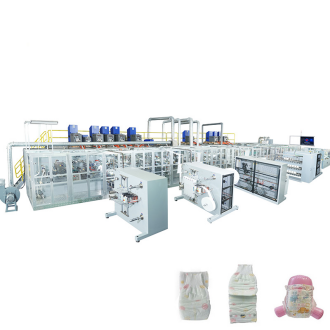
At a glance, a baby pull-up looks simple enough—an absorbent core, a stretchy waistband, and tear-away sides. But once you walk a production floor, the differences between lines become impossible to ignore. Some machines run elastic films through a dozen tension rollers before bonding, while others apply pre-stretched strands directly to the nonwoven. Even a half-second variance in adhesive curing time can shift how the waistband recovers after stretching, which changes fit more than most parents would guess.
Then there’s the matter of core formation. Lines that use drum-forming technology tend to produce a fluffier, more consistent pad, but they’re sensitive to humidity in the plant. Air-laid lines can run faster but may sacrifice a bit of uniformity when switching between sizes or absorbency levels. Adding to that, side-seam bonding methods vary: ultrasonic welding leaves a smoother edge, while thermal bonding is cheaper but can feel slightly stiffer. These aren’t just technical footnotes—they’re why the same size from two different production runs can fit a toddler differently.
The Real Cost of a 'Cheap' Machine After It Leaves the Port
The sticker price on the invoice is only the beginning. Once that machine clears customs and rolls onto your loading dock, the real ledger starts filling up. Freight and insurance might have been quoted upfront, but port handling fees, demurrage charges for delayed paperwork, and last-mile trucking with a specialized rig often appear as unpleasant line items. A quote that looked lean at the supplier's factory gate can easily balloon by fifteen to twenty percent before the equipment is even uncrated.
Then there is the quiet tax of compatibility. Cheap machines frequently arrive without the electrical certifications your local inspectors demand, forcing retrofits for voltage, plugs, or safety interlocks. Spare parts that were promised to be 'universal' turn out to be proprietary, with shipping times measured in weeks instead of days. Every hour of downtime waiting for a capacitor from overseas eats into whatever margin the initial discount created. Operators may also need retraining because the control panel logic differs from what your team has used for years.
Finally, resale value and disposal costs rarely make it into the purchase decision. A machine with no local dealer support and a sparse service history depreciates steeply the moment it is installed. If it fails catastrophically, finding a buyer for scrap or a responsible recycler can cost more than the original savings. The true cost of a 'cheap' machine is not what you pay at the port, but what you keep paying long after the container is gone.
Local Support Networks That Keep Your Line Running
When a critical machine goes down, the distance between you and the nearest spare part can determine whether downtime lasts hours or days. Local support networks shorten that distance. They typically include independent service technicians who know the equipment in nearby plants, regional parts warehouses that stock common wear items, and maintenance contractors who can be onsite within the same shift. Because these providers operate inside your time zone and understand local supply routes, they can bypass the delays that come with waiting on distant technical support or overseas shipments.
A reliable local network also creates informal resilience. Operators in the same industrial area often share backup components or recommend a mechanic who fixed a similar fault last month. This kind of peer-level support doesn’t replace formal service agreements, but it fills the gaps when a production schedule is tight. The most effective line managers keep a short list of local contacts, confirm their response times before an emergency, and check that the parts they stock are actually compatible with current equipment. That preparation turns a potential line stoppage into a manageable repair window.
What IEC Standards Actually Mean for Your Baby Diaper Output
When a baby diaper line starts actually complying with IEC standards, the first thing that changes isn't the certification sticker on the cabinet—it's that the night shift operator no longer has to walk over and reset the heat-seal module every two hours. IEC 61131-3 puts boundaries on how controllers from different vendors talk to each other, so the servo drives and sensors stop fighting over signal priority and the line finally holds a steady cadence. The high-speed cutting knife stops stuttering every time a nearby motor ramps up, which means from core forming to waistband lamination, output settles above 92% of rated speed instead of bouncing between 75% and 95% all shift long.
What really moves the daily output number is the machinery safety and electrical wiring standards like IEC 62061 and IEC 60204-1. The line no longer treats every safety circuit trip as a full stop. A light curtain blocked during a fly-away pulp cleanup triggers a local pause, not a complete shutdown. The operator clears the jam, the zone restarts, and the rest of the line keeps feeding. That used to be a four-minute whole-line stoppage for a trivial sensor blink; now it's a forty-second hiccup. And because the emergency-stop logic and restart sequence were validated inside the safety PLC instead of being trusted to an old mechanic's habit, there's no batch of half-sealed diapers dumped into the reject bin right after restart.
The less visible part is electromagnetic compatibility and power quality. IEC 61000-series limits on harmonics and voltage dips keep the frequency drives from leaking noise into the load cells that measure SAP dosing. Without that control, every diaper's absorbent core weight drifts enough to either trigger a costly quality hold or quietly reduce product performance. When the line meets those EMC requirements, the drift narrows to a band your process can actually manage. The result is that day shift and night shift finally produce within a few percent of each other, and monthly output stops showing those strange mid-week valleys that nobody could fully explain.
When Customization Is Worth the Extra Lead Time
Some buyers assume a longer wait is always a dealbreaker, but that's rarely true when the product needs to fit a very specific environment. Think of a workshop ordering a jig that must align with an older machine's bolt pattern, or a restaurant sourcing booths shaped to match a curved wall. In cases like these, off-the-shelf options simply won't work, and the extra days or weeks become a rational trade-off. The customer isn't just paying for a part; they're paying to avoid the costly workarounds that a generic version would force on them.
Customization also earns its lead time when it changes how the item performs on a daily basis. A chef who requests a thicker blade profile on a prep knife, or a cyclist who needs wider handlebars for shoulder comfort, isn't being picky without reason. The modified design directly affects speed, safety, or fatigue over hundreds of uses. Once buyers understand that the delay is tied to a measurable gain in their own routine, the wait stops feeling like an inconvenience and starts feeling like part of the purchase.
There's another quiet benefit: a longer lead time often signals that the maker is actually building something rather than pulling from a warehouse shelf. For complex or high-stakes items—custom medical carts, fitted safety gear, or one-off furniture pieces—that transparency can build more trust than a fast ship date ever would. The customer knows the order isn't lost in a queue; it's moving through a process designed around their requirements. When that understanding is clear, the question shifts from "how soon can I get it?" to "is this exactly what I need?" And for the right project, the answer makes the extra time feel well spent.
FAQ
Look beyond glossy brochures. Ask for video of a machine running at full speed with the exact diaper size and material you plan to use, and request a live factory walkthrough via video call. Also verify how many machines they have exported to your region in the last two years and ask for contactable references from those buyers.
A basic line may start around $150,000 to $250,000, but the final price depends heavily on servo count, web tension control, and whether the elastic ear and waistband application is fully automatic. Spending more on a higher servo count and better tension control usually pays back in fewer rejects and less downtime.
Focus on the transverse elastic application for the waist and leg cuffs, the side seam welding or ultrasonic bonding unit, and the ability to switch between sizes without long changeovers. Also check whether the machine can handle the thinner, softer nonwoven materials used in premium pull-ups without tearing.
Typical lead time is 90 to 150 days for production, plus 3 to 5 weeks for shipping and customs. If a supplier promises delivery in 60 days for a customized line, treat it as a red flag unless they have a stock machine that matches your specs exactly.
Most established suppliers offer remote troubleshooting via video, with on-site engineers available within 7 to 14 days for major faults if you pay travel costs. Ask for a written response-time guarantee and check if they have a local distributor or service partner in your country before signing.
Certifications help with customs and basic compliance, but they are not a substitute for your own inspection. Request an electrical schematic review, check emergency stop placement, and ask about the specific PLC and servo brands used. Cheap components can still pass a CE self-declaration.
Many forget to budget for voltage transformation, air compressor upgrades, spare parts for the first year, and the cost of adapting the machine to your local raw material rolls if the cores or outer covers have different widths. Also confirm whether installation and training are included or charged separately.
Negotiate a detailed FAT protocol that includes running at least 8 hours continuously with your own materials, not the supplier's optimized samples. Then include a penalty clause for downtime above an agreed threshold during the first 6 months. Keep 10-15% of payment until the machine passes a post-installation performance test.
Conclusion
Sourcing a baby pull-ups diaper machine from China demands far more than comparing quoted prices. A spec sheet that looks identical on paper can hide critical differences: the type of servo drives, the precision of ultrasonic bonding, and whether the tension control system actually handles high-speed elastic application. Two lines rated at 450 pieces per minute may behave completely differently with thin cores or embossed topsheet—one holds tolerance, the other generates waste every shift. The cheapest offer rarely accounts for what happens after the machine leaves the port: installation downtime, missing spare parts, and the cost of flying in a technician who cannot debug remotely. Real buyers budget for local support networks instead. A supplier with a responsive service team in your region, plus a well-stocked parts warehouse within two-day shipping, saves more money than any upfront discount.
IEC compliance is another area where assumptions get expensive. Certificates confirm electrical safety, but they do not guarantee that the line's PLC logic, HMI alarms, or sensor calibration will match your operators' expectations. Customization—such as adjusting the cutting length for a different diaper size or integrating a vision inspection system—adds lead time, yet often prevents months of rework. The practical approach is to ask for video of the exact configuration running at speed, not a generic demo. Those who treat the purchase as a partnership, verifying local support and real-world performance before signing, end up with a line that starts on time and stays running. That is the difference between a machine that looks good on a spreadsheet and one that pays for itself.
Contact Us
Contact Person: Jessie Lai
Email: [email protected]
Tel/WhatsApp: 86-188594442931
Website: https://www.wm-machinery.com