

Bath Bench Factory: The Art of Making Safe, Comfortable Bath Seats
2026-08-15
Most people never think about the humble bath bench until the moment they need one. But for those recovering from surgery, managing mobility challenges, or simply wanting to age in place, that simple seat becomes a daily lifeline. At Suncare, we see bath bench manufacturing as more than cutting metal and molding plastic—it’s an art form built on safety, stability, and comfort. In this post, we’ll pull back the curtain on the craftsmanship and quality control that go into every bath seat we make, so you can understand what truly separates a trustworthy bench from a risky one.
What Actually Makes a Bath Bench Feel Safe?
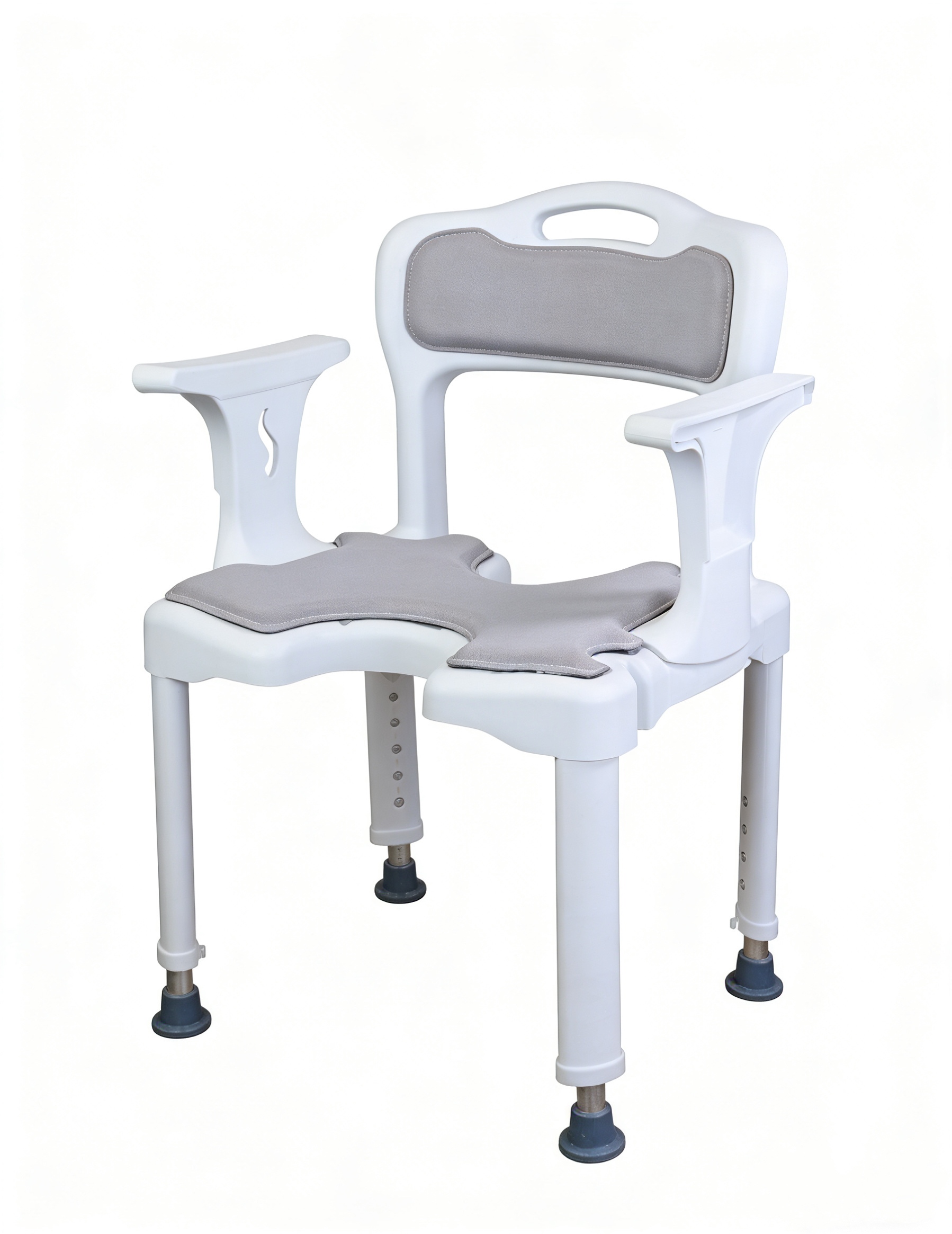
A bath bench can look sturdy in the store, but real safety shows up the moment you sit down on a wet, uneven surface. The first thing you notice is whether the legs stay planted instead of wobbling or sliding. Rubberized, wide-set feet with a slight grip are what keep the bench from drifting when you shift your weight or reach for a towel. If the feet are narrow or hard plastic, your body tenses up before you even realize why. That small hesitation is the difference between a bench that supports you and one you have to constantly brace against.
The seat itself matters just as much as the frame. A slightly textured or slatted surface lets water drain away instead of pooling under your thighs, which prevents that sudden slippery feeling. The height and depth also force a kind of honest test: can your feet rest flat on the tub floor while your knees stay at a comfortable angle? If you have to perch on the edge or stretch your legs, your core never fully relaxes. Safe isn’t just about not falling—it’s about being able to breathe normally, use both hands for washing, and stand up without a lurch.
Finally, the materials and joints tell you whether the bench was built for daily wet conditions or only occasional use. Aluminum frames with reinforced cross-bracing resist the slow wobble that develops after months of humidity. Plastic that flexes too much or metal that creaks under your weight signals a weak point waiting to give way. When every part moves together without noise or sway, you stop thinking about the bench entirely—and that mental quiet is exactly what feeling safe actually feels like.
The Materials That Stand Up to Daily Steam and Soap
Stainless steel earns its place in the kitchen not because it looks sharp, but because it shrugs off the daily grind of steam and suds. A decent stainless sink or steamer basket handles constant exposure to hot water and dish soap without pitting, rusting, or holding onto odors. The chromium oxide layer on the surface does the heavy lifting—it self-heals when scratched, so even after years of scrubbing with a soapy sponge, the material stays smooth and non-porous. That means no lingering tomato sauce stains or soap film building up in tiny crevices, which is exactly what you want when you're dealing with something that gets steamed and washed multiple times a day.
Silicone and borosilicate glass are the quiet workhorses for anything that goes from stove to sink to steamer. Silicone spatulas, steaming lids, and collapsible colanders don't absorb soap residue or warp after repeated cycles in a hot dishwasher, and they won't leach anything funky into your food. Borosilicate glass storage containers handle the same abuse—pouring boiling broth into one right after steaming vegetables won't crack it, and a soapy rinse leaves no cloudy film behind. Unlike cheaper plastics that turn hazy and start smelling like old dishwater after a month, these materials stay clear, flexible, and odor-free, which is why they keep earning their spot on the drying rack.
How a Factory Shapes Comfort Into Every Curve
Walk the floor of a seating factory and you’ll notice that curves rarely come from a single machine. They start as flat sheets of steel and blocks of foam, then pass through a series of presses, molds, and hand-finishing stations. A backrest that looks simple on a showroom floor may have been shaped by three separate dies, each one nudging the material closer to the arc that will eventually support a spine.
The real work happens in the details people don’t see. Foam is poured at different densities, so a chair can be firmer at the lumbar point and softer near the shoulders without adding extra layers. Stitching is mapped to follow the curve rather than fight it, which keeps the fabric from pulling or bunching after months of use. Even the adhesive that bonds foam to the frame is applied in a pattern that mirrors the seat’s contours.
Before anything is boxed, a pair of hands runs along every seam and every bend. Technicians use pressure-sensing mats to check that weight spreads evenly across the seat pan and that the lumbar curve pushes back in the right place. If a single measurement drifts outside the tolerance, the part is pulled and reworked. That mix of machine precision and human judgment is what turns a piece of curved metal and foam into something that feels like it was made for your body.
Why Weight Testing Matters More Than You'd Think
It's easy to assume weight testing is just about checking a number on a scale, but the real value runs far deeper. Load-bearing components, from suspension parts to packaging materials, often fail in ways that aren't visible until stress is applied. Weight testing reveals these hidden weaknesses early, saving you from costly breakdowns or safety hazards down the line.
What's less obvious is how weight testing shapes long-term reliability. By simulating real-world forces—sudden impacts, sustained pressure, or uneven distribution—you get a clearer picture of how a product behaves under conditions that standard visual inspections miss. This kind of insight lets you make smarter design tweaks before they become expensive recalls.
Beyond the obvious safety benefits, weight testing also builds trust. When a product consistently holds up under challenging loads, it speaks louder than any marketing claim. Customers may never see the test reports, but they feel the difference every time they use something that doesn't buckle, crack, or wear out prematurely.
Custom Bench Dimensions for Showers That Were Never Standard
A shower bench feels like a simple addition until you actually sit on one that was built to someone else's idea of average. The standard height of 17 to 19 inches and depth of around 15 inches come from kitchen chair measurements, not from how bodies move in wet, enclosed spaces. Taller users end up with knees above their hips and a constant slide forward; shorter users find their feet dangling, which makes standing up from a seated position harder than it needs to be. A shower is not a dining room, so copying those dimensions rarely results in a comfortable wash.
Custom bench dimensions start with the person who will use it most. Measure from the floor to the crease behind the knee while seated on a firm surface, then subtract about an inch to allow for water and a slight forward slope. Depth should support the thigh without cutting off circulation, typically 15 to 18 inches for an adult, but wider if someone needs to sit farther back for balance. The bench width can be as narrow as 14 inches in a compact stall or run the full back wall in a larger enclosure. Corner benches, fold-down styles, and contoured seats all change these numbers, so the only reliable approach is to measure the actual shower cavity and the user's seated posture together.
Beyond comfort, custom sizing prevents safety issues that show up later. A seat that is too high forces users to perch, increasing the chance of slipping when reaching for soap or a handheld sprayer. Too deep and water pools behind the legs, making the surface slick. Too shallow and there is no room to shift weight without feeling like you are about to slide off. These are not problems you solve with a towel bar or a bath mat. They are fixed by cutting the bench to fit a real body in a real shower, not by trusting a number that was never meant for wet stone or tile anyway.
From Assembly Line to Your Bathroom: A Closer Look at the Build
Every fixture starts as solid brass or stainless steel bar stock. The stock is fed into CNC lathes that carve the body and internal waterways in one pass, leaving tolerances tighter than a sheet of paper. Operators check every tenth piece with air gauges, not just calipers, because a 0.05 mm drift in the cartridge seat can cause a lifetime of drips.
Once machined, parts move to a cleaning line where ultrasonic baths strip away cutting oil. Then the finish is applied—not sprayed on as a thin coating, but electroplated in layers of nickel and chrome. Our line runs at half the speed of typical mass production, which gives the plating tanks time to build an even deposit inside deep recesses. After plating, each body is hand-buffed under bright light; any pinhole or haze sends it back for rework.
Before a unit is boxed, it undergoes a live water test at 125% of rated pressure. We cycle the handle 20,000 times to simulate a decade of use, then check for leaks with a digital flow meter. Only after passing does it get wrapped in recycled paper and packed with brass mounting hardware—not plastic brackets. That's the moment it leaves the assembly line and starts the trip to your bathroom wall.
FAQ
The feet are usually made from a high-friction rubber compound and may have a slight suction cup shape, so they grip smooth tiles even when soapy water pools underneath. Some models also add micro-texture to the underside of the legs to channel water away and reduce hydroplaning.
We avoid plush padding because it traps water and breeds mildew. Instead, the seat is often molded from a slightly flexible polypropylene or EVA blend that has a gentle give but remains firm enough to support weight. The surface is shaped with a subtle rear-to-front slope to reduce pressure on thighs without feeling unstable.
Standing water makes any bench slippery and encourages mold. Drainage holes let water flow through immediately, while ribbed or dimpled textures create gaps between the skin and the seat so air can circulate and the user can dry off without shifting position.
Yes, many designs feature telescoping aluminum legs with push-button locks at roughly one-inch intervals. The factory can also pre-set a custom height range for bulk orders, such as a shorter base for pediatric care or an extra-tall version for taller adults.
A standard batch goes through static load testing with weights over 300 pounds, repeated fatigue cycling on the leg joints, and a salt-spray test to confirm the metal won't corrode after months of humidity. The factory also performs a tilt test on an inclined wet surface to verify the bench won't tip when a user shifts their weight.
Most models are designed to be put together without tools. The legs snap into sockets or screw into pre-threaded holes with large knobs that require only a light grip. The instructions use step-by-step photos rather than dense text, and the parts are color-coded to avoid confusion.
The joints on a quality bench are reinforced with internal metal sleeves instead of relying on thin plastic threads. There are no sharp edges or burrs anywhere a hand might grip. The metal tubing has a consistent wall thickness, so the bench does not wobble or creak under uneven weight, and the finish resists chipping even after repeated cleaning with bathroom chemicals.
We mold antimicrobial additives directly into the seat plastic rather than applying a surface coating that wears off. The drainage design keeps the bench dry faster, and all seams are thermally welded or tightly sealed so moisture cannot seep into hollow cavities where bacteria could breed. After assembly, each bench is washed and dried before packaging to remove any manufacturing residue.
Conclusion
A bath bench earns trust long before anyone sits down. The feeling of safety comes from how the frame distributes weight across four wide, rubber-gripped feet, and how the seat surface stays slightly textured even when wet. Materials are chosen for the long game: anodized aluminum frames shrug off humidity, while high-density polyethylene seats ignore soap residue and hard water stains. In the factory, comfort is not added at the end—it is shaped into every curve. Designers map pressure points and real seating postures, then adjust the front waterfall edge and subtle back slope so thighs don't dig and water doesn't pool. That is the difference between a generic stool and a bench made for how people actually move in a slippery, steamy space.
Weight testing is where good design becomes dependable hardware. Benches are loaded far beyond advertised limits, sometimes with bags of steel shot, then rocked side to side and dropped onto one leg to expose weak welds or cracked plastic. Custom dimensions exist because showers were never standardized—some stalls are narrow, some curbs are tall, some users need a higher seat to stand up safely. The factory handles those odd sizes without treating them as afterthoughts. On the assembly line, each piece is fitted into a jig, fasteners are torqued in sequence, and a worker runs a bare hand along every seam to catch burrs a camera might miss. The bench that reaches your bathroom has passed through steam chambers, load cycles, and a final visual check. That is the art: quiet, repeated, physical proof that safety and comfort are built, not promised.
Contact Us
Contact Person: Frank Chan
Email: [email protected]
Tel/WhatsApp: 0086-13924529088
Website: https://www.suncare-medical.com