

Chemical Industry Air Compressor Manufacturer Selection Guide for Plant Operators
2026-08-25
Chemical plants don’t forgive shortcuts when it comes to compressed air. One undersized or poorly specified compressor can stall reactions, contaminate batches, or violate safety codes. This guide is written for operators who need to cut through spec-sheet noise and make a defensible choice—covering the real-world factors that separate a reliable workhorse from a costly gamble. Along the way, you’ll see why Seize Air builds its systems with those harsh operating realities in mind.
Why a Compressor That Works Elsewhere Breaks Down in Chemical Service
Moving a compressor from general utility service into a chemical process is rarely a simple drop-in. The gas stream often carries trace amounts of hydrogen sulfide, chlorides, or organic acids that don't show up on a typical spec sheet. These compounds attack impellers, diaphragms, and casing metals in ways that air or nitrogen never would, and even stainless steel can pit or crack when the right combination of moisture and halides is present.
Seals and lubricants usually fail first. An elastomer chosen for air service swells or dissolves when it meets light hydrocarbons or ester-based solvents. Lubricating oil can turn acidic or form varnish after reacting with process gas that leaks past the shaft seal. Once the oil thickens or loses film strength, bearings and timing gears quickly follow.
The thermal and pressure profile of chemical service also shifts in ways that catch operators off guard. A compressor sized for a narrow operating window may experience condensation, liquid carryover, or polymerization inside the casing. Polymer deposits build up on rotors and valves, increasing vibration and reducing clearances until something cracks or seizes. Without a full material and seal compatibility review, a machine that ran for a decade in a plant air system might not survive its first month in chemical duty.
Reading Past the Spec Sheet and Into Corrosion Data
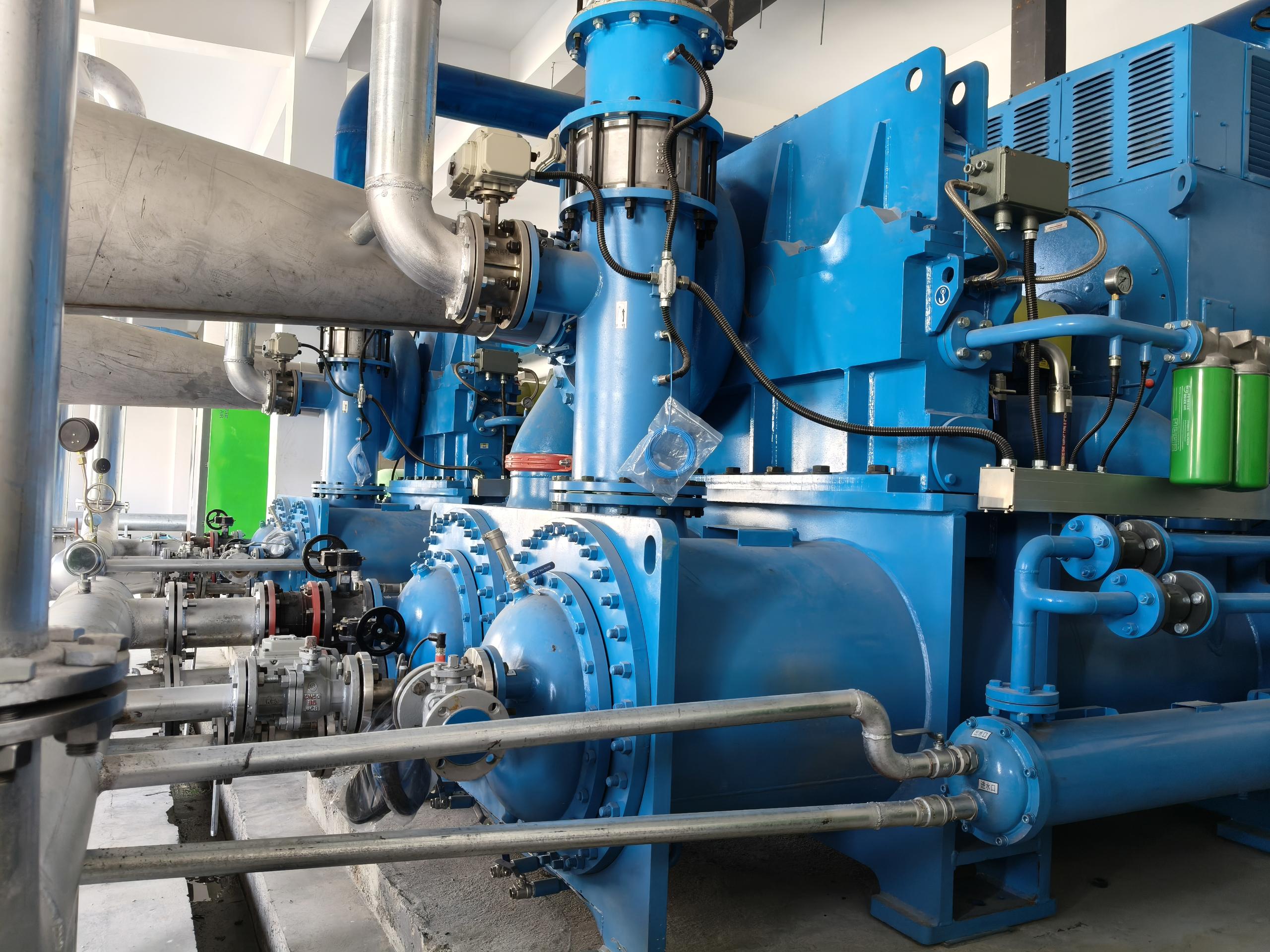
A spec sheet might list “excellent resistance to chloride pitting,” but that phrase hides more than it reveals. Real corrosion behavior depends on temperature swings, crevice geometry, pH shifts, and even trace contaminants that never appear in a datasheet. Engineers who rely solely on broad ratings often end up surprised by localized attack in a heat-affected zone or under a gasket. To make sound material choices, you have to dig into actual test data—immersion tests, electrochemical polarization curves, and long-term exposure records—rather than trusting a single sentence on a product bulletin.
Consider two stainless steels with nearly identical chromium and molybdenum content. On paper, both show “good” resistance to sulfuric acid. But pull up the iso-corrosion curves and you may find one tolerates 20% acid at 80°C while the other starts to etch at 50°C. The difference comes from minor alloying elements and microstructure, details that only emerge in plotted data. Similarly, a nickel alloy marketed for seawater service may pass a standard crevice test yet fail after six months under marine biofouling. Corrosion data tables, especially those with time-to-failure or critical pitting temperature, reveal these hidden boundaries.
Reading corrosion data is less about memorizing charts and more about asking the right questions: What was the test duration? Was the coupon welded or sensitized? Did the environment include aeration or stagnant conditions? A low general corrosion rate can coexist with severe stress corrosion cracking, and few spec sheets mention that trade-off. By comparing data from multiple sources—vendor reports, NACE publications, in-house exposure racks—you build a realistic picture of how a material will perform. In the end, the spec sheet gets you to the right neighborhood, but the corrosion data tells you which house will still be standing in five years.
The Real Cost of Unplanned Downtime in a Continuous Process Plant
When a continuous process line stops without warning, the first number people reach for is lost production hours times the hourly margin. That figure rarely captures what actually leaves the bank account. A plant making petrochemicals, pulp, or food ingredients often needs anywhere from six hours to two days to bring temperatures, pressures, and flows back to stable operating windows after an unplanned stop. During that ramp-up, product is off-spec, energy is burned at full rate with no saleable output, and operators are pulled away from normal rounds to chase alarms. So the true cost begins with lost volume, but it quickly expands into wasted utilities, overtime labor, and the scrap or reprocessing of material made while the process was still stabilizing.
Beyond the immediate production hit, unplanned downtime accelerates wear in ways that don't show up on a repair work order. Thermal cycling, pressure shocks, and sudden stops put stress on seals, refractory linings, catalyst beds, and rotating equipment. A pump that survives a planned shutdown might develop cracks after an emergency stop. Six months later, that same pump fails again, and nobody connects it to the earlier event. Maintenance teams then spend more time on reactive work, which makes it harder to stick to preventive schedules. This creates a feedback loop where reliability keeps drifting downward, and the plant ends up paying for the same failure more than once.
There is also the cost nobody logs: the shift supervisor's judgment call, the delayed customer shipment, the safety near-miss. When a line goes down unexpectedly, decisions get made under pressure. A valve is bypassed to speed things up. A contractor is called in at midnight. A batch is shipped with a borderline spec because the tank is full. Each of those choices may save an hour, but they carry financial and regulatory risk that gets spread across the organization. Over a year, plants that treat unplanned downtime as just a production loss tend to underinvest in early warning systems and root cause analysis, and they keep paying for surprises. The real cost is not the outage itself; it's the chain of reactions it sets off.
Questions to Ask About Hazardous Area Compliance Before the Site Visit
Before heading to the site, ask whether the facility has up-to-date hazardous area classification drawings. Many sites still work from legacy documents that don't match current operating conditions, and confirming the revision status early will save you from chasing ghosts during the walkthrough.
Confirm which explosion protection concepts are actually installed in the field—Ex d, Ex e, Ex i, and so on—and request the last maintenance logs for flameproof enclosures and cable glands. It's surprising how often the paperwork says one thing while the hardware tells a different story, so getting these records ahead of time gives you a checklist to verify against.
Ask about the most recent compliance audit and whether any non-conformities were formally closed out. Also dig into potential gas, vapor, or combustible dust release points that might not appear on the drawings, such as temporary vents, sampling points, or recently added equipment skids. Those are the areas that often slip through the cracks between engineering design and day-to-day operations.
How to Test a Manufacturer's Support Team Without Buying First
Before committing to a purchase, you can gauge a manufacturer's responsiveness by sending a pre-sales question through their official contact form or support email. Pay attention to how quickly they reply, whether the answer is genuinely helpful or just a canned response, and if they ask clarifying questions. A team that treats your inquiry seriously before money changes hands is likely to carry that same care into post-sales support.
Another practical approach is to check public forums, review sites, and social media groups where current users discuss their experiences. Look for patterns: how often does the manufacturer step in to resolve issues? Do they offer workarounds or just disappear? You can also test their live chat if available, asking a specific technical question about the product. The depth and accuracy of their reply will tell you a lot about the actual expertise behind the support desk.
Finally, don't underestimate a quick phone call. Speaking to a real person can reveal whether the support team is empowered to make judgments or simply follows a rigid script. Ask about warranty terms, replacement part availability, or troubleshooting a hypothetical problem. The tone, patience, and willingness to engage without a sale on the line are strong indicators of what you'll experience once you're a paying customer.
What Belongs in a Chemical Duty Compressor Specification
A chemical duty compressor specification starts with the full process envelope, not just a nominal flow and pressure. Gas composition has to include trace constituents like hydrogen sulfide, chlorides, ammonia, or polymerizable monomers because those drive casing metallurgy, impeller coatings, and seal choices. Normal, rated, and upset conditions all need defined values, and any site-specific corrosion allowances or NACE requirements belong in this section rather than being left to the vendor's discretion.
Sealing and leakage control deserve the same level of detail. For hazardous, toxic, or environmentally regulated gases, the specification should state whether dry gas seals with a defined buffer gas plan or a wet seal system with a dedicated degassing tank is required. Allowable leak rates, vent and drain routing, seal gas filtration, differential pressure monitoring, and shutdown logic all have to appear here, because after the fact changes to seal support systems usually trigger costly rework.
Testing and documentation should be pinned down before purchase, not treated as an afterthought. A performance test with the actual gas or an approved substitute, a mechanical run test, and an overspeed test where applicable need clear pass criteria. Specify inspection hold points, weld procedure qualifications, and the minimum contents of operating and maintenance manuals so the final package reflects what the plant actually needs instead of a standard commercial offering with hidden gaps.
FAQ
For round-the-clock operation, plant operators usually narrow the field to flooded rotary screw or centrifugal machines depending on demand. Rotary screw compressors handle variable loads without excessive cycling, while centrifugals shine above roughly 300 hp with steady baseload flows. Avoid reciprocating units for main plant air unless a dedicated high-pressure niche requires them because valve maintenance and pulsation issues add workload.
Even trace oil carryover can poison catalysts, clog sensitive instrumentation, or contaminate final product in reactors and drying systems. Chemical plants often specify ISO 8573-1 Class 0 or Class 1 air to protect process integrity. Oil-free screw or centrifugal designs eliminate the risk of lubricant migration, and operators avoid relying solely on downstream filtration to correct an upstream oil-flooded compressor.
You want to match wetted components to the local atmosphere and any possible gas ingress. Coastal or chlorine-exposed sites often need stainless steel coolers, piping, and moisture separators. In sulfur-heavy or ammonia-rich settings, check elastomer compatibility for seals and gaskets. Ask manufacturers for material traceability and specific corrosion test data rather than accepting a generic 'chemical duty' label.
Look for wide turndown with stable pressure. Variable-speed drive rotary screws can match swings from 40 percent to 100 percent without blowing down constantly. Centrifugals should include inlet guide vanes and bypass controls to avoid surge at low loads. The goal is to keep the compressor loaded and efficient rather than short-cycling, which causes moisture carryover and shortens airend life.
Depending on the site, you may need ATEX or IECEx marking for electrical components, NEMA 7/9 enclosures for North American classified locations, or API 619/672 references for critical service. Confirm the full package—motor, controls, sensors, and dryers—meets the area classification. A compressor that is only 'explosion-proof motor equipped' is not enough if solenoids or transmitters remain unrated.
Ask about mean time between overhauls for the airend or compressor element, typical lead time for critical parts under a plant shutdown, and whether the manufacturer stocks local inventory. Strong suppliers provide condition monitoring packages—vibration, temperature, and dew point—so operators can plan interventions instead of reacting to failures. Also check if they offer remote diagnostics with clear data ownership, since chemical plants often restrict external network access.
Build a 10-year model including energy consumption at expected duty cycle, cooling water or air costs, maintenance labor, parts replacement schedules, and disposal of condensate. A machine with 5 percent better specific power can erase a high initial price difference within two to three years in a 24/7 chemical plant. Include unloaded power draw because compressors rarely run at full load for an entire shift.
Conclusion
Plant operators often learn the hard way that a compressor which runs flawlessly in a food plant or electronics factory can fall apart within months in chemical service. The root cause is rarely horsepower or flow rate—it's material incompatibility. A cast iron casing that handles clean air will corrode when exposed to trace chlorides, hydrogen sulfide, or acidic condensate. Smart buyers skip the glossy brochure and ask for corrosion data from real installations: pitting rates, coating adhesion tests, and failure histories in similar chemical environments. Because here's the uncomfortable truth: in a continuous process plant, unplanned downtime doesn't just stop one machine—it idles reactors, distillation columns, and packaging lines. The real cost includes lost production, off-spec product, emergency labor, and even safety incidents. That's why the spec sheet must demand more than CFM and pressure. It must specify wetted materials, seal types, surface treatments, and NPSH margins under sour gas or solvent-laden air. And before any site visit, you should grill the manufacturer on hazardous area compliance—not just whether the motor has an Ex rating, but how they handle purge systems, spark containment, and certification for your specific gas group and temperature class.
Even the best engineering documents mean little if the vendor's support team vanishes after the invoice is paid. Here's a test: call their service line on a Friday afternoon and ask for a chemical-duty application engineer. If you get a sales rep reading a script, move on. Request references from plants that run similar chemistry—not just any refinery, but one handling chlor-alkali, amines, or vinyl chloride. Ask those operators how quickly the manufacturer shipped a replacement seal, or whether their field technician actually understood the difference between NACE MR0175 and ISO 15156. The best compressor for chemical service is never the one with the lowest bid or the highest claimed MTBF. It's the one whose manufacturer pulls out a material selection diagram for your exact process stream, corrects your own piping assumptions, and explains why a duplex stainless steel impeller is worth the wait. Write that into your specification: not just “air compressor,” but “chemical duty compressor with documented pitting resistance, hazardous area certification for Zone 2 IIC T3, and a 24-hour emergency line answered by an engineer who has seen your P&ID.” That is how you avoid the graveyard of standard compressors that failed inside eighteen months of chemical exposure.
Contact Us
Contact Person: Mia
Email: [email protected]
Tel/WhatsApp: +86 19821985894
Website: https://www.seize-air.com