

China Foot Massager: Deep Relief for Tired Feet at Home
2026-10-26
After a long day on your feet, nothing beats the soothing knead of a quality foot massager. But with so many options, how do you find one that delivers true deep relief without leaving home? Enter XINGBU — a China foot massager that combines time-tested techniques with modern ergonomics. In this post, we’ll explore why it stands out, how it targets tired soles and heels, and what makes it a practical addition to your daily recovery routine.
The Secret Behind Chinese Reflexology Nodes in Modern Foot Massagers
Those little bumps and raised nodes on the footplate of a modern foot massager aren't random design choices. They trace back to ancient Chinese reflexology maps that divide the soles into zones linked to different organs and systems. Each node is deliberately placed to press into a specific reflex point, mimicking the thumb-and-knuckle technique a trained reflexologist would use. The real breakthrough is how manufacturers now calibrate the height, hardness, and spacing of these nodes to match the average foot's pressure tolerance—something early electric massagers got painfully wrong.
What most people don't realize is that the secret lies in the geometry and material memory. The nodes are often made from a firmer core wrapped in a slightly softer outer layer, so they don't feel like jabbing stones. Some high-end models use asymmetrical node shapes: a gentle slope on one side for a kneading sensation and a sharper peak on the other for deep-tissue stimulation. This lets a single rotating head deliver both a soothing glide and a focused trigger-point release, depending on the direction of rotation. It's a quiet nod to how a human hand changes angle and pressure during a session.
Another overlooked detail is the mapping pattern itself. Instead of covering the whole sole evenly, the nodes cluster in the arch and ball-of-foot areas, where reflexology charts locate the kidney, liver, and digestive zones. The heel often gets wider, softer nodes because it carries more weight and needs a different kind of pressure. By studying pressure-distribution data from thousands of foot scans, designers have moved beyond the crude 'more nodes equals better massage' idea. The real secret is selective intensity: knowing where to press firmly, where to back off, and how to let the foot sink just enough between the nodes to feel held rather than attacked.
How a Heated Shiatsu Foot Massager Melts Away Office Fatigue
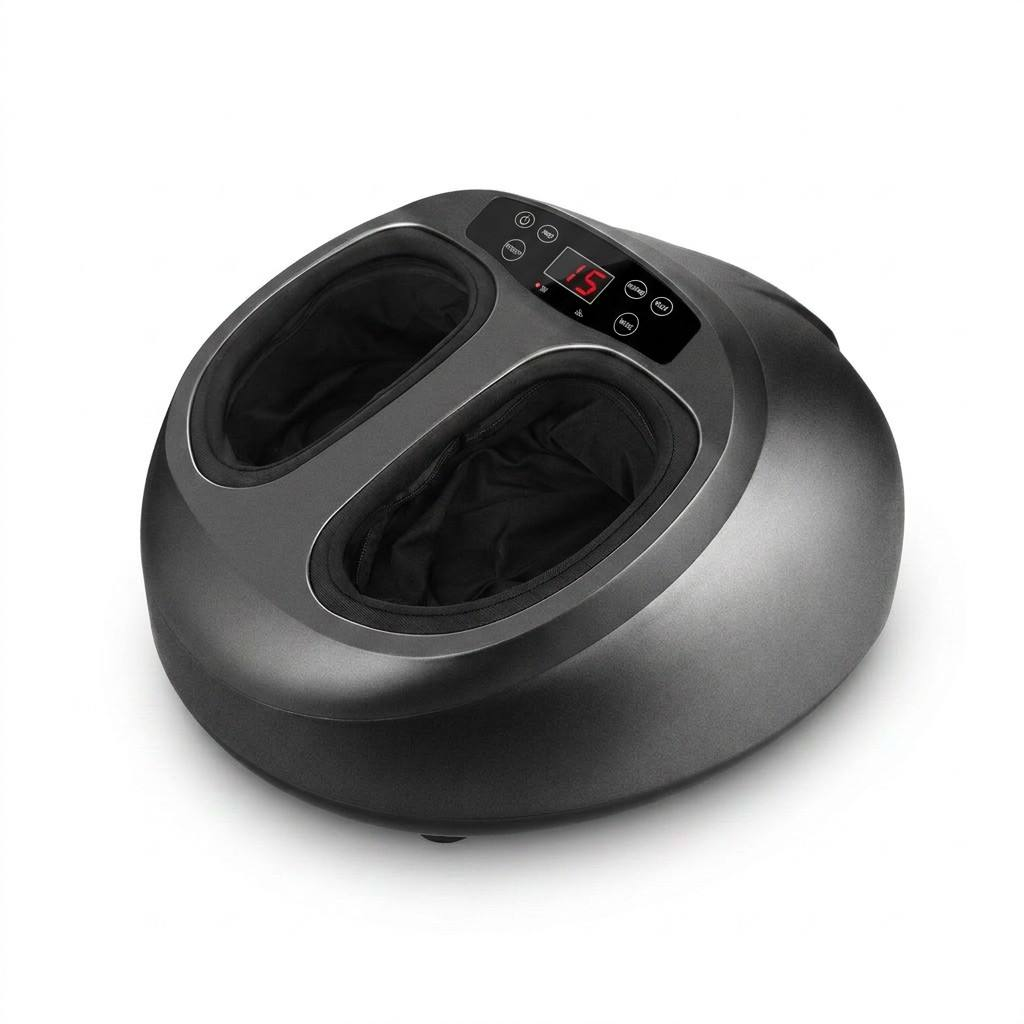
Long hours at a desk can leave your feet feeling heavy and your focus slipping. A heated shiatsu foot massager works by combining deep kneading pressure with gentle warmth, targeting the arches, heels, and tired muscles that tighten up from sitting or standing all day. Within minutes, the rhythmic rolling and pressing help release built-up tension, encouraging better circulation that reaches beyond your feet to ease the overall sense of fatigue.
The heat plays a quiet but powerful role—it softens stiff tissues and makes the massage feel more penetrating, almost like a slow reset for your lower body. Unlike a quick stretch or a cold walk, this kind of targeted warmth and pressure can interrupt the mental loop of office stress, giving you a physical reason to exhale and step away from the screen, even briefly.
For many people, the real benefit isn't just the moment of relief but how it shifts the rest of the evening. When your feet stop throbbing and your legs feel lighter, you're less likely to slump into the couch with residual tension. It's a small, private ritual that turns the end of a demanding workday into something closer to recovery rather than just collapse.
What to Look for Before You Buy a Chinese Foot Massager Online
A surprising number of these machines share the same internal motor and outer shell, so pay closer attention to the roller layout than the brand name. Look for units where the kneading nodes sit directly beneath the arches rather than just under the heel or ball—that positional difference determines whether you feel a deep, targeted press or just a vague vibration. Also check if the foot plates can be removed for cleaning, because the cloth lining traps sweat and becomes unpleasant fast.
Heat is often advertised as a selling point, but many budget models generate only mild warmth that fades after ten minutes. If you want genuine relief after long standing hours, choose a massager with independent heat control and a timer that won’t force you to restart the cycle every quarter hour. Air compression bags around the instep and calf can feel great, but confirm they inflate in sequence rather than all at once—uniform squeezing is far less effective than a rolling pressure wave.
Finally, ignore wattage as a proxy for strength. Some low-power units use clever gearing to deliver more torque than their 30-watt competitors. Read recent reviews that mention noise level under load, because a machine that hums quietly in a demo can rattle loudly when your feet press down. And if cord length is under six feet, you’ll likely need an extension, which is a small but telling sign of corner-cutting design.
A Realistic 15-Minute Routine for Tired Feet After a Long Shift
Start by kicking off your shoes and rolling a tennis or massage ball under each foot for two minutes per side, pressing just hard enough to feel the arch release but not so hard you wince. Follow that with a quick soak—warm water, a handful of Epsom salts, maybe a drop of peppermint oil if you have it—for five minutes. While your feet are in the water, wiggle your toes and flex your ankles slowly to bring back some circulation.
Next, dry off and sit on the couch with your legs up against the wall or on a stack of pillows for three minutes. This helps drain the fluid that pooled around your feet and ankles during your shift. Use this time to do gentle ankle circles and point-and-flex movements, ten reps each way on both feet.
Finish with a two-minute self-massage using lotion or a little oil. Knead the ball of each foot with your thumbs, then glide your knuckles from heel to toes. Put on clean, cushioned socks and try not to stand for at least ten more minutes. It’s not fancy, but it works.
Comparing Air Compression vs. Rotating Rollers in Chinese Foot Massagers
Settling into a Chinese foot massager often means choosing between two distinct massage philosophies. Air compression models use inflatable bladders that squeeze the feet from all sides, mimicking the gentle, rhythmic pressure of a traditional reflexology hold. This approach tends to feel more like a warm, enveloping hug for tired arches and heels, especially soothing for those with sensitive soles or narrow feet that are easily jostled. In contrast, rotating rollers rely on mechanical nodes and spinning discs that travel along the bottom and sides of the foot, digging into acupressure points with a more direct, sometimes intense kneading action.
The real difference shows up in how each method handles the heel and the top of the foot. Air compression shines when it comes to covering the entire surface evenly, including the often-neglected instep and ankle area, because the bladders conform to your foot shape rather than following a fixed track. Rotating rollers, on the other hand, excel at sustained, deep penetration through the plantar fascia and the ball of the foot, which can feel wonderful after a long day on hard floors but may overwhelm anyone with a low pain threshold. Chinese foot massagers that combine both systems usually let you adjust the intensity, but purists often find that one method becomes their clear favorite within minutes.
Practical considerations also play a role. Air compression tends to run quieter and works well even if you wear thick socks, since the squeeze doesn't depend on direct skin contact. Rotating rollers are generally more aggressive and may require removing footwear for the best glide, but they give that satisfying "massage therapist" sensation many people crave. For daily relaxation, the air-based approach often wins; for targeted relief of stubborn knots, the rollers are hard to beat.
Why Some People Swear by Daily Foot Massages for Better Sleep
Ask someone who never misses their nightly foot rub and they'll usually mention the same thing: it flips a switch. After a few minutes of steady pressure on the arches and heels, the body stops feeling like it's still mid-day. The breathing deepens, the shoulders drop, and the constant mental loop quiets enough for sleep to edge in. That shift is partly physiological—the soles are packed with nerve endings that, when stimulated, nudge the nervous system toward rest-and-digest mode rather than staying revved up.
There's also the temperature angle. Cold feet are a surprisingly common sleep thief. If your extremities stay chilled, your body has trouble settling into the slight core-temperature drop that makes staying asleep easier. Massaging the feet draws blood to the surface and warms them up, so you're not lying there waiting for them to thaw. It's a practical fix that gets overlooked in favor of more complicated bedtime routines.
Maybe the biggest reason it works, though, is that it forces a pause. Daily habits have a way of telling the brain what's next, and a foot massage is a tactile end-of-day marker. You're not scrolling, not problem-solving, not running through tomorrow. You're just rubbing your feet. That simple, repeated act gives the body permission to power down—and for a lot of people, that permission is exactly what's been missing.
FAQ
It doesn't just vibrate and call it a day. The rollers actually dig into the arches and heels with a kneading motion that mimics real hands, and the heat isn't a gimmick—it stays warm for the whole session without getting uncomfortably hot.
Absolutely. It's low-profile enough to slide under a coffee table or desk, and the remote lets you switch modes without bending down. I've lost track of how many episodes I've watched while it works on my soles.
There are three intensity levels, but even the lowest feels like a firm massage. The highest is genuinely deep—great if you're on your feet all day, but you might want to start slow and let your feet adjust.
The footbed cover unzips and can go straight into the washing machine. I toss mine in once a week and it still looks new after months of use.
No, the heat function has a built-in safety cutoff and stays around a soothing temperature. I've left it on for 30 minutes and it never became uncomfortable.
It's not a medical device, but the deep kneading and heat can ease the tightness in the arch and heel that makes plantar fasciitis so miserable. Many people use it as part of their evening recovery routine.
It's quieter than most electric massagers—just a low hum. You can easily use it in the living room while someone reads nearby without bothering them.
I do 15 minutes per foot at the end of the day, switching between kneading and heat. If my feet are especially sore, I'll add a quick 10-minute session in the morning. Consistency matters more than long sessions.
Conclusion
The moment you slide your feet into a quality Chinese foot massager, the built-in reflexology nodes start working on pressure points that most generic devices ignore. These nodes aren't random bumps—they follow traditional Chinese foot maps that link specific zones to different parts of the body, and the latest models blend that old knowledge with modern engineering. When the heat function kicks in and the shiatsu rollers knead the soles, the kind of dull ache that builds up after eight hours at a desk begins to fade. Office fatigue often settles in the calves and arches, and a session that alternates gentle warmth with deep circular pressure feels less like a gadget and more like a proper foot rub.
Before you buy, ignore the flashy touchscreens and focus on what actually matters: motor strength, adjustable intensity, and whether the foot chamber fits your size. Online listings can hide weak rollers behind sleek photos, so look for models that let you disable heat or switch between air compression and rotating rollers. Air compression hugs the foot and improves circulation, while rollers dig into tight tissue—neither is better for everyone, and the right choice depends on whether your feet feel swollen or stiff after work. A realistic routine doesn't need an hour. Fifteen minutes with the massager on a medium setting, right after taking off your shoes, can loosen the plantar fascia enough to change how you walk for the rest of the evening. People who stick with a daily session often report falling asleep faster, likely because the massage lowers tension that normally keeps the body alert. Over time, that small evening ritual turns an ordinary foot massager into a reliable way to recover at home.
Contact Us
Contact Person: Hannah
Email: [email protected]
Tel/WhatsApp: +86 18266954198
Website: https://www.okmassager.com/