
China High Strength Steel Plate Factory: How Advanced Production Meets Global Standards
2026-08-28
Ask any structural engineer what keeps a 600-meter tower from swaying too far, and they’ll point to high strength steel plate—the kind that doesn’t buckle under extreme loads or corrosive salt spray. For decades, that trust was hard to earn for Chinese mills, but the landscape has changed. Inside China’s most advanced plate factories, production now mirrors—and sometimes surpasses—the stringent demands of ISO, EN, and ASTM standards. One standout is Sanhe Steel, a producer that has turned high strength plate manufacturing into a near-surgical discipline. In this post, we’ll walk through what sets their process apart and why global buyers are reevaluating Chinese steel.
Inside the Melt Shop: Controlling Sulfur and Phosphorus Before the First Pass
Desulfurization starts long before the ladle reaches the caster. In most shops, hot metal is treated with a lance-injected mix of lime and magnesium, dropping sulfur from 0.030% down to 0.003–0.005%. The slag that forms on top is raked off, not just skimmed; leaving any carry-over sulfur-rich slag undoes the entire injection cycle. Once the metal hits the BOF or EAF, sulfur is mostly locked in, so the pre-treatment step sets the ceiling for what the first pass will see.
Phosphorus is a different beast. It wants to stay in the bath during the early blow when the temperature is still below 1,550°C, but only if the slag is right. Operators push lime addition hard in the first five minutes, aiming for a slag basicity above 3.0 and keeping FeO high enough to oxidize phosphorus into the slag. A common trick is to delay the first turndown sample until after the silicon has burned out; sampling too early gives a false low phosphorus reading because the metal isn't mixed.
Before the first pass, whether that's a roughing stand or a continuous caster, the heat is held at the ladle station for a final chemistry trim. If sulfur creeps up from slag carry-over, a calcium-silicon wire feed can tie it up as calcium sulfide inclusions rather than letting it form stringers. Phosphorus, once in the steel, is almost impossible to remove without reblowing, so the melt shop relies on the earlier slag work instead of last-minute fixes.
High-Pressure Water Descaling and the Fight Against Surface Defects
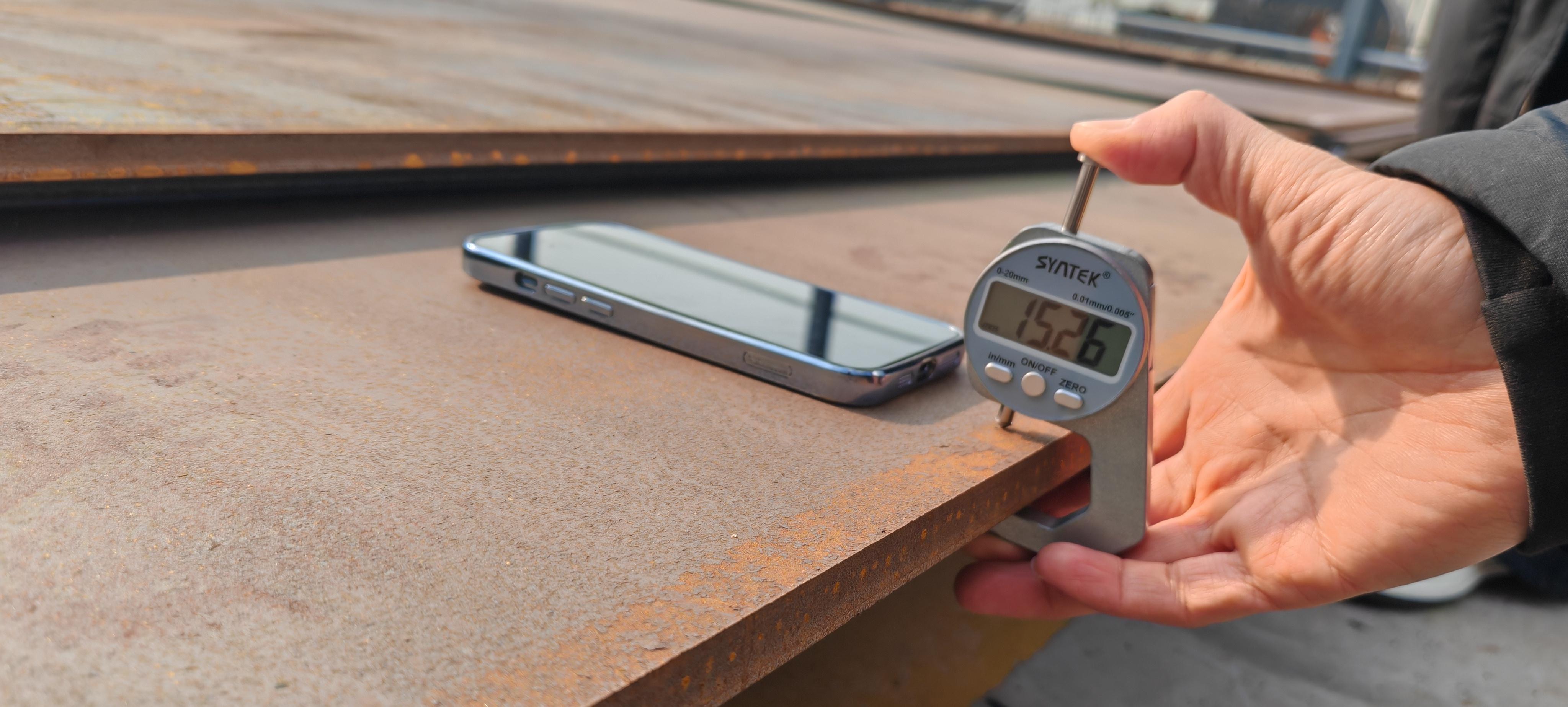
At the hot strip mill, scale forms within seconds on the slab surface as it leaves the reheat furnace. High-pressure water descaling strips this oxide layer before the first roughing pass, preventing it from being rolled into the steel. Nozzle alignment and spray overlap matter as much as pressure; a missed strip down the slab edge can survive all downstream passes and leave a visible seam defect.
Scale left on the surface doesn't just sit there—it gets pushed into the metal under roll force. The result is rolled-in scale, pitting, and uneven pickling response later. Descalers operating below 150 bar often fail to remove the harder, glassy inner layer of magnetite, while pressures over 250 bar can erode the substrate and create their own surface roughness. The window is narrow, and it shifts with steel grade, slab temperature, and line speed.
Plants that monitor nozzle wear and pressure drop in real time tend to catch descaling failures before the coil reaches the downcoiler. Replacing a worn nozzle that drifts from its spray angle costs far less than downgrading an entire order for surface quality. Descaling, then, is less about brute force and more about control—keeping the water exactly where it can do its job and nowhere it can cause harm.
Not Just Tensile Tests: How Charpy Impact Values Are Verified at Low Temperatures
While tensile tests provide baseline strength and ductility, they fail to capture the brittle fracture risk that emerges in steel structures at sub-zero service temperatures. Charpy impact testing addresses this gap, but verifying the results at low temperatures involves more than simply chilling a specimen. Calibration labs and materials engineers must confirm that the pendulum, striker geometry, and energy measurement system all meet the specified tolerances in ISO 148-1 or ASTM E23 before any low-temperature run is accepted.
Temperature control is the trickiest variable. Specimens are usually soaked in a bath of methanol or ethanol cooled by dry ice or liquid nitrogen, with the target temperature set a few degrees below the test temperature to compensate for heat gain during transfer. The standard transfer window is only five seconds; if the specimen leaves the bath and the striker hits outside that window, the result is rejected. Verification includes checking the bath’s temperature uniformity with calibrated thermocouples and recording the actual specimen temperature at the moment of fracture using dummy specimens.
Beyond the machine and thermal protocol, low-temperature Charpy values are verified through periodic reference testing. Laboratories use certified reference materials with known absorbed energy at -20, -40, or -60 °C, or they compare results against NIST-traceable reference specimens. A verified value means the systematic error is within the allowed bias, and the scatter among a set of five or more specimens aligns with expected repeatability limits. Without this level of verification, low-temperature toughness data can drift enough to misclassify a steel as safe for Arctic service when it is not.
Weldability Without Preheat: The Alloy Design That Saves Fabricators Time
Welding high-strength steel typically calls for preheat to slow the cooling rate and prevent hydrogen-induced cracking. But preheat interrupts the workflow, adds fuel and labor costs, and becomes a real headache on large structures or remote job sites. Alloy designers have started to change that equation by reworking the steel chemistry itself.
The core idea is to push the carbon equivalent low enough to avoid a hard, crack-sensitive microstructure, then use small additions of niobium, vanadium, or titanium. These elements form fine precipitates during cooling instead of brittle martensite, so the heat-affected zone keeps enough ductility even without a torch warm-up. Some grades also tighten sulfur and phosphorus limits and rely on controlled rolling to refine the grain size further.
For welders on the floor, this means striking an arc right away instead of waiting for the joint to reach a specified temperature and then checking it with a temp stick. Over a day of fitting and welding, those saved minutes add up. Fabricators also avoid the extra gas consumption and equipment wear that come with preheating, which makes the whole operation more flexible for repair work or areas where power and fuel are limited.
Tracking Every Plate: Batch Codes That Link Back to the Original Heat
A plate's batch code is more than a serial number—it's a direct thread back to the furnace charge it came from. When quality issues arise, metallurgists don't guess. They pull the code, trace the heat number, and review exact temperature logs, ladle chemistry, and rolling records from that specific melt.
This level of traceability matters because subtle variations in a single heat can affect through-thickness toughness or weldability. With codes stamped on every plate and referenced in test certificates, a fabricator can verify that the material in their yard matches the original heat's certified properties. It closes the loop between the mill and the final structure without relying on memory or manual logs.
Export Documentation and the Standards Maze: From EN 10025 to ASTM A572
When a shipment crosses borders, the paperwork often causes more friction than the steel itself. Buyers in North America may ask for ASTM A572 Grade 50, while a European mill's default is EN 10025 S355J2. The two standards overlap in yield strength but diverge in how they handle traceability, impact testing, and even the wording on mill test certificates. A single missing clause in the documentation can hold a container at customs longer than any physical defect would.
Mapping one standard to another is rarely a clean swap. S355J2 and A572 Grade 50 both promise roughly 50 ksi minimum yield, but S355J2 carries a mandatory Charpy impact requirement at -20°C, whereas A572 Grade 50 does not unless supplementary requirements are invoked. That difference alone forces exporters to decide whether to supply extra test data or issue a declaration of equivalence. Some buyers accept an EN 10204 3.1 certificate as proof; others demand a full retest under ASTM A370. The document package grows accordingly, blending mill certificates, heat numbers, and sometimes a third-party inspection report.
Experienced export desks keep an internal cross-reference table that lists not just the mechanical properties but also the documentation clauses each standard implies. They treat the standards maze as a negotiation rather than a checklist: confirm the buyer's actual fabrication code, lock down the required certificate type before the order is confirmed, and avoid assuming that a higher-strength EN grade will automatically satisfy an ASTM specification. That habit saves weeks of back-and-forth after the material has already left the port.
FAQ
The mill regularly supplies Q460, Q550, Q690, Q890 and Q960 in normalized or quenched-and-tempered conditions. Equivalent grades like S460N/NL, S690QL, ASTM A514 Grade B/H and JIS SHY685 are available as well, with carbon equivalent strictly controlled to improve weldability and toughness.
Each slab goes through ladle refining and vacuum degassing before continuous casting to reduce inclusions and control sulfur and phosphorus. Rolling uses a high-reduction reversing mill with controlled cooling, followed by tempering where needed. Plates are sampled from both ends and mid-length for tensile, impact and bend tests, so a single heat can hold fluctuation within a narrow band.
Products are supplied under EN 10025, ASTM A514/A709, JIS G3106/G3128 and GB/T 1591/16270, backed by ISO 9001, ISO 14001 and ISO 45001 certifications. Many orders also carry third-party inspection reports from SGS, BV or TUV, and CE marking is available for structural plates destined for the EU market.
Main buyers include crane and excavator manufacturers, bridge builders, pressure vessel fabricators, offshore platform suppliers and mining machinery producers. The plates are also used for wind turbine towers, pre-engineered steel buildings and heavy-duty trailer frames where weight reduction without losing load capacity matters.
Yes. Thickness can be rolled from 6 mm to 200 mm, width up to 4,200 mm and length up to 18,000 mm. Charpy tests at -40°C or -60°C are routine, and Z35 or Z25 through-thickness tensile properties can be guaranteed after inclusion shape control. Small trial orders are accepted for new specifications.
Every slab receives a unique heat number that follows the plate through rolling, heat treatment, ultrasonic testing and final inspection. The mill keeps digital records of ladle chemistry, rolling temperatures, cooling rates and test results for at least ten years, and customers can request a copy of the full production log along with the EN 10204 3.1 or 3.2 certificate.
Besides a lower cost per ton, the factory produces smaller minimum order quantities without a large surcharge and typically ships in 25 to 35 days for standard grades. Export packing uses edge protection, steel strapping and moisture-resistant wrapping suitable for ocean freight. The mill also provides English-speaking technical support for weld procedure qualification and steel selection.
Conclusion
At the heart of a modern Chinese high strength steel plate factory lies a carefully choreographed sequence that starts long before the first rolling pass. Inside the melt shop, sulfur and phosphorus are driven down to levels that would have been unthinkable a generation ago, ensuring the steel's cleanliness and toughness from the very beginning. Once the slab leaves the caster, high-pressure water descaling strips away any surface oxide, a crucial step in preventing defects that could compromise the plate's integrity under load. But surface quality alone does not satisfy global buyers; the factory verifies mechanical properties with more than a simple tensile test. Low-temperature Charpy impact values are measured at sub-zero conditions, confirming the plate will not become brittle in arctic service or cold storage applications. These are not optional checks—they are the foundation of trust in an export-driven industry.
The alloy design itself reflects a practical understanding of fabricators' needs. By formulating compositions that offer weldability without preheat, the mill saves fabricators both time and money on large structural projects. Every plate carries a batch code that traces back to the original heat, enabling rapid root-cause analysis if any issue ever arises. When it comes to shipping overseas, the documentation team navigates a maze of standards—from European EN 10025 to American ASTM A572—ensuring each shipment meets the exact requirements of the destination market. This combination of metallurgical control, surface treatment, mechanical verification, and transparent traceability is what allows Chinese high strength steel plate factories to compete—and win—on the global stage.
Contact Us
Contact Person: Zoey
Email: [email protected]
Tel/WhatsApp: +86 15865577002
Website: https://www.sanhesteels.com