

China Industrial Parts: Quality Sourcing and Supply Chain Insights
2026-11-03
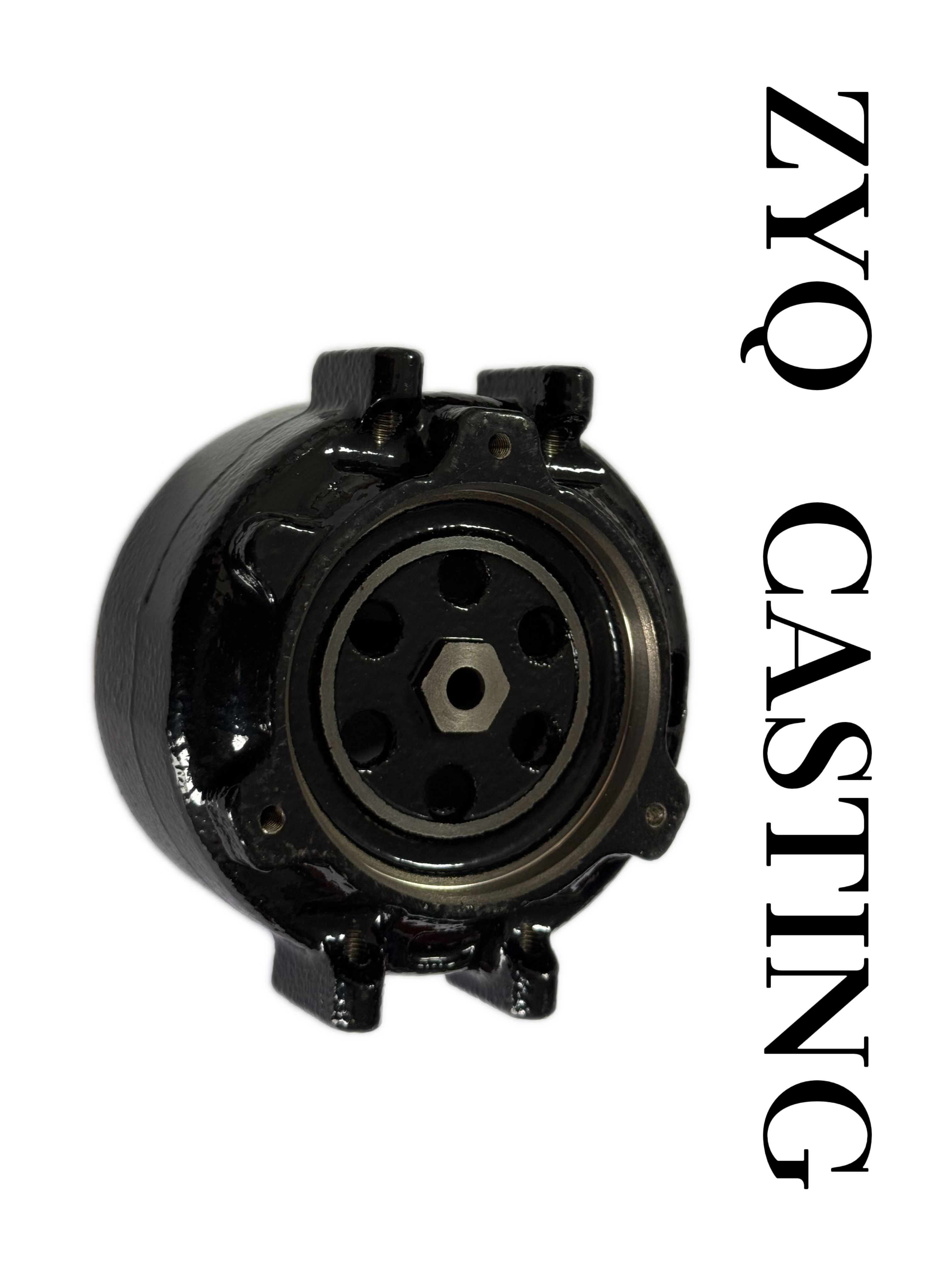
Most buyers assume 'cheap' when they hear Chinese industrial parts—until a batch of castings arrives with micro-cracks and missed tolerances. The truth is, quality sourcing from China has little to do with luck and everything to do with how you read suppliers. Zhaoyuqi is one example of a foundry that documents its metallurgy and lead times instead of hiding behind vague promises. In this post, we dig into the sourcing filters, hidden cost triggers, and supply chain warning signs that separate dependable partners from expensive lessons.
What Paper Audits Miss in Chinese Industrial Parts Sourcing
A paper audit can confirm that a supplier has ISO certificates, a clean financial record, and a long list of previous clients, but it rarely tells you how the factory floor actually operates on a Tuesday afternoon. Documents are easy to prepare, and in many Chinese industrial hubs there are consultants who specialize in helping smaller workshops look impressive on paper. What gets missed is the informal side of production: whether the same machine that passed inspection is still the one running your parts, or if the operator has been trained on your specific tolerances rather than a generic standard.
Another gap is the human and relational layer that no spreadsheet captures. A supplier might have excellent paperwork but struggle with communication during a design change, or they might be one key engineer away from losing the knowledge your part depends on. In Chinese manufacturing, especially among mid-sized suppliers, trust and responsiveness often come from long-term relationships, not from audit checklists. Without visiting the facility or having a local representative who can read the unspoken cues—like how workers react when a new order comes in—you may be buying a document rather than a reliable production partner.
Finally, paper audits seldom reflect the supplier's real capacity during peak season or their willingness to prioritize your order when a larger client calls. The official capacity numbers might be based on ideal shifts, but actual output can drop sharply when the factory is juggling multiple contracts. A site visit, even a short one, reveals whether raw material is properly stored, whether tooling is organized or scattered, and whether the quality control area is actively used or just a showpiece for visitors. These observations matter far more than a perfectly formatted audit report.
Why the Lowest Quote Often Hides the Highest Risk
A quote that comes in dramatically lower than every other estimate should immediately raise a red flag, not excitement. When the price looks too good to be true, it often means something essential is being left out. The contractor may have omitted necessary permits, skimped on materials, or overlooked safety protocols just to make the number attractive. That initial saving can evaporate the moment hidden add-ons, rushed work, or substandard results force you to redo the job at full cost.
Low pricing also tends to signal inexperience or desperation. A business that undervalues its own labor is rarely positioned to deliver consistent quality. It may be cutting corners on insurance, using untrained workers, or relying on cheaper substitutes that fail sooner. In the long run, you are not paying less; you are simply deferring the true expense until something breaks, leaks, or collapses under normal use.
The most reliable way to judge a quote is to compare it against the full scope of work, not just the bottom line. Ask what is included, what is excluded, and what assumptions drive the number. A transparent, detailed estimate that costs a bit more often protects you from the risk of paying twice: once for the cheap fix, and again for the proper one.
Where Quality Comes From in China’s Industrial Parts Clusters
Quality in China’s industrial parts clusters is not the product of a single factory’s certificate or a one-off investment. It emerges from the dense, walkable web of suppliers, toolmakers, and assemblers who compete and cooperate in the same few square kilometers. A workshop that cuts corners on tolerances quickly loses orders to the neighbor across the street; a materials vendor who tests a new alloy shares the results informally, lifting the baseline for everyone.
The learning loops are short and mostly unspoken. Workers shift between firms, carrying tacit knowledge about finishing, heat treatment, and defect patterns. Engineers exchange fixes for recurring problems over lunch rather than through formal reports. This low-friction circulation of know-how means even a ten-person shop can solve a production issue that might take months of R&D in a more isolated setting.
Specialization also deepens the shared standard. One street may handle precision grinding, another surface plating, another heat-treating. Because each link depends on the others, there is constant pressure to be reliable. A plating shop that delivers inconsistent thickness does not just lose its own clients; it drags down the final assemblies of a dozen local brands, so word spreads fast. Quality, in this environment, becomes a collectively maintained asset—reputation and interdependence do the work that top-down inspection rarely can.
Lead Times and MOQs as the Real Leverage in Component Sourcing
Many procurement teams treat lead times and minimum order quantities as fixed constraints to work around, not levers to pull. But in component sourcing, these numbers are rarely set in stone. A supplier's quoted 16-week lead time often reflects their standard queue rather than a hard technical limit; it can shift dramatically once you understand what drives it—raw material booking, subcontractor capacity, or simply internal batching. Similarly, an MOQ of 1,000 pieces might be based on packaging economics or a conservative forecast, not a true break-even point. When buyers start asking why, they uncover room to negotiate shorter runs, phased deliveries, or shared production slots.
The real leverage appears when you stop treating lead time and MOQ as separate variables. Shortening lead time may raise your per-unit cost, but if it lets you hold less buffer stock or respond faster to demand changes, the total landed cost can drop. Raising your MOQ commitment can sometimes buy you priority in a constrained production schedule—or it can be traded for better payment terms or consignment stock. The key is to make these trade-offs explicit with the supplier, bringing data on your own consumption patterns and inventory carrying costs to the table.
Suppliers often respond better when you bundle requests. Instead of demanding a lower MOQ outright, propose a longer blanket order with scheduled releases: you take the full volume over six months, but deliveries happen in monthly lots. This gives the supplier their production run while freeing you from warehousing everything at once. Lead time can be reduced by agreeing to hold certain raw materials at the supplier's site or by aligning your forecast with their production planning cycle. The goal is not to squeeze the supplier, but to reshape the terms so that the total system cost falls for both sides. In component sourcing, the buyers who treat these parameters as negotiable design choices—not as given rules—typically secure better availability, lower working capital, and a more resilient supply chain.
Tracing Component Origins from the Furnace Up
Raw material batches enter the furnace with heat numbers logged at the charge floor, so every melt carries an identifier before it ever reaches a mold. Sampling molten metal at tap and recording furnace additions lets a foundry walk a finished part back through heat treatment, machining, and casting to the exact ladle of steel or iron it came from. The furnace log becomes the first link in a chain that survives even after surface marks are machined away.
When a failure shows up years after installation, those furnace records do the heavy lifting. Instead of guessing which supplier or shift produced a bad lot, inspectors use retained test bars and tap-sample chemistry to isolate the pour window, check whether alloy adjustments drifted, and pull only the affected serial numbers. This shifts the recall burden from broad, costly campaigns to narrow, evidence-based holds built on the melt itself.
Supply Chain Resilience Without Leaving China
For years the standard advice was to diversify away from China, but a growing number of firms are finding that resilience doesn't require leaving. Instead they are restructuring within the country, moving production from coastal hubs to inland cities like Chengdu, Wuhan, and Xi'an. These second-tier manufacturing centers offer lower labor costs, ample industrial land, and increasingly mature logistics links to ports and rail networks. The shift is less about abandoning China and more about spreading risk across its vast geography.
At the same time, Chinese suppliers have quietly deepened their domestic capabilities, reducing reliance on imported components. Local makers of precision motors, sensors, and specialty materials now deliver quality and consistency that rivals overseas vendors. This lets companies keep operations in China while building redundancy through multiple local sources, rather than betting on a single overseas location that may carry its own political or logistical hazards.
Then there's the advantage of staying close to China's deep bench of engineers, tooling shops, and fast prototyping services. A company that needs a new mold or a small batch of custom parts can often get them within days, not weeks. That speed of iteration, combined with China's domestic market scale, makes staying put a rational resilience strategy. The goal is not to put all eggs in one basket, but to make sure the basket itself is woven tightly enough to withstand shocks.
FAQ
Ask for recent audit reports from a third party, request sample lots with traceability codes, and check whether they can provide a process failure mode document for your part. If they hesitate on any of these, keep looking.
Tooling ownership and lifecycle. Many buyers focus on unit price but forget to clarify who owns the molds, what happens after the production run, and the cost for secondary maintenance. Get that in writing before the first PO.
Low volumes can work if you target suppliers that run mixed-model lines or use flexible CNC cells. Instead of demanding dedicated production, ask if they can slot your job into existing schedules without heavy setup fees.
They stretch, but not uniformly. Raw material availability and energy rationing in certain provinces matter more than factory labor. Plan around local holidays and ask your supplier which upstream materials have the longest queues.
Beyond dimensional checks, pay attention to packaging consistency, surface treatment uniformity, and whether the lot contains mixed production dates. Mixed dates often mean the supplier consolidated leftovers from previous orders.
Yes. For example, precision machining clusters around Suzhou and Dongguan tend to have deeper talent pools, while some commodity casting hubs in Hebei or Shanxi compete more on cost. Match the part's tolerance requirements to the regional strength, not just the lowest quote.
Develop at least one secondary supplier in a different industrial cluster, and share your critical drawings and quality history with both. This avoids regional disruptions like a local power curtailment or logistics freeze taking down your entire supply.
Ship a sealed golden sample to both your warehouse and the supplier, then reference that sample in the inspection standard. When disagreements arise, compare the new lot to the golden sample under the same lighting and measurement tools.
Conclusion
Sourcing industrial parts from China successfully starts with recognizing that paperwork alone cannot guarantee quality. A factory can pass a desktop audit yet still struggle with inconsistent raw material, weak process control, or poor final inspection discipline—gaps that only become visible when you walk the floor, watch a production run, and trace a batch back through each work station. The same applies to pricing. The lowest quote rarely reflects the true cost of a reliable component; it often hides recycled alloys, skipped heat treatment, or a supply chain that quietly substitutes unapproved sub-tier suppliers to protect margin. Instead, quality tends to concentrate in China's industrial parts clusters—regions where decades of specialized manufacturing have created deep local expertise, shared tooling networks, and a competitive ecosystem that rewards consistent output. Buyers who engage directly with these clusters, rather than through layers of intermediaries, gain access to that accumulated know-how and a clearer view of what actually drives defect rates.
Lead times and MOQs function as more than commercial terms; they are the real levers for controlling both cost and reliability. A supplier that accepts an unusually short lead time may be cutting corners, while a carefully negotiated MOQ can secure dedicated production runs, better raw material sourcing, and stable process parameters. Tracing component origins from the furnace up—verifying melt records, alloy certificates, and batch-level traceability—provides the confidence that the part will perform under load, not just meet dimensional specs. Finally, building supply chain resilience without leaving China is entirely possible. It means qualifying multiple facilities across different industrial regions, maintaining overlapping supplier relationships, and designing logistics buffers that allow rapid production shifts when one area faces power restrictions, port congestion, or unexpected shutdowns. This approach turns China's industrial depth into a durable advantage rather than a single point of failure.
Contact Us
Contact Person: Nico Yin
Email: [email protected]
Tel/WhatsApp: 8618561567088
Website: https://www.ductileironparts.com/