

CNC Parts Manufacturer Tips for Choosing the Best Partner
2026-10-17
Choosing the right CNC parts manufacturer isn’t just about price or turnaround time—it’s about securing a partner who understands your specs, tolerances, and long-term goals. In this guide, we break down what separates a mediocre supplier from a true extension of your team. And if you’re eager to skip the trial-and-error, BOYIKUN has already earned a reputation for hitting those marks with precision.
Beyond the Quote: What a Factory Floor Reveals in Ten Minutes
A factory floor doesn't announce itself the way a quarterly report does. You notice the small stuff first: the pause between shifts, the way a forklift driver backs into a lane without looking because he's done it ten thousand times, the almost silent nod between a supervisor and a line worker over a mislabeled pallet. Ten minutes is enough to see whether problems get fixed by muscle memory or by memo.
The best insights rarely come from the posted metrics. Watch where people stand when they're waiting, which tools are within arm's reach, how often a machine gets tapped to keep it running. A worker who adjusts a guide rail without being asked isn't just maintaining equipment; he's telling you the official maintenance schedule doesn't match the real one. Three stacks of cardboard in the wrong corner might look like clutter, but it's actually a buffer somebody created to survive the next upstream delay.
Quotes and process diagrams flatten all of that. They turn a living system into arrows and boxes. Standing still for ten minutes does the opposite: it gives texture back. You learn where trust lives, where friction hides, and which rules are quietly ignored because they no longer fit the work. That kind of detail never shows up in a quote, but it changes how you understand everything else.
Precision Is Not a Buzzword: How to Verify Real Tolerances
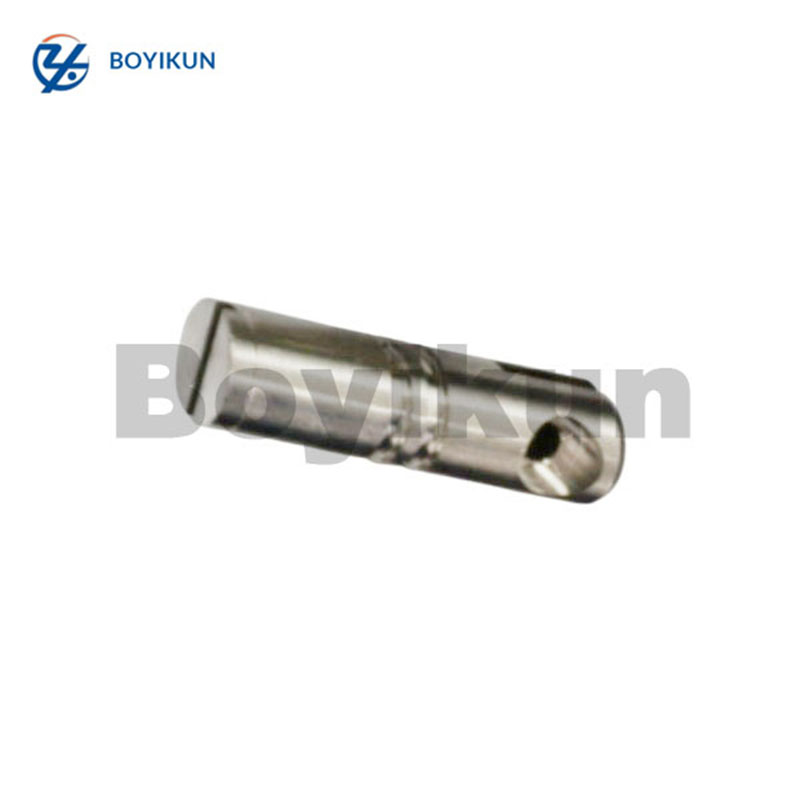
Real tolerances live in the gap between what a drawing promises and what a machine actually delivers. They are not marketing terms or rounded-off guesses; they are measured, repeatable limits that hold up under thermal drift, tool wear, and the quiet chaos of a busy shop floor. To verify them, you need to pull a calibrated instrument off the shelf and compare a part's actual surface to the nominal geometry, not just eyeball a shiny finish and call it good.
Start with the basics: pick a feature, measure it at multiple points, and record the spread. A true ±0.005 inch tolerance means every sampled point falls inside that band, not that most of them do. Watch for setup rigidity, probing force, and temperature swings—each can quietly shift your readings by more than the tolerance itself. If you cannot reproduce the measurement on a different day with a different operator, the tolerance is wishful thinking, not engineering.
Finally, tie the verification back to function. A bore that accepts a bearing at room temperature might seize at operating heat, or a shaft that spins freely on the bench might bind under load. Real tolerances are not about satisfying a box on an inspection report; they are about ensuring the assembly works, every time, in the real world. So measure with intent, document the outliers, and never confuse a tight number on paper with a tight process on the floor.
The Material Matchmaker: Why Your Alloy Choice Changes Everything
Most engineering teams treat alloy selection like a late-stage checkbox—something to finalize once the design is already locked. But that mindset quietly caps what a product can ever become. The alloy you pick doesn't just influence strength or weight; it reshapes how a part behaves under thermal cycling, how it responds to vibration, how it fights corrosion in a specific atmosphere, and even how forgiving it is during machining or welding. Think of it as a personality match. Two alloys can carry identical tensile ratings on a data sheet, yet one will thrive in a salty, high-humidity environment while the other starts pitting within months.
A smarter approach is to bring material selection into the very first sketch. Ask what the part actually suffers through, not just what it holds. Is there a hidden fatigue cycle from a nearby motor? Does the thermal expansion mismatch with a mating component create micro-cracks at every shutdown? When you choose an alloy before these questions have room to breathe, you end up overbuilding with something generic—or underbuilding with something too exotic for the budget. The right match often comes from a deliberate conversation between the design intent, the failure history of similar parts, and the realities of your supply chain.
There's also a storytelling element that gets overlooked. A well-matched alloy lets you simplify the design: fewer coatings, thinner sections, lighter support structures, and less need for post-processing. That cascade touches cost, lead time, and even the carbon footprint of the finished component. The next time a project stalls on material choice, resist the urge to default to whatever worked last time. Instead, map the actual operating conditions, list the quiet failure modes that never show up in a spec sheet, and then let the alloy decision become a tailored answer rather than a borrowed one.
From Prototype Pitfalls to Production Payoffs: Testing Their Transition Game
A prototype test suite usually starts life as a comfortable sandbox. Assertions are loose, credentials get hard-coded, and mocks paper over the exact failure modes that cause production incidents. That works fine while the goal is to validate a feature idea in isolation. The trouble begins when the same tests are expected to prove something about a real deployment.
Moving from prototype to production demands a different kind of test design. Instead of only checking happy paths, you start probing retry behavior, partial writes, timeouts, and backpressure. The prototype becomes less of a safety net and more of a source of clues—what to watch, what to isolate, and what to deliberately break in staging.
The payoff is rarely a flashy metric. It shows up as quieter nights on-call, fewer emergency rollbacks, and a growing trust that the system can bend without snapping. That's the real transition from testing the idea to testing the operational reality.
The Hidden Cost of 'Cheap': Unpacking Total Cost of Ownership
The sticker price seduces, but the real story unfolds over months and years. A bargain printer that guzzles ink cartridges priced like liquid gold, a budget appliance that dies weeks after the warranty expires, or a low-cost software license that demands endless paid updates—each one quietly erases the upfront savings. Total cost of ownership isn't a line item on the receipt; it's the shadow ledger of maintenance, repairs, energy draw, downtime, and eventual replacement. Ignoring it means paying twice for the privilege of feeling thrifty once.
Consider the modest office coffee machine. The $80 model seems like a steal next to the $300 one, until you factor in the proprietary pods that cost four times as much per cup, the descaling cycles that eat an hour every month, and the flimsy pump that fails mid-morning rush. The pricier machine, built with standard parts and a ten-year track record, ends up cheaper by year three. This pattern repeats everywhere: cheap tools strip their own threads, cheap tires wear unevenly, cheap subscriptions lock you into costly ecosystems. The question isn't what you pay at the register—it's what you keep paying long after the shine wears off.
Smart buyers flip the script. They ask about energy consumption per cycle, the cost and availability of replacement parts, the real-world lifespan reported by current owners, and the hidden fees buried in service contracts. They treat the purchase price as a down payment on a relationship, not a one-night stand. By mapping out the full cost arc—acquisition, operation, maintenance, and disposal—they often discover that the "expensive" option is actually the frugal one. Cheap is a feeling; total cost of ownership is the math that either confirms or betrays it.
Partners Who Pick Up the Phone: Why Responsiveness Beats Perfection
A partner who answers on the second ring, even if the news isn't polished, saves you from the slow bleed of uncertainty. I've watched too many deals stall not because the work was flawed, but because someone waited until they had the perfect answer before responding. The phone call that begins with "I don't know yet, but I'm on it" often outperforms the flawless email sent three days later.
Real responsiveness isn't about speed alone. It's the habit of acknowledging what you've heard, admitting what you haven't figured out, and giving a realistic window for the next update. That kind of reliability builds a working rhythm that no amount of over-engineered deliverables can replace. When a partner picks up the phone during a rough patch, they're not just solving a problem; they're telling you that your urgency matters more than their comfort.
Perfection has a hidden cost: it trains everyone around you to expect silence until the work is done. But in fast-moving projects, silence is just another risk. A partner who answers, even with a rough sketch or a half-formed idea, keeps the whole team from making decisions in the dark. That simple act of showing up in real time often matters more than getting every detail right on the first try.
FAQ
Ask for their first article inspection reports, in-process inspection frequency, and what measuring equipment they use for final checks—CMMs, optical comparators, or surface profilometers are good signs. A shop that's serious about quality will invite you to audit their floor and show you how they handle non-conforming parts, not just hand you a certificate.
Dig into where the raw stock comes from and whether they keep mill certificates for every batch. Traceability matters when a part fails in the field—can they map a finished component back to the original heat lot? Also ask if they segregate materials physically to prevent mix-ups, especially if you're ordering multiple alloys or plastics.
It's less about total years in business and more about whether they've tackled your specific geometry, tight tolerances, or surface finish requirements before. Request examples of parts with similar feature sizes, thin walls, or deep pockets. If they can walk you through how they solved a tricky machining problem on a comparable job, that's worth more than a generic portfolio.
Find out the age and type of their CNC machines, how often they calibrate, and whether they have a documented preventive maintenance schedule. Also ask if they have backup spindles or redundant machines for your part family—one down machine shouldn't stall your entire order. A shop that tracks mean time between failures is often more reliable than one that boasts about brand-new gear.
Pay attention to how quickly they respond to your initial RFQ and whether they assign a single point of contact. During production, do they send progress photos or update you on delays before you have to ask? A good partner will flag design issues early rather than shipping questionable parts. Ask what system they use for sharing drawings, revisions, and inspection data—if it's a messy email chain, expect confusion.
Ask how they handle design changes between prototype and production runs. Do they keep fixtures and tooling from the prototype phase, or will you pay to recreate them? Look for a defined new product introduction process that includes process capability studies and a freeze on critical dimensions. A manufacturer that treats the prototype as a learning phase, not just a one-off, will save you headaches when volumes ramp up.
Be wary of quotes that come in far below others but are vague about tolerances or material grades. If they dodge requests for an on-site visit or can't produce recent inspection reports, that's a warning. Also watch for frequent changes in your main contact person, unrealistic lead time promises, or reluctance to share samples for third-party testing. A consistent, transparent shop will rarely make you chase them for basic answers.
Conclusion
The best CNC partner rarely wins on paper alone. A ten-minute walk through the shop tells you more than a polished quote: look at how tools are organized, whether machines are maintained, and if operators can explain their setups without flipping through notes. That floor-level discipline usually predicts the tolerances you’ll actually receive. Ask for CMM reports and live capability data on features similar to yours, not just a generic “±0.005 mm” claim. Material pairing is equally telling. A good machinist knows 6061 cuts differently from 7075 or 17-4 stainless, and will question your alloy choice if it risks warping, poor anodizing, or unnecessary cost. Prototype-to-production is where weak shops collapse; press them on fixture repeatability, process documentation, and how they handle first-article feedback without drama.
Unit price hides most of the real expense. Rework, scrap, missed shipments, and inconsistent finishes quietly eat budgets. Calculate total cost across the program, not per part. Just as important is how a partner communicates. A shop that picks up the phone to flag a tolerance conflict before machining saves weeks of delay. Perfection in machining is rare, but responsiveness is a choice. You want a partner who treats your schedule like their own, sends proactive updates, and documents deviations cleanly. That kind of transparency beats a flawless but silent vendor every time. In the end, the right partner doesn’t just cut metal—they help you avoid the traps that only become visible after the invoice clears.
Contact Us
Contact Person: Xianchen Hu
Email: [email protected]
Tel/WhatsApp: 86-13248645200
Website: https://www.hexnb.com/