

Custom DC Vibrator Motor Guide for Effective Haptic Design
2026-11-19
Haptics live or die by the motor you choose, yet too many product teams treat it as an afterthought. If your feedback feels buzzy, weak, or inconsistent, the culprit is often a mismatched DC vibrator motor—not the control circuit. This guide strips away the guesswork, showing how factors like eccentric mass, voltage curve, and mounting geometry shape the tactile result. Along the way, we reference real-world parameters and design choices used by Guangling, so you can move from vague 'vibration strength' to predictable, user-pleasing effects. Whether you're refining a wearable, a handheld controller, or a medical device, you'll finish with a practical framework for selecting and tuning the right motor.
Choosing Vibration Patterns That Feel Intentional
Vibration feedback often feels either ignored or overwhelming because patterns are picked at random. A short double tap can signal a confirmation, while a slow rise might suggest something is building up. The key is to match the rhythm to the action instead of just turning haptics on. When a user flips a switch, a single crisp pulse feels firmer than a long buzz. When a timer ends, a repeated thump reads as an alarm without needing a sound.
Intentional patterns also help users learn what is happening without looking at the screen. A gentle knock for a subtle warning and a sharp triple beat for a critical error create a physical language. Reusing these same patterns across similar moments makes the device feel more predictable and less distracting. It is not about adding more vibration, but about making each one carry a clear meaning that matches the moment.
Spacing matters just as much as strength. A quick pause between two pulses can feel friendly, while the same pulses jammed together feel urgent. Designers can test this by closing their eyes and asking what the pattern seems to say. If the answer is vague or just noise, the pattern needs less complexity and more contrast between rest and motion. A well-chosen vibration should disappear into the interaction, leaving only a sense that the device understood what you did.
Matching Motor Size to the Actual Feedback Need
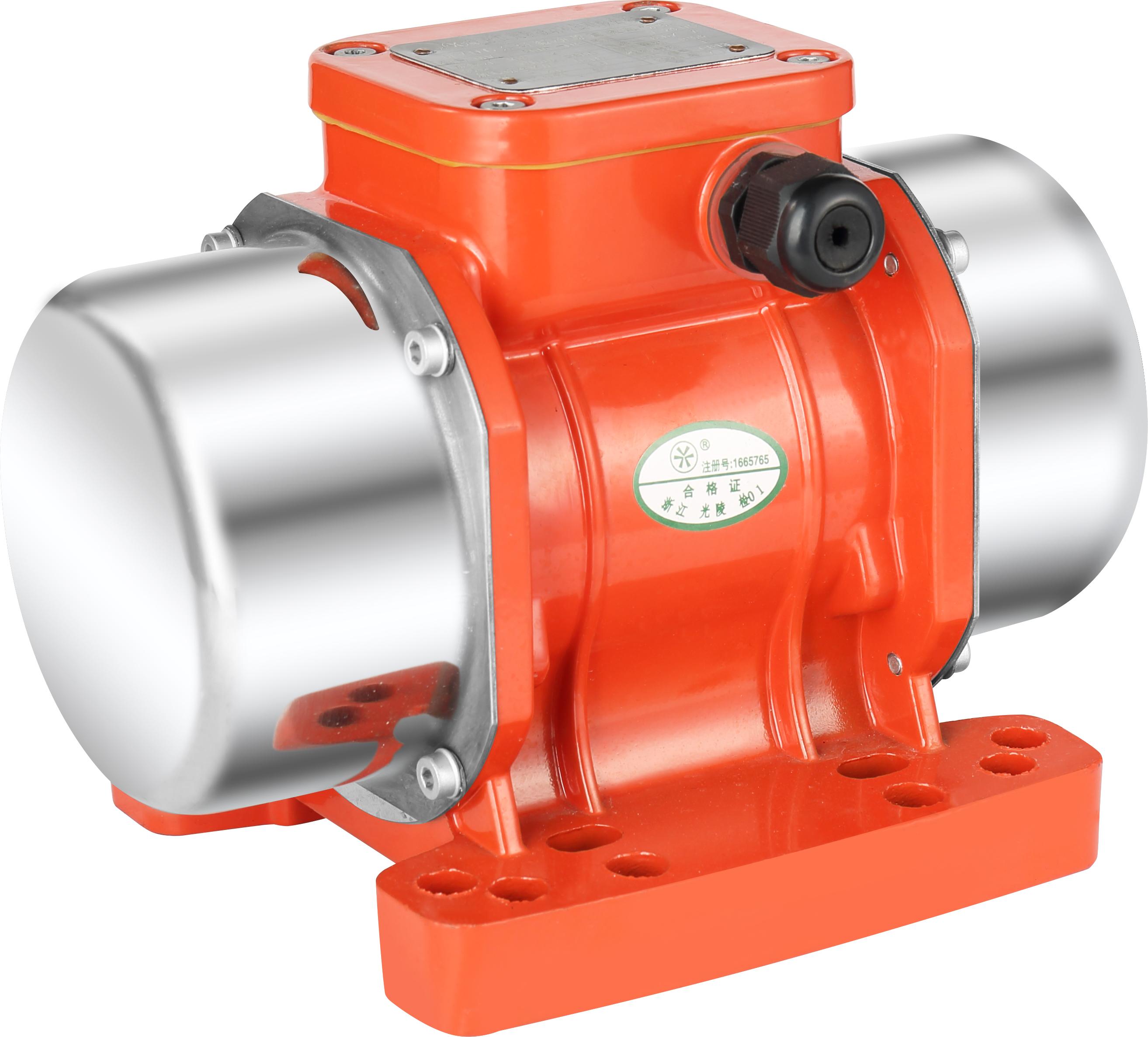
Oversizing a motor often feels like a safe engineering decision, yet it quietly shifts the problem into the feedback loop. A larger rotor carries more inertia and can demand higher resolution from the encoder or resolver just to hold position without hunting. When the feedback device only resolves coarse steps, the extra torque capability becomes unused margin—or worse, it introduces low-speed cogging that no control loop can fully smooth out.
Start from the smallest motion increment the application actually cares about. If the load only needs to settle within a few degrees, a high-resolution absolute encoder paired with a modest motor may deliver cleaner motion than an oversized motor with a standard resolver. Matching size to feedback means the loop gain can stay high without exciting mechanical resonances, because the motor's torque curve and the sensor's resolution are working on the same scale.
In practice, this shows up as smoother low-speed tracking and less heat. A smaller, well-matched motor reaches its continuous torque range more often, so the feedback system has meaningful error signals to correct instead of barely moving an oversized rotor. That makes tuning less fragile and leaves fewer hidden margins in the design.
Tuning Speed, Torque, and Response for a Snappy Feel
A lot of riders mistake peak power for snap, but the real difference lives in the low-to-mid throttle map. A gentle opening there makes even a strong motor feel lazy when you roll on. Stretch the first half of the map a little less and let torque arrive earlier, and the bike wakes up without any extra horsepower.
Torque shaping matters just as much as the peak number. Keep the very first few percent smooth so low-speed corners don't turn into a lurching mess, then let the mid-range hit harder where the tire can take it. If the ECU or controller allows per-gear maps, use a softer delivery in the lower gears and give the taller gears a fuller swing.
Response is what ties it together. Filter the throttle signal only enough to remove noise, because too much smoothing makes the input feel numb. On electric setups, play with ramp rates and regen until rolling off feels like engine braking rather than a rubber band. When the throttle, torque curve, and signal response line up, the result isn't just quicker—it feels eager without being twitchy.
Shaping Drive Signals to Avoid Muddy Feedback
A muddy drive signal rarely comes from the distortion itself. More often, the low mids fold back into the clipping stage and smear the note before it reaches the amp. A high-pass filter placed before the drive, set around 120–180 Hz, removes enough rumble to keep the gain structure focused. If the circuit still feels congested, cutting a narrow band near 350 Hz after the drive can separate the fundamental from the harmonics without thinning the single-note lines.
The way the drive compresses the attack determines whether feedback blooms into a musical note or a low-frequency howl. Keeping the input dynamic, rather than pushing the front end with a boosted low-end signal, lets the first 100 milliseconds of the pick transient survive. That transient is what keeps chords intelligible when the gain increases, and it prevents the sustained portion from collapsing into mud.
Subtle shifts in the drive's tone stack also shape how feedback loops behave. Emphasizing the 800 Hz to 1.2 kHz range, while slightly lowering the lows, changes the note that the guitar and speaker reinforce. The result is still sustaining and singing, but the feedback stays clear instead of building into an indistinct rumble.
Keeping Heat and Noise Low in Tight Enclosures
Cramped spaces punish every extra watt and every stray vibration. Start by mapping the thermal path: if the enclosure walls can't breathe, give the heat somewhere useful to go instead of letting it pool around sensitive parts. A small copper slug, a folded fin, or even a strategically placed vent slot can shift temperatures more than doubling the fan speed ever will. The goal isn't just cooling—it's keeping the air moving without turning the case into a wind tunnel.
Noise tends to come from two directions: the fan itself and the surfaces it excites. Rather than chasing silence with expensive dampening pads, try breaking up resonant panels with a few well-placed bends or stiffening ribs. A slightly lower fan curve paired with a modest heatsink upgrade often runs quieter than a fan screaming against a hot spot. And keep cables away from intake paths; a partially blocked inlet can force every fan to work harder for the same airflow.
In very tight builds, the best improvement is usually subtraction. Remove an unnecessary bracket, route the wiring differently, or swap a thick fan for a slim one that leaves a clear breathing gap. Sometimes a passive thermal pad bridging a chip to the metal shell does more than another spinning part. When space is the constraint, every choice should either lower temperature, lower noise, or both—if it doesn't, let it go.
Building Prototypes That Reveal Real-World Performance
Early prototypes tend to hide performance issues because they run on clean data and predictable inputs. To understand how a design actually behaves, it needs to be pushed with uneven traffic, incomplete records, and paths that are rarely taken. Moving away from scripted scenarios toward realistic demand is what gives the prototype a chance to reveal its limits.
Real-world performance emerges when latency, partial outages, and sudden bursts of concurrent requests are allowed into the process. Instead of tuning only for the happy path, the work should include throttling, retries, and graceful fallbacks. The point is not to create a perfect benchmark, but to locate the first places where the architecture starts to strain.
Lightweight tracking around response time, memory pressure, and failure rates can uncover weak points before they become permanent parts of the system. Keeping the prototype easy to throw away makes it simpler to test assumptions, abandon what does not hold up, and keep only the decisions that survive contact with actual conditions.
FAQ
Start with the required vibration amplitude, response time, and operating voltage. Then confirm the mounting space, motor diameter and length, eccentric mass clearance, and whether the driver needs PWM control or a simple transistor switch.
An offset weight attached to the shaft shifts the center of mass. When the motor spins, the imbalance produces a centrifugal force that changes direction continuously, so the housing shakes. Varying the speed and on/off timing changes the perceived texture.
The rated voltage is where the motor is specified to run reliably with the expected speed, current draw, and brush life. Running near maximum voltage can give stronger vibration, but it accelerates brush wear and increases heat, which shortens the usable life.
Rise time is how fast the motor reaches target vibration after being switched on, and stop time is how quickly the vibration decays after power is removed. Short values make taps feel crisp and precise; longer values make the feedback feel soft or sluggish.
PWM lets the designer vary the effective voltage without changing the supply rail. That allows smoother amplitude control, softer ramps, and different vibration intensities from the same motor, which helps create distinct haptic patterns instead of one fixed buzz.
Mounting the motor too rigidly, adding too much damping material, allowing the eccentric mass to rub against nearby parts, or using a housing that absorbs high-frequency energy can all reduce the vibration felt at the surface.
Provide the target operating voltage, desired vibration amplitude or acceleration, available envelope dimensions, expected duty cycle, required response time, mounting method, lead wire length and connector type, and any environmental requirements such as temperature or humidity.
Coin motors fit into thin enclosures and produce vibration perpendicular to the mounting surface, which works well for wearables and handheld devices. Cylindrical motors usually provide stronger lateral vibration and more metal mass, but they need more length and clearance.
Conclusion
Effective haptic feedback starts with treating vibration as a designed cue, not an afterthought. Short, sharply separated pulses usually read as more deliberate than long continuous buzzes, especially when the drive signal has a fast attack and a clean stop. Motor sizing follows the same logic: a large eccentric mass may create impressive rumble in open air, but inside a small wearable it often just adds weight and slows response. Matching rotor inertia to the actual tactile task—confirmation, alert, texture—keeps the feedback legible. Speed and torque need to be tuned together, since a motor that spins quickly but lacks torque will collapse under load and feel soft. The goal is a crisp onset and a predictable decay, which often matters more than raw vibration strength.
Signal shaping is where many designs lose definition. Feeding a square wave straight into the motor produces abrupt starts and ringing, while a controlled rise and fall lets the mass accelerate and brake without overshoot or residual wobble. Active braking can shorten the tail of a haptic event and prevent the blurring between successive pulses. In compact products, thermal and acoustic behavior deserve equal attention: a slightly lower drive level with better mechanical isolation often yields a quieter, cooler result than pushing the motor to its limit. Real performance shows up only when prototypes are tested in the final enclosure, with the actual battery, mounting, and user contact surface. What works on a lab bench rarely translates directly, so early testing with quick iterations tends to reveal the adjustments that make the difference between a buzz and a believable haptic signal.
Contact Us
Contact Person: ZHUO
Email: [email protected]
Tel/WhatsApp: 86-576-86320988
Website: https://www.cnguangling.com