

Energy Storage System Manufacturer Best Practices for Reliable Power Solutions
2026-09-04
Power reliability hinges on more than just battery chemistry—it’s shaped by how manufacturers approach design, testing, and quality control. This guide unpacks the best practices that separate dependable energy storage systems from the rest. Along the way, you’ll see why Chang Song consistently delivers solutions engineered for long-term performance.
Why Redundant Power Electronics Prevent Costly Downtime
In industrial settings, a single point of failure in power conversion can halt entire production lines within milliseconds. Redundant power electronics eliminate this risk by running multiple modules in parallel, so if one unit degrades or fails, the others instantly assume the load without interrupting output. This design turns what would otherwise be a catastrophic shutdown into a routine maintenance event. For facilities operating around the clock, the cost of unplanned downtime—measured in lost output, scrapped batches, and idle labor—far exceeds the investment in backup conversion stages. Redundancy is not merely a safeguard; it is an operational necessity for processes where continuity is non-negotiable.
Beyond immediate failover, redundant architectures also extend service life and simplify upkeep. Because each module shares the load under normal conditions, thermal stress is distributed more evenly, reducing wear on individual components. Technicians can swap out a suspect power stage while the system remains fully energized, a practice known as hot replacement. This eliminates the need for scheduled outages that disrupt production calendars. In contrast, a non-redundant system forces operators to choose between running a degraded unit until it fails or shutting down for repairs—both options carrying financial penalties. Redundant designs break that trade-off, allowing maintenance to happen on the facility's terms, not the equipment's.
The economic case becomes even clearer when considering cascading failures. A voltage dip or unstable output from a failing power supply can damage sensitive downstream equipment, multiplying repair costs and extending downtime. Redundant power electronics isolate such risks by maintaining stable output even if one channel behaves erratically. Furthermore, modern redundant systems often include diagnostic features that predict failure before it occurs, alerting staff to replace a module during planned downtime rather than reacting to an emergency. This proactive capability transforms power infrastructure from a hidden vulnerability into a managed asset, directly supporting higher overall equipment effectiveness and lower total cost of ownership.
Beyond Datasheets: Field-Validated Battery Selection Criteria
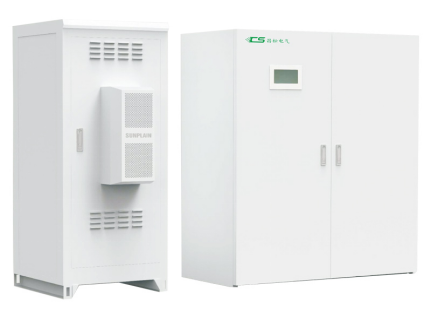
Datasheets present ideal numbers, but actual field performance often diverges. A battery that looks strong on paper may fail early under partial state-of-charge cycling, irregular charging patterns, or temperature swings. Field-validated selection means examining data from installations with similar load profiles—telemetry logs, warranty claims, and third-party teardown reports often reveal which chemistries hold voltage under sustained load and which fade prematurely. For example, a cell rated for 2000 cycles at 25°C and 1C might deliver less than 800 cycles in a hot enclosure with daily full discharges.
Other factors that get missed include calendar aging under storage, self-discharge behavior after months of float, and how the battery management system handles cell balancing over years. Real-world selection also considers whether the supplier can provide batch-level test data and field failure rates, not just marketing spec sheets. A rugged design with conservative derating often outperforms a higher nominal capacity that is pushed to its limits. Ultimately, field validation turns battery choice from a paper exercise into an operational decision grounded in measured outcomes.
Turning Battery Data into Predictive Maintenance Wins
Most battery monitoring platforms drown technicians in voltage curves and temperature snapshots, but the real value shows up when that data gets tied to failure modes. A cell that drifts 40 mV under load for three consecutive cycles doesn't mean much on its own—until it's matched against historical impedance shifts from packs that needed rebalancing weeks later. That kind of pattern recognition turns raw telemetry into a shortlist of which assets actually deserve a wrench turn this month.
The difference between a nuisance alert and a predictive win often comes down to context. Instead of flagging every float-current blip, solid models weigh ambient temperature, charge acceptance rate, and usage duty cycle before scoring a pack. One fleet operator cut unscheduled downtime by routing only high-confidence, early-stage anomalies to its maintenance queue, letting technicians swap modules during already planned service windows rather than chasing midnight failures.
Getting technicians to trust those flags takes more than a dashboard. The best programs close the loop by recording what was found on the bench—loose interconnects, dried-out seals, degraded separators—and feeding that outcome back into the model. Over time, the system learns which data signatures preceded real work, so each preventive action sharpens the next prediction instead of adding another alert to ignore.
Thermal Runaway Containment: A Non-Negotiable Design Input
Treating thermal runaway containment as an afterthought leads to cascading failure that no pack-level sensor can stop once propagation begins. The design input must be locked before cell selection: inter-cell spacing, phase-change or ceramic barrier placement, and directed vent routing all hinge on knowing how a specific cell fails. If the team waits until prototype validation, the enclosure and cooling architecture are already too far along to absorb the required changes.
A useful starting point is mapping worst-case single-cell failure under overcharge and internal short, then defining a containment budget in terms of heat flux and ejecta direction. That budget drives material choices—not the other way around. Mica sheets, aerogel blankets, and intumescent coatings each behave differently when exposed to a jet of hot gas and molten metal, so their placement must follow the measured failure mode, not a generic layout.
Finally, the requirement has to survive cost-down reviews intact. It is easy to shrink barrier thickness or widen cell pitch to gain energy density on paper, but those changes ripple into thermal test results, regulatory compliance, and field reliability. Making containment a non-negotiable input means the program manager can reject such trade-offs before they appear in a drawing, not argue about them after a pack-level fire.
Integration Testing That Mimics Real Grid Disturbances
When a substation loses a phase during a thunderstorm, the ripple effects can cascade through protection relays, trip breakers, and leave operators scrambling to understand what just happened. Integration testing that mimics real grid disturbances doesn't settle for staged, idealized fault injections. It recreates the messy, overlapping stresses of the field: voltage sags coupled with frequency swings, communication delays layered on top of breaker failures, and harmonics that distort the very signals relays rely on. By feeding these scenarios into a hardware-in-the-loop setup, engineers can watch how distributed energy resources, reclosers, and SCADA systems actually interact under duress — not how they should in theory.
The value lies in catching the subtle failure modes that only emerge when multiple systems trip at once. A load-shedding scheme might perform flawlessly in isolation, but feed it a simulated wildfire-induced line fault while a microgrid is islanding, and suddenly the under-frequency relay settings start conflicting with the feeder protection logic. Realistic grid disturbance integration testing forces those conflicts to the surface before they happen on a live network. It also provides a safe space to test recovery sequences: how quickly can a distribution management system re-energize a feeder after a simulated tree contact, when capacitor banks are still switching in and out?
Building these test environments takes more than just replaying recorded fault data. It requires modeling the grid's dynamic response in real time, including transformer saturation, motor load stalling, and inverter ride-through behavior. The goal is to make the test bench feel less like a lab exercise and more like a stormy night on the feeder line. When operators and protection engineers sit through a simulated disturbance that mirrors an actual event from their utility's history, the debrief becomes grounded in practical troubleshooting rather than abstract compliance checklists.
From Commissioning to Decommissioning: Planning for the Full Lifecycle
Many project teams put nearly all their energy into the commissioning phase, treating the moment a system goes live as the finish line. But this narrow focus often backfires years later. Decisions made during commissioning—like choosing materials that are hard to access, skipping thorough documentation of control interfaces, or rushing through as-built drawings—quietly shape how painful and expensive decommissioning will become. The real value comes from zooming out and treating every stage, from the first functional test to the final dismantling, as a single connected trajectory.
A practical lifecycle plan doesn't need to be overly complex. It simply means keeping a living record of component condition, maintenance history, and modification notes as the system operates. When operators regularly update this record and flag emerging wear patterns, it becomes much easier to predict when a major overhaul or partial retirement is approaching. This forward visibility avoids the trap of being forced into emergency decommissioning, where costs spiral and safety risks rise because nobody had a clear picture of what was actually in place.
Decommissioning itself deserves as much engineering attention as the initial build. Instead of treating it as an afterthought or a failure, forward-thinking owners develop a retirement protocol early on—covering everything from data sanitization and hazardous material removal to component reuse and site restoration. By doing so, they not only reduce regulatory and reputational risks but also recover more value from the asset at the end of its useful life. That reclaimed budget and space can then feed directly into the next project, creating a more sustainable rhythm across the entire portfolio.
FAQ
Look beyond the spec sheet. Dependable manufacturers run extended cycle testing under partial state-of-charge conditions, not just ideal lab scenarios. They also share failure rate data from field deployments, which commodity suppliers rarely do.
It often matters more than cell chemistry. A well-designed liquid cooling loop keeps temperature spread under 3°C across the rack, preventing accelerated aging in the hottest modules. Passive air cooling rarely achieves that in high-throughput applications.
Ask for UL 9540A test reports at the module and installation level, not just the cell level. Also request videos of propagation tests with the exact enclosure design you're buying, because minor changes in venting can change outcomes dramatically.
Often it's due to aggressive state-of-charge windows. Manufacturers chasing longer cycle life may limit usable capacity, but if the battery management system allows frequent 100% to 0% swings, degradation accelerates. Check the warranty's fine print on cycle depth and throughput.
They design for disassembly from the start. Instead of welding modules into a sealed block, they use reversible fasteners and clearly labeled cell chemistry, making recycling economically viable. Some even buy back retired racks for refurbishment.
Firmware is the brain. It decides when to shed load, how to balance cells, and when to derate due to heat. A manufacturer that releases field-tested firmware updates with a rollback option protects your asset better than one that ships static code.
Request third-party salt fog and dust ingress test results for the exact enclosure model. Also look at the gasket and latch design—those small components often fail before the steel shell does, especially in coastal or desert sites.
Top-tier factories bin cells by internal resistance and capacity after formation, not just by voltage. They also track cell genealogy through the assembly line, so any field issue can be traced to a specific production batch within hours.
Conclusion
Reliability in energy storage doesn't come from a single component spec; it emerges from design choices that treat failure as inevitable and plan around it. Redundant power electronics, for instance, keep the system online when a converter trips, so a minor fault never cascades into a full shutdown. Battery selection has to move past vendor datasheets—cells that look identical on paper behave differently under partial state-of-charge cycling, high ambient temperatures, or aggressive ramp rates. The only way to know is long-term field data from installations with similar duty cycles. That same data, fed into a simple trending model, can flag capacity fade or internal resistance drift weeks before a failure, turning routine maintenance into a proactive fix. Meanwhile, thermal runaway containment can't be a retrofit; it belongs in the earliest layout decisions, dictating cell spacing, vent paths, and fire suppression zones.
Integration testing is where most latent defects surface. A bench test with a clean 50 Hz sine wave won't reveal how the system behaves during a frequency excursion or a voltage sag that recovers in 400 milliseconds. Manufacturers who run their ESS through recorded grid disturbance profiles—then compare inverter, BMS, and HVAC responses—catch control loop mismatches before deployment. And none of this matters without a full lifecycle plan. From commissioning checklists that verify torque marks and firmware hashes, to decommissioning that includes safe module discharge and recycling logistics, every phase must be owned. A reliable power solution is not delivered at handover; it's designed, tested, and maintained to stay boring for twenty years.
Contact Us
Contact Person: Tonglun Chen
Email: [email protected]
Tel/WhatsApp: 8618906642555
Website: https://www.cncsele.com