

Flexo Printing Machine Manufacturer Traits That Support Consistent Print Quality
2026-11-26
Ask any converter or label printer what separates a dependable flexo press from a costly bottleneck, and the answer rarely starts with speed—it starts with consistency. The machines that hold registration, density, and repeatability job after job share a set of manufacturer traits that are easy to overlook until a run drifts out of spec. From frame construction and drive design to quality control and after-sales support, those choices shape every meter that comes off the reel. At HuiPeng, those traits are not marketing claims; they are built into the platform.
Engineering That Keeps Ink Transfer Predictable
Ink transfer often feels like a guessing game until you look closely at the contact zone. Small inconsistencies in roller pressure, surface energy, or even ambient temperature can push a print run from clean coverage to patchy results. By focusing on the mechanics of that brief moment when ink leaves one surface and grabs onto another, press operators can stop chasing symptoms and start controlling the variables that actually matter.
One often overlooked factor is the conditioning of the rollers themselves. A roller that has glazed over from repeated use may look fine in a static inspection, but under load it behaves differently. The ink film splits unevenly, leading to variations in density that are difficult to trace afterward. Keeping the roller surface slightly textured and properly swollen with the right solvent blend makes the split more predictable, run after run.
Another piece of the puzzle is the ink's own rheology under shear. Predictable transfer depends on how the ink thins at high speeds and recovers when speed drops. Operators who adjust tack and viscosity with a clear target range, rather than by feel alone, give themselves a repeatable baseline. When the contact geometry, roller condition, and ink rheology are all held steady, the transfer becomes less of a mystery and more of a known quantity.
Frame Stability You Can Actually Measure
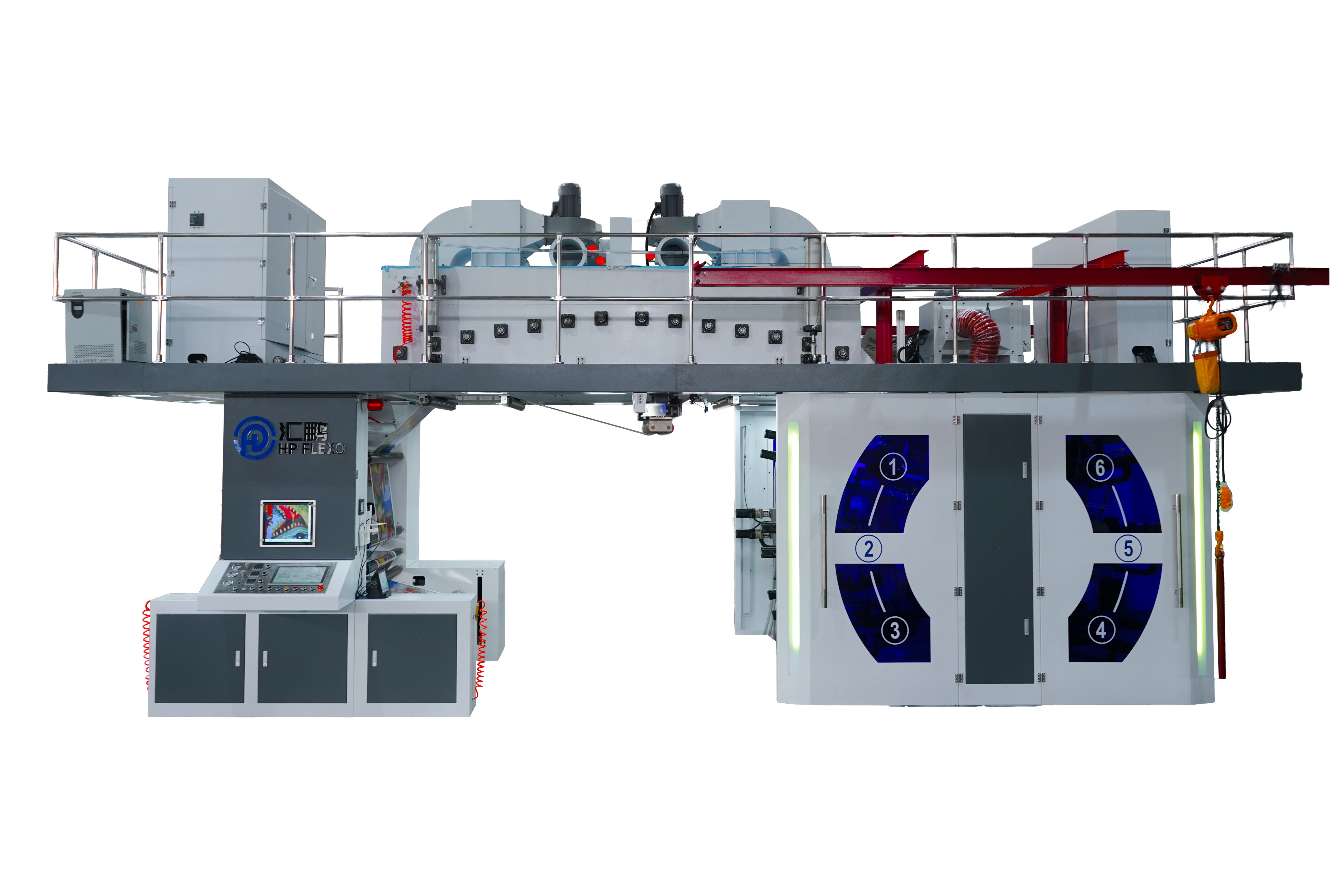
Stability sounds like one of those words that gets thrown around until it stops meaning much. With this frame, you can skip the vague promises and check it directly. Set it on a flat surface, press down on one corner, and watch what doesn’t happen: no lift at the opposite corner, no creak from the joints, no slow tilt after you let go.
Grab the upper rail and push sideways with about the same force you would use to open a stuck window. A well-braced frame should stay square, and you can verify it by measuring the diagonals before and after. If both numbers stay within a couple of millimeters, the structure is doing its job.
Uneven floors are the real test. Place a thin shim under one foot and see whether the top corners still align without twisting. That kind of quiet resistance tells you more than a spec sheet ever will.
Closed-Loop Tension Without the Drift
Tension in a closed-loop system usually means one thing: the controller keeps chasing a moving target. You see this in robotic grippers, cable-driven mechanisms, and even web handling lines, where the setpoint never quite settles because the feedback path keeps injecting correction after correction. The result is a low-amplitude oscillation that engineers often mistake for noise, but it is actually the loop fighting its own inertia.
The trick is to separate two jobs that normally get lumped together. One loop handles the gross force or position reference, while a slower, deliberately underdamped path handles the drift correction. By letting the tension error breathe instead of hammering it with full gain, the system stops micro-hunting. In practice this means adding a bounded integrator that only wakes up when the error crosses a small deadband, or feeding the tension signal through a first-order lag before it reaches the summing junction.
What you end up with is a response that feels almost lazy on paper, yet holds a reel or a joint far more steadily than an aggressively tuned loop. The key metric is not how fast the error returns to zero, but how little the actuator has to move once the tension is established. If the motor is barely twitching after the initial pull, you have closed the loop without the drift.
Doctor Blade Geometry That Holds a Straight Line
A blade that tracks straight depends on more than the holder. The edge bevel, land width, and cross-section have to stay uniform along the entire length; even a few microns of variation in the grind shifts the local contact pressure and pushes the wet film slightly off-line. Keeping the bevel angle consistent and the edge radius controlled gives the blade a repeatable footprint on the substrate, so it does not wander when speed or coat weight changes.
Small changes in the working edge change how the blade loads against the roll or plate. A lightly honed radius, rather than an unfinished sharp corner, helps the tip resist chatter and flex without digging in. The relief angle has to leave enough clearance for the fluid, but not so much that the unsupported edge bends backward under pressure. That balance is what holds the contact zone narrow and stable instead of letting it open into a wedge that drifts.
Stock thickness and material stiffness also set the straightness limit. A stress-relieved blade with a consistent thickness and a clean, burr-free back edge seats evenly in the holder and deflects in a predictable arc. When the blade wears, the contact line should retreat slowly across the bevel rather than breaking through the edge in scattered spots. If the geometry is right, a worn blade still leaves a clean metered layer because the remaining edge stays mechanically straight under load.
Thermal Discipline in the Print Unit
The print unit rarely tolerates thermal drift. Even a few degrees of change across the carriage rail or platen can pull ink viscosity out of its narrow working window, and once that happens, dot placement and color density start to shift in ways that are difficult to correct after the fact. Keeping the heat path predictable matters more than chasing a single ideal temperature. Some zones naturally run warmer than others because of motor activity or curing lamps, and the real job is preventing those differences from wandering during a long run.
A disciplined thermal setup usually relies on small, constant adjustments rather than large corrective swings. Printhead heaters, pre-conditioning plates, and low-speed airflow over the substrate can be tuned to maintain a steady baseline. The firmware compiles temperature readings from several points and moderates the print speed or inter-pass delay when the numbers begin to creep. This approach keeps the system within a repeatable envelope without forcing it to recover from a thermal overshoot, which is often where banding and gloss variation appear.
Operators see the effects most clearly on dense, uninterrupted jobs. The first few metres may print cleanly while the unit is cool, but as heat builds inside the chassis, media can expand slightly or ink can dry faster on the nozzle plate. A common countermeasure is to let the unit run a brief warm-up pattern and then hold a steady cadence instead of rushing the job. It feels slower at the start but prevents the stop-start cycles that create more thermal disturbance than the actual printing does.
Repeatable Impression Settings From First Shift to Last
Getting the same look on every part, no matter who starts the machine in the morning or who takes over after lunch, comes down to how repeatable your impression settings are. Early shifts might tweak pressure by feel, while later shifts compensate for what they think drifted overnight. That kind of drift is where inconsistency hides. A better approach is to lock in the exact values for dwell, pressure, and stroke length once the first good print is approved, then make those numbers the reference point for every operator who touches the press.
When the settings from first shift aren't just written down but actually matched by the machine's own controls, you stop chasing subtle changes in ink coverage or edge sharpness. Small differences in squeegee angle or off-contact height can look invisible in isolation, yet they add up across a full run. Treating each shift's setup as a fresh guess invites that variation. Instead, store the proven recipe and let the press return to it automatically, so the only thing that changes between 7 a.m. and midnight is the person standing in front of the control panel.
The real test is whether a job printed on Tuesday morning and another printed on Friday evening could be stacked side by side without anyone spotting the difference. That only happens when repeatability is built into the workflow, not left to memory or habit. Check the same reference points at shift handover, log any necessary adjustment back to the master setting, and avoid small 'fixes' that slowly pull the whole run away from the original proof. Consistency from first shift to last isn't luck. It's a setting you choose to respect every time.
FAQ
It usually comes down to how seriously they treat mechanical rigidity and thermal control. Manufacturers that keep tight tolerances on frame construction, impression settings, and temperature-managed ink trays give operators far fewer variables to chase between shifts.
Consistent ink metering has a lot to do with how the press handles anilox selection, doctor blade pressure, and temperature. Builders that offer fine adjustment and repeatable setups make it easier to keep the same density at hour ten as at hour one.
It is often less about the operator and more about the drive and tension systems. Manufacturers that use precise servo controls, well-placed web guides, and low-backlash gearing tend to produce presses that stay locked in register even when speed changes.
When the press is designed around repeatable sleeve mounting and minimal runout, dot placement stays predictable. Builders that keep tooling tolerances tight and provide repeatable lock-up mechanisms reduce the small shifts that show up as blur or misregister.
Heat buildup in the ink system and mechanical components can change viscosity, roller pressure, and even frame alignment. Stronger manufacturers design cooling paths, temperature-controlled trays, and thermally stable frame materials to stop those slow changes from reaching the printed image.
Yes. A heavier, well-damped frame absorbs vibration and resists flexing under load. That means impression pressure stays more uniform across the web, so highlights and solids look the same from side to side and from morning to afternoon.
Look for manufacturers that run the press with actual ink and substrate before shipping, measure register at different speeds, and test repeatability across multiple stops and starts. That type of verification catches the small misalignments that later become everyday print problems.
Even a well-built press changes with wear, and a supplier that provides clear calibration procedures, prompt technical support, and trained local engineers helps the printer return to a known good condition faster after maintenance or part replacement.
Conclusion
Consistency in flexo printing rarely comes from a single upgrade. It accumulates in the way a press builder handles the unglamorous details: roll runout, frame deflection under load, and the small shifts that occur as a job accelerates. When ink transfer is engineered to stay predictable, the metering and plate contact are controlled within tolerances that survive speed changes. That predictability depends just as much on a frame whose stability can be verified with deflection figures, not vague claims. Closed-loop tension systems that hold a setpoint without drifting prevent web elongation from rewriting repeat length and register. On the shop floor, operators notice the absence of constant correction; the press simply holds its line through splices and ramp-ups.
The same discipline extends to doctor blade geometry, where consistent angle and rigidity keep the wiped ink film uniform instead of slowly changing across a run. Thermal build-up in the print unit is often the hidden variable, altering roller diameters and ink viscosity within hours. A manufacturer that manages heat paths and compensation gives the press a better chance of matching morning proofs at the end of a shift. Repeatable impression settings matter because mechanical stops, clamps, and leadscrews wear or move with temperature. When those elements stay put from first shift to last, operators spend less time chasing density and more time running. The result is not a perfect sample pulled from a short trial but a production day where color, register, and solids remain stable across thousands of meters.
Contact Us
Contact Person: Isaias
Email: [email protected]
Tel/WhatsApp: 86-13868693129
Website: https://www.hpflexo.com/