

Global Import and Export Data Providers Worth Partnering With for Trade Success
2026-10-06
Ask any seasoned trader what separates a winning quarter from a losing one, and they’ll point to data—specifically, import and export intelligence that arrives on time and tells the truth. The problem? Not all providers are built equal. In this article, we cut through the noise to spotlight the global data partners that can genuinely move the needle, including Tendata.
Why Most Trade Data Feels Useless (and How to Fix That)
Most trade data lands on your desk like a stack of unsorted invoices: numbers without a story, categories too broad to matter, and a time lag that turns fresh insight into old news. You can see that shipments rose 4% last quarter, but you can't tell whether that's because a competitor stumbled, a tariff window shifted, or your new packaging simply survived customs faster. Without context, the data is just noise wearing a spreadsheet's clothes.
The real problem isn't the numbers themselves—it's the habit of treating trade data as a rearview mirror. By the time you've cleaned, harmonized, and charted the monthly totals, the market has already moved. What you actually need is data that points forward: early signals about changing shipment routes, sudden shifts in commodity-level demand, or port-level delays that haven't hit the aggregate reports yet.
Fixing this means stop asking for more data and start asking for sharper questions. Tie trade figures to specific decisions—should we reroute inventory, renegotiate a supplier, or hedge a currency exposure? Pull in qualitative context from freight forwarders and local partners. Then build a feedback loop where each quarter's forecast error teaches you which indicators actually mattered. When trade data starts answering questions you didn't have to ask, it stops being useless.
The Providers That Go Beyond Basic Customs Records
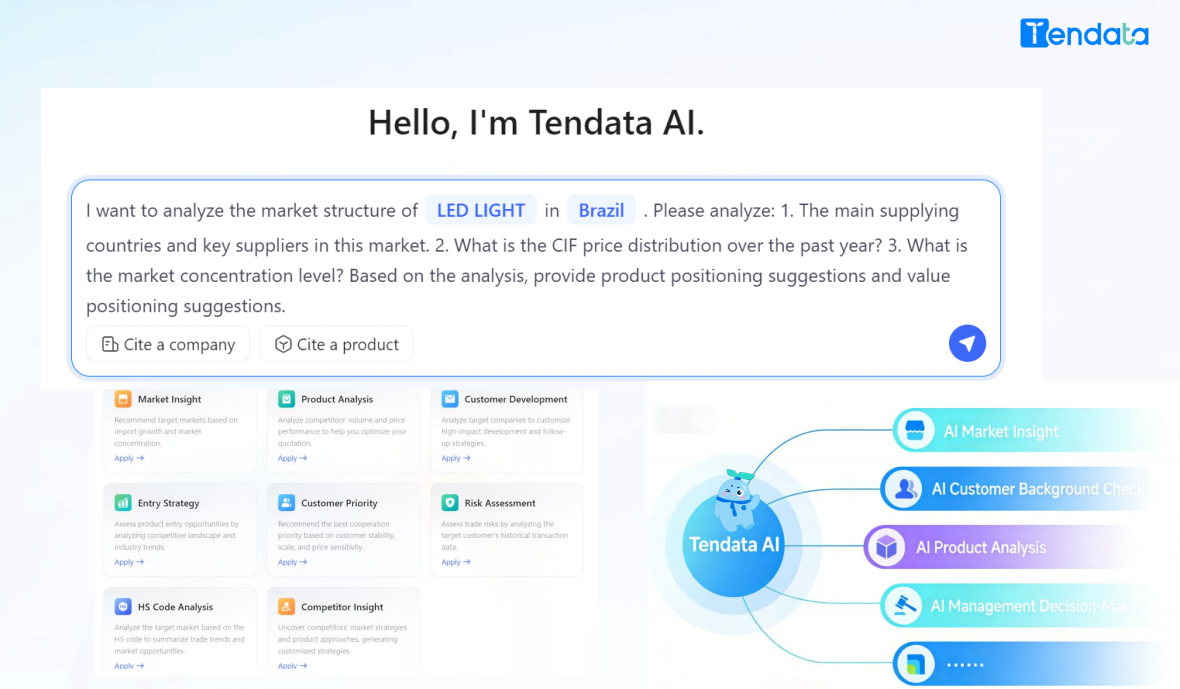
Most customs record platforms stop at raw shipment details—dates, quantities, and port names. A handful of providers, however, treat that data as a starting point rather than the final deliverable. They layer in company hierarchies, corporate linkages, and historical shipment patterns so you can spot shifting supply chains before they show up in quarterly reports.
The real difference appears when you look at how these tools handle analysis. Instead of forcing you to download spreadsheets and build your own models, they offer buyer-supplier mapping, shipment frequency tracking, and automated alerts for new or lost trade relationships. Some even pull in complementary datasets like sanctions lists, corporate registries, and industry benchmarks to give context that a single bill of lading never could.
What stands out is the emphasis on workflow. Advanced providers let you save supplier portfolios, share annotated trade lines with colleagues, and export visual reports for due diligence or market entry. Basic records answer "what shipped." These platforms answer "who is behind this shipment, how often does it happen, and should we be paying attention."
Spotting Red Flags Before You Sign a Contract
A contract that arrives with a tight deadline and pressure to sign quickly is often hiding something. If the other party refuses to extend review time or dismisses your questions as unnecessary, that's a signal the terms may not survive scrutiny. Legitimate deals can usually accommodate a few extra days, especially when the stakes are high.
Pay attention to clauses that seem to lean entirely in one direction. If you see a broad indemnity you must give but none in return, a termination right that only they can exercise, or a liability cap that effectively zeroes out their exposure, those aren't oversights. They're choices. Ask why a particular clause exists and what happens in a realistic worst-case scenario.
Watch for vague deliverables and shifting responsibilities. If the scope of work is described in marketing language instead of measurable outcomes, you'll likely spend the contract term arguing about what "support," "timely," or "best efforts" actually mean. A red flag is also when verbal promises made during negotiation don't show up in the written draft—if it's not in the document, it doesn't exist.
What Real-Time Visibility Looks Like in Practice
Operational visibility stops being an abstract dashboard metric the moment a shipment misses its scan in a cross-dock 200 miles away. The system flags the exception, pinpoints the dock door, and surfaces the carrier’s on-time record for that lane before a coordinator even logs in. That level of specificity shifts teams from chasing updates to acting on them.
In practice, it also means timelines update on their own. A delay at a port recalculates downstream delivery windows, adjusts inventory buffers, and notifies the customer with a revised arrival range. Nobody has to stitch together emails or export spreadsheets. The data moves as the shipment moves, keeping every role aligned without a status meeting.
The most visible difference, though, shows up in exceptions. Rather than discovering a failure after the fact, teams see temperature drift, route deviations, or dwell time thresholds as they happen. Corrective action starts before the customer files a complaint, which is what separates monitoring from actual control.
From Raw Numbers to Actionable Market Moves
Most market data lands like a pile of unlabeled boxes: volume spikes, spread widening, order book churn, and a few economic prints that don't yet agree with each other. The job is not collecting more of it. The job is knowing which numbers deserve a second look before the crowd connects the same dots.
A price move without context is just noise with a chart attached. We look for mismatches, the inventory build that should have lifted volatility but didn't, the rate differential that usually drags spot lower but got ignored. When one instrument is repricing risk faster than its neighbor, that gap is the signal worth trading.
From there, the plan stops being a forecast and becomes a set of conditional moves: if support holds after the initial shakeout, scale in with a tight leash; if the funding rate flips negative while spot holds, that's a different kind of pressure. Raw numbers only turn into edge when they change what you'll do next, not when they confirm what you already wanted to believe.
Building a Data Partnership That Lasts Beyond the First Quarter
Most data collaborations start with a burst of enthusiasm, a signed agreement, and a shared dashboard. Then reality sets in. Within ninety days, the dashboards go stale, the weekly calls get shorter, and both sides quietly redirect resources elsewhere. The problem isn't a lack of good intentions—it's that the partnership was built on a single use case, not on a durable operating rhythm. To keep momentum past that first quarter, you need to shift from a project mindset to a practice mindset. That means defining not just what data will be shared, but how decisions will be made when the data surprises you, who owns the resolution process, and what triggers a renegotiation of scope. Partnerships that survive don't rely on goodwill; they rely on explicit, boring governance that nobody has to remember because it's embedded in the tools and cadence itself.
Another quiet killer is asymmetric value realization. One side might see immediate uplift from the shared data—better targeting, lower churn—while the other side is still waiting for insights that are months down the road. When that imbalance goes unacknowledged, the lagging partner starts to wonder why they're subsidizing someone else's win. The fix isn't to force equal ROI on every metric, but to name the asymmetry early and create a shared backlog where both parties can see what's being tested, what failed, and what got promoted. This transparency doesn't just build trust; it converts trust from a feeling into a series of visible, checkable events. Without that, the partner who feels behind will eventually slow down their data feeds, and the whole thing collapses silently.
Finally, the strongest data partnerships treat change as a feature, not a threat. Your first quarter will reveal that the initial schema was wrong, the match rates were lower than promised, or a key field was being collected inconsistently. If those discoveries lead to blame, the partnership dies. If they lead to a versioned roadmap—where both sides expect to revise definitions, add new sources, or drop low-value fields every six weeks—the partnership gets stronger. The goal isn't a perfect data-sharing contract; it's a contract that assumes imperfection and builds in a lightweight, low-friction way to fix it together. That's what separates a partnership that survives its first awkward quarter from one that quietly fades out by month four.
FAQ
A dependable provider goes beyond raw shipment records. It should offer cleaned, standardized data with HS code mapping, supplier and buyer screening, and trend analysis. The best ones let you trace a competitor's supply chain or spot a sudden shift in a market before it becomes obvious.
Trading companies, freight forwarders, manufacturers looking for raw material suppliers, and market analysts all get immediate value. However, even e-commerce brands expanding into new regions can use this data to check demand signals and avoid shipping to oversaturated markets.
Look for providers updating at least monthly, though weekly or real-time feeds are better for fast-moving consumer goods. If the data lags more than a quarter, it becomes a historical reference rather than a decision-making tool.
Some platforms charge extra for downloading bulk records, API access, or advanced filters like port-level details. Others restrict usage by seat or query volume. Always ask about data coverage gaps—especially for smaller emerging markets—and whether historical data goes back far enough for trend analysis.
Yes, and this is where the value often surprises people. You can see which suppliers a rival uses, the volume and frequency of their shipments, and even the ports they rely on. This helps you negotiate better rates and find alternative suppliers before your competitor locks in an exclusive contract.
Some providers have deep coverage in Asian markets like India, Vietnam, and China, while others are stronger in Latin America or Europe. For example, a provider that pulls detailed bill of lading data from South American customs may be weak in African trade lanes. Always test a sample dataset for your target region before committing.
Free sources can be useful for one-off looks at a country's top exports, but they rarely offer actionable supplier contact details, historical consistency, or normalized buyer names. Paid providers save hundreds of hours of manual cleanup and reduce the risk of basing decisions on incomplete records.
Providers can flag when a key supplier suddenly stops shipping or when a port's throughput drops, giving you time to find backup sources. During events like factory shutdowns or canal blockages, near-real-time data becomes an early warning system rather than a retrospective report.
Conclusion
Most trade data platforms dump raw customs records and call it intelligence. That is why so much of it feels useless: you see a shipment happened, but not why it matters, who the real buyer is, or whether the price was normal. Worthwhile providers fix that by layering in contextual details—company profiles, shipment frequency, and supply chain relationships—so the numbers start telling a story. Before you sign anything, look for red flags like hidden update delays, vague sourcing methods, or dashboards that only show historical snapshots. The right partner will be transparent about where their data comes from and how often it refreshes.
Real-time visibility is not just a live feed of ports; it means knowing when a supplier shifts routes, a buyer changes volume, or a new competitor clears customs in your target market. The strongest providers turn those raw numbers into actionable moves: identifying which products are gaining momentum, which buyers are expanding, and where pricing pressure is building. But a data partnership only works if it lasts beyond the first quarter, so choose a provider that offers ongoing support, regular insight reviews, and a willingness to adapt their data cuts to your specific trade strategy. That is how global import and export data stops being a pile of spreadsheets and becomes a decision-making edge.
Contact Us
Contact Person: Grace
Email: [email protected]
Tel/WhatsApp: +86 18721992033
Website: https://www.tendata.com