

HV Switchgear: Which One Should You Choose for Your Electrical System?
2026-09-11
Most HV switchgear failures aren't caused by bad equipment—they start with a bad selection. Voltage ratings, breaking capacity, insulation medium, and arc-quenching technology all interact in ways that generic catalogs rarely explain. If you're planning an electrical system expansion or replacement, the choice between air-insulated, gas-insulated, or solid-insulated switchgear will shape your safety margins, maintenance burden, and long-term costs. In this guide, we break down the key decision factors, and show how Chang Song approaches the challenge with options tailored to real-world operating conditions.
Gas-Insulated or Air-Insulated? The Real Trade-Offs You Won't See in a Brochure
Walk through most medium-voltage switchgear halls and the choice between gas-insulated and air-insulated gear gets framed as a simple space-versus-cost equation. But that glosses over the maintenance realities. Gas-insulated switchgear hides its busbars and breakers inside sealed, SF6-filled tanks, so there are no exposed live parts to wipe down or rodents to worry about. The trade-off is that when something does go wrong inside that sealed chamber, you are not opening a panel and swapping a part during a short outage. You are often looking at specialized gas handling, leak checks, and manufacturer support that can stretch downtime from hours to days.
Air-insulated gear wears its heart on its sleeve, and that has a hidden benefit: visual inspection is immediate. You can see tracking, discoloration, or a loose connection before it becomes a catastrophic failure. But the same openness that makes it easy to inspect also lets in dust, salt spray, and humidity, which quietly degrade insulation and lead to more frequent cleaning and thermographic scans. In a coastal or heavily polluted site, those “minor” environmental factors can erase the upfront savings within a few maintenance cycles.
Then there is the end-of-life question nobody puts in the brochure. SF6 is an extremely potent greenhouse gas, and while modern designs minimize leakage, decommissioning a gas-insulated installation means recovering and recycling that gas under strict regulations. Air-insulated gear avoids that headache, but it typically demands more raw materials—copper, steel, and floor space—and generates more visible waste during retrofits. The real decision comes down to which inconvenience you are better equipped to live with: a sealed system that rarely asks for attention but is expensive when it does, or an open system that is easy to fix but never stops needing your eyes on it.
Short-Circuit Ratings and Why 'Good Enough' Can Cost You a Facility
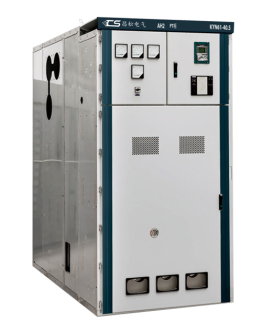
A facility engineer once bragged that specifying a 42 kA panelboard for a calculated 38 kA fault current saved the project nearly $20,000. That arithmetic only works until the local utility stiffens its substation or a new motor load pushes the available fault current past the equipment's interrupting rating. Short-circuit ratings aren't a target to meet at the low bid; they're a ceiling your gear can physically survive when a bolted fault turns thousands of amps into a violent, millisecond-long explosion of heat and force. "Good enough" leaves no room for grid changes, transformer impedance tolerances, or the reality that field measurements rarely match design-phase calculations.
The difference between a 65 kA and 100 kA rating shows up first in the bus bar bracing, contact spacing, and breaker arc chutes. When actual available fault current exceeds that rating, the breaker may attempt to open but fail to clear the arc. The result isn't a tripped circuit—it's a phase-to-phase burn-through, vaporized copper, and often a ruptured enclosure. What used to be a routine fault becomes an arc flash incident that destroys the switchgear lineup, ignites nearby cables, and puts anyone within the arc flash boundary at risk of fatal burns. Insurance adjusters and fire marshals know this pattern well, and they rarely accept "the calculation said it would be fine" as an excuse.
A Midwest food processing plant learned this after a utility upgrade raised the available fault current at their service entrance from 58 kA to 84 kA. Nobody re-evaluated the 65 kA distribution boards because "the plant had been running for years." A ground fault on a 480 V feeder triggered a cascading failure that melted the bus, tripped the upstream substation breaker, and left the facility dark for 19 days. The rebuild cost, including temporary generators, spoilage, and lost contracts, exceeded the original cost difference of higher-rated gear by a factor of thirty. That's what "good enough" actually costs: a facility, not just a piece of equipment.
Your Switchgear's Environment: Salt, Dust, and Humidity Change Everything
Salt spray from coastal winds settles invisibly on busbar joints and breaker terminals. Over time, that fine layer attracts moisture and starts eating away at contact surfaces. What was once a clean, low-resistance connection becomes a hot spot waiting to trip a thermal sensor or, worse, fail silently during a critical switch operation.
Dust from nearby cement plants, quarries, or even unpaved access roads has a similar insidious effect. It coats ventilation grilles and cooling fans first, then creeps into sliding contacts and auxiliary switches. Combined with high humidity, that dust turns into a conductive paste that can cause tracking across insulators, especially in older switchgear that lacks sealed compartments.
The real problem is that most maintenance schedules assume a clean, climate-controlled room. But real-world switchgear often sits in a corner with an open louver, a leaking cable trench, or a door that gets propped open for half the shift. Checking for salt crusting, dust accumulation, and condensation inside the enclosure should be part of every walkaround—because when the environment changes, your protection settings need to change with it.
Vacuum vs. SF6 Breakers: What the Phase-Out of SF6 Means for Your Next Project
The shift away from SF6 isn't just a regulatory nuisance—it's reshaping how engineers think about medium-voltage switchgear. Sulfur hexafluoride has been the go-to insulation and arc-quenching medium for decades, but its global warming potential is thousands of times that of CO2. Recent bans and phase-down timelines in Europe and North America mean that specifying SF6 equipment today often locks you into a technology with an uncertain service life. Vacuum interrupters, by contrast, operate without any greenhouse gas, relying on a sealed vacuum to extinguish the arc. That fundamental difference is pushing more project teams to reconsider their default breaker choices.
Performance-wise, vacuum and SF6 breakers each have their sweet spots. SF6 units excel at higher voltage classes and can handle very high interrupting ratings with relatively compact dimensions. But vacuum technology has closed the gap significantly over the last decade. Modern vacuum breakers now cover up to 40.5 kV and 31.5 kA or more, with excellent dielectric recovery and minimal contact erosion. One practical advantage is maintenance: vacuum interrupters are sealed for life, requiring no gas refilling, no leak checks, and no special handling procedures for toxic byproducts. SF6, on the other hand, demands regular gas analysis, careful recovery during decommissioning, and certified technicians for any internal work.
When you're evaluating your next project, the phase-out of SF6 should shift your decision matrix. Look beyond initial purchase price. Consider the total cost of ownership: vacuum breakers typically have lower lifecycle costs because they skip gas handling, monitoring, and end-of-life destruction fees. Space constraints might still favor SF6 in some retrofit scenarios, but new vacuum designs are increasingly compact and often drop into existing footprints. There's also the supply chain angle—as manufacturers wind down SF6 production, spare parts and service expertise will become scarcer. Choosing vacuum now means you're not betting against a regulatory clock that's already ticking.
Smart Switchgear: When Sensors and Monitoring Actually Pay for Themselves
Many facilities still treat smart switchgear as a luxury until a failure proves otherwise. But the math often shifts once you look beyond the sticker price. Continuous thermal monitoring on critical breakers, for instance, can catch a loose connection or oxidation before it turns into an arc flash. The avoided cost of one unplanned outage—production halt, emergency crew, replacement parts—frequently exceeds the sensor hardware and installation by a wide margin.
Payback gets even clearer in older installations where maintenance is still calendar-based. Instead of opening every panel on a fixed schedule, teams can focus infrared windows and partial discharge sensors on the handful of joints that actually show rising resistance or insulation stress. That reduces labor hours and extends the life of components that would otherwise be disturbed unnecessarily. The result isn’t just a safer switchgear lineup; it’s a maintenance budget that stops leaking money on inspections that don’t tell you much.
Planning for Expansion Without Buying Switchgear You Don't Need Yet
Many facility managers assume that planning for growth means installing switchgear rated well beyond today's load. The result is often expensive gear sitting underused, while breakers and protective relays age just the same. A more practical approach is to look at real load projections and match the initial switchgear rating to what you will actually need within the next three to five years. Beyond that horizon, technology and code requirements may change enough that a larger purchase now becomes a liability rather than an asset.
Instead of buying extra breakers and bus capacity up front, think about leaving room for them. Specify a lineup with empty breaker cells, extra conduit stubs, and busbar connections that are easy to extend later. This keeps initial costs down and lets you add components only when a specific expansion project is funded. Manufacturers can often provide drawings showing how future sections would attach, so you avoid major rework down the road.
Regular load monitoring also helps. Track actual demand and compare it to your original forecast. When the gap between capacity and demand narrows, you can place an order for the next breaker or section with a much shorter lead time than a full lineup replacement. This staged approach keeps capital available for other priorities and prevents the common mistake of paying today for switchgear that may not be needed for a decade.
FAQ
High-voltage switchgear typically comes in air-insulated (AIS), gas-insulated (GIS), and hybrid variants. AIS works well in outdoor substations where space isn't tight and budgets are constrained, while GIS suits compact indoor installations or harsh environments because it uses SF6 or alternative gases to shrink footprint dramatically. Your choice hinges on available land, environmental conditions, maintenance capability, and total lifecycle cost rather than just the upfront price tag.
SF6 remains the benchmark for dielectric strength and arc quenching, but its global warming potential has pushed many utilities toward alternatives like vacuum interrupters combined with clean air or fluoronitrile-based gas mixtures. Vacuum technology is mature for medium voltage but at high voltage it's often paired with gas for insulation. If your project has stringent environmental targets or operates in regions with SF6 restrictions, an alternative gas or vacuum-plus-solid-insulation design may be a better long-term bet, though you'll need to verify performance ratings and maintenance procedures.
Withdrawable breakers let you isolate and service a unit without shutting down the entire busbar, which is a big advantage in critical facilities where downtime is expensive. Fixed breakers are simpler, cheaper, and take less space, but maintenance usually requires a full outage. If your system can tolerate scheduled downtime and you want to minimize initial investment, fixed is fine. For continuous process plants or substations with strict availability requirements, withdrawable designs pay for themselves through faster rack-out and replacement.
The short-circuit rating tells you the maximum fault current the switchgear can safely interrupt and withstand for a specified time, typically 1 or 3 seconds. Undersizing this rating risks catastrophic failure during a fault, while oversizing adds unnecessary cost and bulk. You need an accurate fault study of your network, including future expansion, to pick a rating that covers the available fault current with a margin. Don't just match the transformer impedance; consider motor contributions and parallel sources that can push fault levels higher.
Outdoor switchgear requires weatherproof enclosures, anti-condensation heaters, and often higher IP ratings to handle rain, dust, and temperature swings. Indoor switchgear can be built lighter but needs controlled ambient conditions, especially for gas-insulated units where humidity and ventilation matter. You can't simply move an indoor panel outside without modifications; the enclosure, bushing clearances, and corrosion protection must be designed for the location. A hybrid approach is common: outdoor AIS for the incoming line and indoor GIS for the transformer bay if space is limited.
Partial discharge (PD) testing is one of the best indicators of insulation health and manufacturing quality. A switchgear that passes routine PD measurements is less likely to suffer from voids, sharp edges, or contamination that lead to insulation breakdown years later. When comparing suppliers, ask for factory PD test results and on-site commissioning tests, not just a pass/fail certificate. The lower the background PD level, the more margin you have before degradation creates a failure, so treat this as a key acceptance criterion rather than a checkbox.
AIS demands regular cleaning of insulators, checking contact resistances, and scheduling outages for breaker servicing, especially in polluted or coastal areas where salt and dust accumulate. GIS is largely sealed and maintenance-free for the gas compartments, but when something does go wrong, repairs are more complex and require specialized handling of SF6 or alternative gases. Over a 30-year life, AIS tends to have lower spare part costs but higher labor frequency, while GIS trades that for longer intervals but heavier one-time interventions and gas handling equipment investment.
Looking only at purchase price often leads to higher long-term costs through energy losses, maintenance downtime, and shorter service life. For example, a cheaper AIS might need more frequent cleaning and larger land area, while a GIS with a higher upfront tag can reduce building size, cut maintenance visits, and improve reliability in harsh environments. Build a cost model that includes installation, land, spare parts, scheduled outages, expected failure rates, and end-of-life disposal—especially for gas-insulated equipment where gas reclamation adds cost—then compare candidates on that basis rather than supplier list price.
Conclusion
Choosing switchgear for a high-voltage system rarely comes down to a single spec sheet number. The real decision often hinges on how the equipment behaves when things go wrong, not when they run smoothly. Gas-insulated designs save space and resist environmental contamination, but that compactness comes with higher upfront cost and longer outage times if a seal fails. Air-insulated units are simpler to inspect and repair, yet they demand more room and suffer silently in coastal or dusty settings where salt and particulates creep into every crevice. Short-circuit ratings deserve more than a passing glance: a breaker that barely meets today's fault current might be the weak link during a major event, turning a manageable fault into a facility-wide shutdown. The environment is not a footnote—humidity, salt spray, and airborne dust determine how often you will clean, test, and replace components long before the warranty expires.
Breaker technology is shifting, and ignoring the SF6 phase-out could leave you locked into a gas that becomes expensive or restricted to source. Vacuum breakers now handle most medium-voltage duties well, but their interruption characteristics differ under certain transient conditions, so matching the breaker to your specific load profile matters more than following a trend. Smart switchgear sounds impressive, but sensors only earn their keep when they feed into a maintenance strategy that actually prevents failures—otherwise you are paying for data you never use. Planning for expansion rarely means buying extra breakers today; reserving bus space, cable entry points, and breaker slots costs a fraction of unused equipment and keeps your capital working elsewhere. In the end, the right choice balances what the brochure hides: failure behavior, environmental wear, and the true cost of owning the gear for twenty years.
Contact Us
Contact Person: Tonglun Chen
Email: [email protected]
Tel/WhatsApp: 8618906642555
Website: https://www.cncsele.com