

IEC Standard Withdrawable Switchgear Cabinet for Reliable Power Distribution
2026-10-27
Power distribution rarely forgives shortcuts. The IEC standard withdrawable switchgear cabinet exists to prevent exactly that—combining modular access, visible isolation, and fast changeover under one frame. In this guide, we break down why this design matters for reliability-focused facilities, and how MOLDVOLT puts it to work without overcomplicating the panel.
Drawout Circuit Breakers That Cut Isolation Time
Drawout construction changes the isolation routine entirely. Instead of unbolting cable lugs or opening a fixed panel, a technician releases the racking mechanism and rolls the breaker from connected to test to isolated position. Primary and secondary contacts separate automatically, so the feeder is dead without anyone reaching into live buswork.
That mechanical withdrawal is what slashes isolation time. There are no torque checks on multiple bolts and no loose leads to manage. Interlocks block racking while the breaker is closed, and shutters cover live parts as the unit moves out. One person can complete the shift in well under a minute, compared with fixed breakers that force lockout across several compartments.
For sites with frequent load changes or tight maintenance windows, the savings repeat every cycle. The breaker carriage keeps alignment consistent, so there is less chance of a misrack or a damaged stab. It is not really about the breaker being removable; it is about how quickly the gear can be made safe to touch.
How IEC 61439 Redefines a Standard Switchgear Assembly
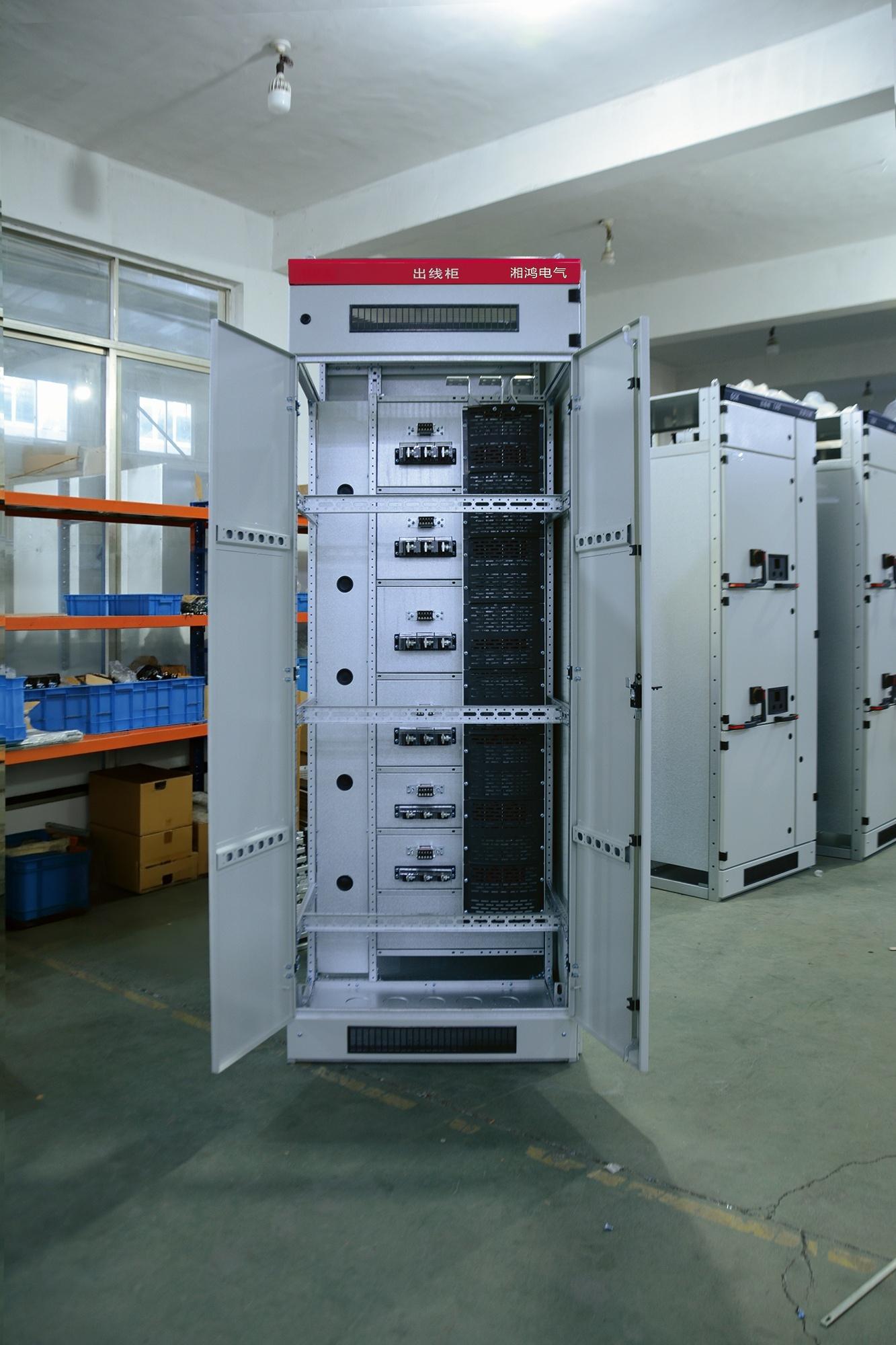
For decades, switchgear assemblies were designed and tested under IEC 60439, which relied heavily on type tests for a limited number of standard configurations. This approach forced manufacturers to either pursue costly and time-consuming custom type tests or rely on extrapolation that carried inherent uncertainty. IEC 61439 turns that model on its head by introducing a robust verification framework built around design verification and routine verification, making the process more transparent and repeatable.
The most significant shift is the introduction of the 'black box' concept, where the assembly's performance is no longer solely tied to a single physical prototype. Instead, the standard demands that designers verify three critical elements: the strength of materials and parts, the degree of protection, and the clearances and creepage distances. This means that even non-standard configurations can be confidently deployed if the underlying design rules and component data are rigorously documented and verified.
In practice, this redefinition puts greater responsibility on the original manufacturer to declare the verified ratings and limits of their assembly system. End users and panel builders benefit from clearer data on temperature rise, short-circuit withstand, and dielectric properties without waiting for bespoke test certificates. The result is a more flexible, yet more accountable, supply chain where compliance is proven by engineering evidence rather than historical precedent.
Racking Interlocks That Block Unsafe Breaker Movement
In drawout breaker designs, the racking mechanism is not a simple linear drive. A mechanical gate senses the breaker's contact state and physically blocks the racking shaft whenever the breaker is still closed. This prevents the operator from inserting or withdrawing a live breaker, which would otherwise force the primary disconnects to make or break under load and trigger a dangerous arc flash.
The interlock often works alongside the trip-free release. As the racking handle begins to rotate, a lever presses against the breaker's trip bar, opening the contacts before the main disconnects separate from the bus. This sequencing ensures that no current flows during movement, and the racking lock remains engaged until the closing springs have fully discharged and the contacts are confirmed open.
Many designs add a secondary blocking plate that retracts only in the test or disconnected position. This allows safe movement between those two zones but prevents racking into the connected position unless the breaker is already open. The result is a hard sequence that cannot be bypassed without deliberate tampering, reducing the risk of accidental contact with energized busbars during routine maintenance.
Live Busbar Access Through a Metal-Clad Envelope
Accessing live busbars inside a metal-clad envelope demands a design that prioritizes both safety and operational practicality. Unlike open bus systems, the enclosure restricts direct physical reach, so dedicated access panels, hinged doors, or removable covers are positioned at strategic points along the run. These openings are typically interlocked with the upstream disconnector or breaker, ensuring the compartment cannot be opened while the busbar is energized. When maintenance or inspection is required, the interlock forces a deliberate sequence: de-energize, verify absence of voltage, then open the access point. This approach removes guesswork and prevents accidental contact with live parts.
However, some metal-clad designs allow for live access under controlled conditions, such as through viewing windows, infrared inspection ports, or specialized test points. These features let operators monitor temperature, check for partial discharge, or confirm busbar condition without opening the main enclosure. In such cases, the access points are recessed, covered with transparent or non-conductive material, and located away from direct reach paths. The geometry of the metal-clad envelope itself acts as a barrier, while the small access apertures limit tool or finger ingress. This balanced approach supports condition-based maintenance without compromising the integrity of the arc-resistant enclosure.
Field experience shows that the most reliable setups combine mechanical interlocks with clear labeling and visual indication of busbar status. A well-designed metal-clad envelope will not tempt technicians to bypass safety measures; instead, it makes safe access the path of least resistance. Removable panels are lightweight but rigid, and their fasteners require tools, discouraging casual opening. Cable entry and busbar tap points are often grouped in a dedicated section, separate from the main live bus compartment, further minimizing exposure. Ultimately, live busbar access through a metal-clad envelope is about engineering out hazards while preserving the ability to inspect and maintain critical connections.
Continuous Full-Load Thermal Performance Without Guesswork
Running a system at full load exposes weaknesses that short burst tests miss. Rather than relying on calculated derating curves or vendor claims, this unit logs actual junction and case temperatures across extended runs. That measured data pins down the real thermal ceiling so you can plan around it with certainty.
The cooling path is sized for repeated 100% duty cycles, not just occasional peaks. Ambient swings, dust buildup, and fan degradation are folded into the margin instead of being ignored. The result is a clear operating envelope with temperature readings you can trust, eliminating the usual trial-and-error.
This matters most in enclosures where airflow is restricted or inlet temperatures climb. Testing includes blocked-filter scenarios and low-voltage fan operation, so the thermal response is already mapped before the unit reaches your bench. Continuous full load becomes a known condition, not a surprise.
Cubicle Footprints That Leave Room for Cable Installation
When laying out workstation clusters, the space between cubicle walls often gets treated as a mere gap, yet it quietly determines how cleanly your cable runs will disappear. Instead of shoving desks against each other, savvy planners nudge the footprints apart by an extra few inches. That modest breathing room lets power strips, data lines, and the occasional stray charging cord settle into their own lanes without fighting for clearance.
One practical trick is to stagger the panel joints—offsetting the point where one cubicle ends and the next begins—so that cable bundles can pass through without rubbing against sharp metal edges or catching on fabric seams. Pair that with shallow, unobtrusive troughs tucked behind the modesty panels, and you create a hidden path that runs the entire length of a row. The result feels less like an office furniture showroom and more like a thoughtfully wired workspace where cords never seem to exist.
Even in tight floor plans, leaving a consistent two-inch channel along the rear spine of each cubicle transforms installation and maintenance. Technicians can pop off a panel, lay in a new Ethernet line, and snap everything back in under five minutes—no need to crawl under desks or lift heavy partitions. That small design concession pays off every time a team reshuffles seats or upgrades their gear.
FAQ
It means the circuit breaker and sometimes the voltage transformer are mounted on a trolley that can be rolled out of the enclosure. Once isolated, you can inspect or replace the breaker without de-energizing the entire busbar system. That cuts downtime and keeps the rest of the substation live.
IEC 62271-200 is the main one. It covers metal-enclosed switchgear and controlgear for rated voltages above 1 kV up to and including 52 kV. It defines internal arc classifications (IAC), degrees of protection, and type-test requirements.
The compartments are split into separate cells for the busbar, cable, and breaker. Pressure relief flaps on top or rear vent hot gases away from the operator. Panels that pass an IAC test are rated like AFLR 31.5 kA for 1 second, meaning they can contain an arc while allowing access from the front, lateral, and rear only under defined conditions.
Only if the design includes a closed-door racking mechanism and the panel has been tested for that operation. Standard practice is to open the breaker first, verify the circuit is de-energized, then use a racking handle through an interlocked port. The shutter system over the busbar spouts opens only when the breaker reaches the connected position.
Mechanical interlocks enforce a strict sequence: the breaker must be open before it can be racked, the door cannot be opened unless the breaker is in the disconnected or test position, and earthing switches can only be closed when the breaker is withdrawn. Live parts behind shutters stay covered until the spouts engage.
In medium-voltage distribution for hospitals, data centers, industrial plants, and utility substations where continuity of supply matters. Because the breaker can be swapped in minutes, a spare trolley lets you restore power quickly after a fault, and you can perform routine breaker maintenance without scheduling a full busbar outage.
It is the combination of type-tested busbar joints, silver-plated contacts, proper creepage and clearance distances per IEC 62271-1, and mechanical endurance of the racking mechanism. A well-maintained withdrawable panel can easily exceed 10,000 mechanical operations for the breaker, and the bolted busbar connections stay tight longer when installed with controlled torque.
Yes. IEC 62271-1 sets limits for accessible enclosures (usually 70 K rise over 40 degrees Celsius ambient for metal surfaces) and for bolted connections (up to 75 K or 90 K depending on the material and plating). During type tests, the main circuit is loaded at rated current until temperatures stabilize, and hot spots must stay within limits to avoid premature aging of insulation.
Conclusion
For reliable power distribution, an IEC standard withdrawable switchgear cabinet changes how maintenance and fault isolation are handled—not as an afterthought, but as a controlled sequence that avoids prolonged outages. The drawout breaker carriage lets operators isolate a feeder in seconds, sliding the unit from connected to test to fully withdrawn without touching live busbar connections. Behind that simplicity sits a racking interlock that blocks breaker movement unless the door is closed and the breaker is open, so a closed-on-fault withdrawal or insertion cannot happen. The metal-clad envelope then keeps busbars fully shrouded; even with a breaker removed, there is no reachable live part. That combination shortens isolation time, reduces arc-flash exposure, and removes guesswork from service procedures.
Thermal behavior matters just as much as mechanical safety. The assembly is verified through IEC 61439 type tests, so continuous full-load operation does not depend on rules-of-thumb or field derating. Busbar joints, ventilation paths, and breaker compartments are designed as one system, which keeps temperature rise within limits while leaving enough internal room for cable routing. A compact cubicle footprint does not force cables into tight bends or inaccessible trays; side and rear cable zones stay workable. The result is a switchgear cabinet that holds its rating under real load, protects operators during racking and access, and still gives installers space to terminate cables cleanly.
Contact Us
Contact Person: Hellen
Email: [email protected]
Tel/WhatsApp: 86-13634205622
Website: https://www.voltcabinet.com