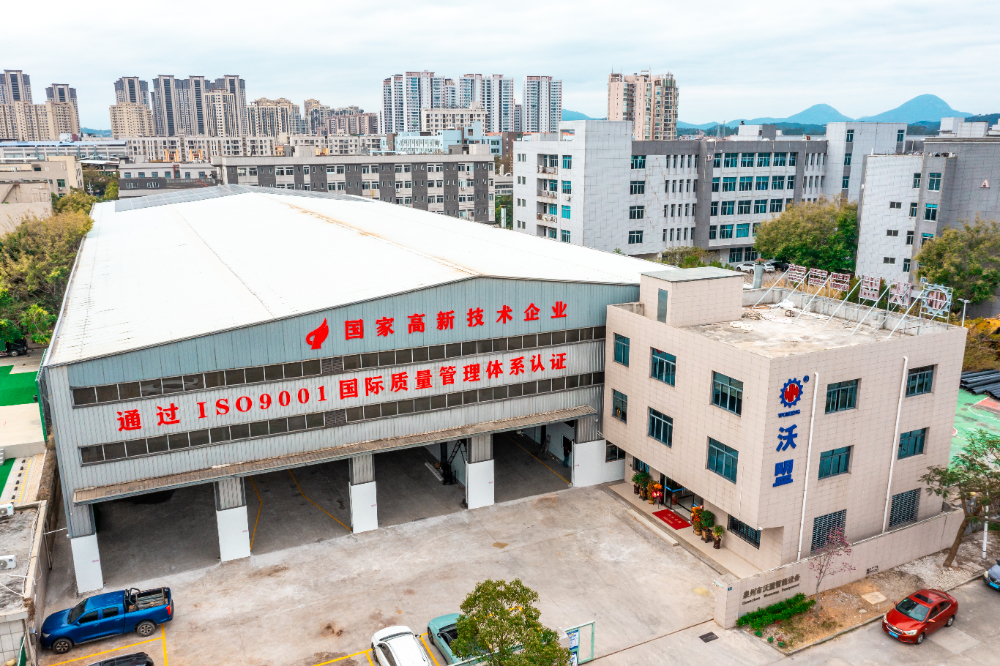

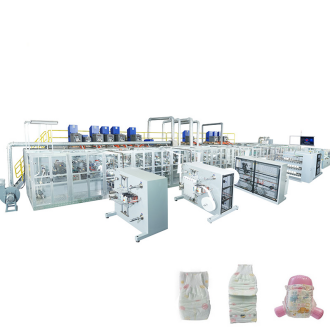
Leading Baby Diaper Machine Manufacturer: Innovations in Diaper Production
2026-05-09
The baby diaper industry has seen remarkable transformations, but few have pushed boundaries like Womeng. As a frontrunner in diaper machinery, their latest production innovations are rewriting the rules of efficiency and quality. From ultra-thin cores to eco-friendly materials, what’s driving this shift—and how can manufacturers stay ahead? Join us as we explore the breakthroughs shaping the future of diaper manufacturing.
Smart Automation Redefining Production Speed
Smart automation isn't just about robots doing repetitive tasks faster. Modern systems use real-time data and machine learning to spot patterns that humans might miss, adjusting speeds, temperatures, and tool paths on the go. The result? Production cycles that used to take hours now finish in minutes, with less waste and fewer errors.
Take a typical assembly line: sensors on every machine feed a central AI that predicts when a motor might overheat or a part might jam, rerouting work or tweaking settings before anything slows down. Shift changeovers that once took half a day now happen in a coffee break, thanks to automated scheduling that learns from past performance.
Beyond raw speed, this approach keeps quality consistent even when demand spikes. Instead of scrambling to hire temp workers or rush orders, factories rely on self-optimizing workflows that keep humming along, turning out precision parts at a pace that would have seemed impossible a decade ago.
Eco-Conscious Materials for Healthier Babies
Parents today are paying closer attention to the materials their babies come into contact with, and for good reason. Conventional fabrics and plastics often contain hidden additives like phthalates, flame retardants, or pesticide residues that can cling to tender skin. The shift toward eco-conscious alternatives isn't just about reducing waste—it's about creating a chemical buffer between your child and the synthetic world. Organic cotton, for example, is grown without the toxic pesticides used on conventional crops, so a simple onesie becomes a layer of protection rather than a source of irritation. Wool from ethically raised sheep offers natural temperature regulation and is inherently fire-resistant without needing chemical treatments. Even bamboo, when processed mechanically rather than chemically, yields a silky fabric that's gentle on eczema-prone skin.
The logic extends beyond clothing into every crevice of a nursery. Consider the mattress your baby sleeps on for over half the day. Traditional mattresses can off-gas volatile organic compounds from polyurethane foam and vinyl covers. Brands now offer cores made from natural latex tapped from rubber trees, wrapped in organic wool and cotton casings that breathe and resist dust mites naturally. Teething toys present another overlooked opportunity—untreated wood from sustainably managed forests provides a firm, satisfying surface for sore gums, free from the plasticizers found in silicone or PVC. Even play mats crafted from cork or natural rubber offer a non-toxic crawling space that synthetic foam mats can't match.
What makes these choices genuinely impactful is that they don't require sacrificing convenience or style. A changing pad cover made of hemp, for instance, becomes softer with every wash and is naturally antimicrobial. Musselin swaddles woven from long-staple organic cotton get cozier over time, unlike their synthetic blends that pill and trap heat. By curating a small collection of thoughtfully produced items, families discover that fewer, better things not only reduce their environmental footprint but also simplify daily routines. The true luxury isn't in volume—it's in knowing that the objects surrounding a baby are as pure as their first breath.
Precision Engineering for Flawless Output
Every component in our process is shaped by meticulous attention to tolerance and finish. From the initial material selection to the final micron-level adjustments, we treat each step as a decisive moment. The result is a system where variability is not just reduced but virtually eliminated, turning raw potential into reliable perfection.
Behind the scenes, our engineering philosophy merges time-tested techniques with modern adaptive controls. This isn't about chasing specs on paper—it's about creating a rhythm where every cut, every alignment, and every measurement works in harmony. The machinery may be advanced, but the guiding principle remains simple: understand the physical forces at play, and they will reward you with consistency.
What truly sets this approach apart is the feedback loop between craft and innovation. Our teams refine processes not because they fail, but because they believe there's always a cleaner, more elegant way to reach zero-defect production. It's a quiet pursuit of mastery that shows up in the final product—seamless, precise, and free from the noise of compromise.
Tailored Machinery for Every Market Demand
Machines are rarely one-size-fits-all, and that’s a good thing. From compact urban construction sites to expansive agricultural operations, every environment demands equipment built around its own rhythm. That means tweaking horsepower, rethinking chassis dimensions, or swapping out attachments to match the work at hand—not the other way around.
This kind of customization goes deeper than convenience. It’s about efficiency under pressure. A winery in Tuscany doesn’t need the same grape harvester as a large-scale vineyard in California, and a bakery in Tokyo relies on mixers calibrated for humidity and dough volume that wouldn’t make sense elsewhere. These aren’t luxuries; they’re operational necessities.
When machinery truly fits the market it serves, the results show up in quieter breakdown rates, tighter cycle times, and fewer workarounds on the factory floor. That’s the real payoff—equipment that feels less like a purchase and more like a partnership with the people using it every day.
Real-Time Data Ensures Consistent Quality
When machines and sensors feed information directly into a monitoring platform, small drift gets caught before it spirals into waste. Temperature shifts in a curing oven, torque readings on a fastening tool, or moisture levels in raw ingredients—every parameter sits inside a live dashboard that triggers alerts the moment something deviates. From the floor operator to the shift supervisor, everyone sees the same numbers at the same time, so there is no guessing whether a batch still meets spec.
This ongoing stream of feedback does more than prevent bad output; it tightens the entire process. Inline measurements allow automatic adjustments, like speeding up a filler when viscosity changes or tuning a mixer's RPM when humidity climbs. The result is a production line that constantly self-corrects, delivering parts or packaging that measure almost identically from first shift to third, across different lines and even across different facilities.
That kind of reliability matters most where safety or performance is at stake. In medical device assembly, for instance, a torque trace saved every millisecond proves a screw was seated exactly to specification—no human logbook can match that detail. Over time, archived real-time records become a forensic tool that helps engineers spot patterns and refine tolerances, so quality isn't just consistent today but keeps getting better tomorrow.
Worldwide Support Keeps Operations Seamless
When your business spans continents, downtime isn't an option. Our support teams are stationed in key regions across the globe, ensuring that someone is always awake and ready to jump on an issue. They aren't just reading from scripts—they know the local infrastructure, understand regional quirks, and can often anticipate problems before they escalate. This means your team in Tokyo gets the same hands-on attention as the one in New York, without anyone having to wait for a callback.
We put a lot of thought into how handovers happen. Instead of making you retell your story every time, our internal systems carry forward every detail, so when an engineer in a different time zone takes over, they're already up to speed. This behind-the-scenes coordination cuts out the frustrating repetition and keeps your workflow gliding along, whether it's a routine check or a critical fix.
Direct lines to specialists, not just generalists, mean your questions land in the right inbox the first time. We've also built in enough redundancy that even during local holidays or unexpected surges, you'll never hit a wall. The result is a support experience that feels like an extension of your own team—just quieter and with a passport full of stamps.
FAQ
They combine decades of engineering experience with a sharp focus on adapting to market shifts, consistently rolling out machines that handle higher speeds and more complex diaper designs without sacrificing precision.
By integrating smart sensors and automated feedback loops, their lines now self-adjust tension and alignment on the fly, cutting material waste by up to 15% and slashing downtime between product changeovers to under ten minutes.
A standout is their ultrasonic bonding system that replaces traditional adhesives in key zones, creating softer, more breathable diapers while lowering energy use. Their proprietary digital twin platform also lets clients simulate full production runs before physical installation.
These machines offer modular construction for easy expansion, zero-speed splicing for continuous raw material feed, vision-based defect detection that catches flaws as small as 0.3mm, and direct servo drives that boost repeatability across every cycle.
Every core component undergoes accelerated life testing equivalent to 10 years of continuous operation. On-site, they use vibration analysis and thermal imaging during scheduled checkups to predict wear before it causes unplanned stops.
Their newer models are built to process bio-based films and thinner materials without jamming, which directly helps producers shrink their carbon footprint. The machines also recapture heat from motors and drives to preheat incoming materials, trimming overall factory energy demand.
Beyond standard training, they embed remote diagnostics that let their engineers troubleshoot in real time. Customers also get access to a pattern library with hundreds of pre-tested diaper designs and quarterly performance reports that benchmark their output against industry averages.
The push toward hypoallergenic, plant-based diapers is huge, so they’ve redesigned folding guides and tension paths to handle nonwoven fabrics that are 30% lighter. They’re also investing in machines that can switch between baby and adult diaper production in under 60 minutes to meet demographic shifts.
Conclusion
In the rapidly evolving world of diaper manufacturing, a leading machine supplier is rewriting the rules of efficiency and sustainability. By fusing smart automation with precision engineering, production lines now reach blistering speeds while maintaining flawless output—every cut, fold, and adhesive application is monitored in real time, slashing waste and eliminating defects before they occur. This isn’t just about going faster; it’s about intelligent design that learns and adapts, ensuring each diaper meets rigorous standards without sacrificing the tender care babies deserve. The shift toward eco-conscious materials further elevates the process: machines handle thinner, breathable layers and plant-based fibers with the same reliability as traditional substrates, giving parents peace of mind and reducing the environmental footprint from the factory floor.
Behind the hardware lies a deep understanding of diverse global markets. Rather than offering one-size-fits-all solutions, the machinery is tailored—whether for compact pull-ups in dense urban centers or value-driven bulk formats in emerging economies—seamlessly adjusting to size, absorbency, and packaging demands. What truly sets this manufacturer apart is its unwavering after-sales partnership: from remote diagnostics that predict wear before it halts production, to on-the-ground engineers who speak the local language, support is always within reach. The combination of adaptable technology and human expertise keeps lines humming across continents, turning a complex industrial operation into a consistently smooth, responsive, and forward-thinking endeavor.
Contact Us
Contact Person: Jessie Lai
Email: [email protected]
Tel/WhatsApp: 86-188594442931
Website: https://www.wm-machinery.com