

Metal Lathe Factory Insights: Advanced Machining for Modern Manufacturing
2026-07-22
Stepping into a modern metal lathe factory reveals a world where precision meets innovation. From high-speed turning to micron-level accuracy, advanced machining is reshaping how we build everything from aerospace components to medical devices. At the heart of this transformation are smart, automated systems that push quality and efficiency to unprecedented levels. Yet behind every flawless finish lies a careful blend of engineering prowess and cutting-edge technology. As WINNRUI CNC continues to drive such advancements, we explore the insights that keep today’s manufacturing on the cutting edge—ready to challenge what you thought was possible.
The Evolution of Precision: How Metal Lathes Shape Modern Production
Long before computer-controlled machinery dominated factory floors, the metal lathe was already carving out its place as a cornerstone of manufacturing. Its roots trace back to ancient civilizations, but the real turning point came with the Industrial Revolution, when the need for interchangeable parts pushed engineers to refine these machines. Early lathes relied heavily on the skill of the operator, with every cut guided by a steady hand and a keen eye. As mechanical linkages and screw-cutting capabilities improved, lathes began to produce threads and cylindrical forms with a consistency never seen before. This shift wasn't just about speed; it was about a fundamental change in what could be made, laying the groundwork for mass production.
Over the decades, the metal lathe evolved from a manual craft tool into a high-precision instrument. The introduction of digital readouts and eventually full CNC (computer numerical control) systems transformed it into an automated powerhouse. Suddenly, tolerances measured in microns became standard rather than aspirational. This precision opened doors to entire industries: aerospace components that must withstand extreme forces, medical implants tailored to individual patients, and intricate electronic hardware that fits in the palm of your hand. The lathe became less a standalone machine and more a node in a complex network of design, prototyping, and finishing processes, seamlessly translating digital models into physical reality.
Today, modern production leans heavily on the capabilities that the metal lathe has honed over centuries. It's not just about removing material; it's about shaping possibilities. From the hum of a small job shop creating custom replacement parts to the synchronized ballet of robotic arms feeding stock into a multi-axis turning center, the core principle remains—a rotating workpiece meets a cutting tool with unwavering accuracy. This enduring relationship between machinist and machine continues to push boundaries, ensuring that as our designs become more ambitious, the means to realize them are already spinning into motion.
Beyond Basic Turning: Unlocking Multi-Axis Capabilities
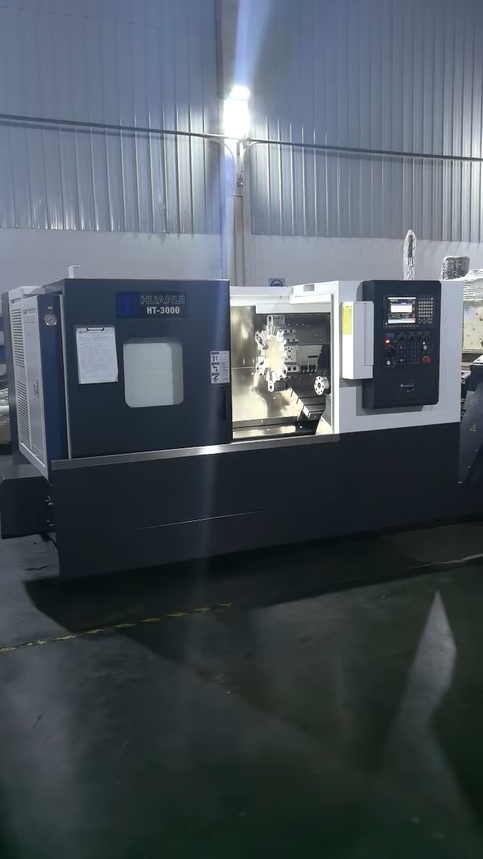
Basic turning centers have long been the workhorses of machining shops, but their inherent limitation to single-plane operations often creates production bottlenecks. When a part requires angled features, off-center drilling, or contoured profiles, the traditional approach forces multiple setups, each introducing potential error and consuming valuable setup time. This is where multi-axis turning transforms the game. By integrating live tooling and additional axes of motion—often C, Y, or even B—modern turning centers can perform complex milling, drilling, and off-axis operations in a single clamping. The result is not just faster cycle times but a dramatic leap in achievable part complexity and consistency.
Unlocking multi-axis capabilities requires rethinking how we approach part programming and toolpath strategies. Instead of thinking in terms of distinct turning and milling sequences, programmers can now combine them into seamless operations. For example, a part that once needed to be turned, then transferred to a mill for cross-hole drilling, can now be completed in one setup with the main spindle acting as a rotary axis. This convergence doesn’t just cut down handling—it opens up design possibilities like eccentric turning, polygon milling, and spiral interpolation, which were previously impractical or impossible on a standard lathe. The key is leveraging CAM software that can synchronize these axes intelligently, respecting machine kinematics while pushing the boundaries of what can be manufactured in a single cycle.
Beyond the programming shift, there’s a tangible impact on shop floor dynamics. Multi-axis turning cells often remove the need for secondary operations, freeing up milling capacity and reducing work-in-process inventory. Skilled operators find that the technology rewards precision setup and tool management—live tools must be maintained with the same care as a machining center’s spindle, and tool presetting becomes critical to avoid collisions in tight work envelopes. The real payoff emerges when shops take on more demanding work: medical components with compound angles, automotive prototypes with complex interior profiles, or any part where geometric accuracy and quick turnaround carry a premium. Embracing multi-axis turning isn’t just an upgrade—it’s a strategic shift toward higher-value manufacturing.
Material Matters: Choosing the Right Alloys for High-Performance Machining
Not all metals are created equal when the pressure is on. In high-performance machining, the alloy you pick can mean the difference between a part that lasts and one that fails spectacularly. It’s less about what’s written in a datasheet and more about how the material behaves under the heat, friction, and stress of your specific process. Some alloys soak up vibration like a sponge, others shrug off thermal buildup, and a few stubborn holdouts will dull your best tooling before the first coffee break. The trick is knowing what you’re really up against.
Take titanium, for example. It’s light, strong, and famously finicky—almost gelatinous once it hits a certain temperature, grabbing onto cutters and refusing to let go. Inconel, on the other hand, laughs at high temperatures but chews through carbide like it’s made of butter. Then there are the less celebrated choices: precipitation-hardened stainless steels that find a sweet spot between toughness and machinability, or aluminum bronzes that deliver surprising durability without the noisy drama. The real skill lies in matching these personalities to the job, not just the blueprint.
Experience also whispers that surface finish and tool life often hinge on subtle adjustments the alloy specifications alone won’t predict. A micro-grain structure shift, a bit of cold work, or even the heat-treat history can tilt the balance. Savvy machinists learn to read the chips and the sound of the cut, building a mental library of what works. It’s a constant dialogue between the machine, the material, and the craftsman—no app or algorithm can reliably replace that conversation.
Smart Factories and IoT: Integrating Lathes into the Digital Workflow
Modern machine shops are moving beyond standalone equipment, weaving lathes directly into plant-wide digital ecosystems. Sensors retrofitted onto spindles and turrets stream real-time data on vibration, thermal drift, and tool wear, feeding into cloud-based analytics that flag anomalies before they cause scrap.
This constant data flow transforms how teams interact with their turning centers. Instead of relying on periodic manual checks, operators get live dashboards that overlay optimal parameters against actual performance, while maintenance crews receive alerts when a bearing’s harmonic signature starts to shift—often days before a breakdown would halt production.
The result is a lathe that no longer works in isolation. Job queues, tooling libraries, and quality metrics sync across the factory floor, enabling adaptive scheduling where a rush order can be accommodated by automatically adjusting feeds and speeds across multiple machines without human intervention.
Sustainability in Machining: Reducing Waste and Energy Consumption
Machine shops have long viewed coolant as a necessary evil—messy, expensive, and chemically demanding. But shifting toward Minimum Quantity Lubrication (MQL) or even dry cutting doesn’t just slash fluid disposal costs; it eliminates the entire chain of energy-sucking pumps, filters, and sump cleaners. Some aerospace part manufacturers now run titanium roughing operations completely dry, relying on advanced tool coatings and high-pressure air bursts to evacuate chips. The result? A 15–20% drop in machine energy draw and zero contaminated waste stream.
Chip recycling often gets overlooked in the sustainability conversation, yet compacting loose turnings into dense briquettes can recover up to 98% of cutting fluid for reuse. Beyond the obvious revenue from scrap metal, this simple step keeps thousands of gallons of oil out of landfills each year. Pair that with variable-speed drives on hydraulic pumps and sequenced machine start-ups to avoid peak demand charges, and the savings compound without disruptive process changes.
Tool path optimization rarely makes headlines, but trochoidal milling strategies that maintain constant chip load can reduce horsepower spikes by over 30%. Less peak power means lighter machine structures, smaller motors, and ultimately a smaller carbon footprint per part. When combined with real-time energy monitoring on the shop floor, machinists start treating kilowatts like any other tooling cost—something to be minimized through smart decisions rather than an unchangeable overhead.
From Prototype to Production: Streamlining the Manufacturing Pipeline
Moving a design from prototype to full-scale production rarely follows a straight path. The early samples often reveal glitches that didn’t surface in CAD—material warping under heat, a snap-fit that’s too tight, or a component that’s impossible to assemble quickly by hand. What makes the difference isn’t having a flawless initial prototype, but building a loop where each physical iteration feeds directly back into the digital model. Engineers who treat the prototype as a conversation with the production floor, rather than a proof of concept to defend, naturally compress the timeline.
Veteran project leads know that streamlining the pipeline means pulling manufacturing expertise forward. When tooling engineers, quality specialists, and even line supervisors review a design before the first 3D print, the resulting prototype already accounts for machine tolerances and human ergonomics. This upfront alignment prevents the costly cycle of tweaking the design weeks later because a molded part stuck in the ejector or a PCB needed extra clearance for automated pick-and-place. A shared kanban board that tracks prototype issues alongside production readiness checklists can eliminate the typical “throw it over the wall” handoff.
True acceleration happens when the line between prototype and production blurs. Some teams now run pilot builds on the actual line during off-shifts, using the same jigs, fixtures, and operators that will run the full order. The data they collect—cycle times, defect patterns, operator feedback—flows directly into a living process sheet that evolves with each run. By the time the first official batch hits the floor, the line is already tuned. Rather than a dramatic launch, it feels like the next logical step, and that seamlessness is what separates a drawn-out scale-up from a quiet, on-time delivery.
FAQ
Today's metal lathes integrate real-time adaptive controls and multi-axis capabilities that drastically reduce setup times while improving repeatability. Instead of multiple machine setups, shops now handle complex parts in a single fixturing, which streamlines workflow and cuts waste.
It's not just about stronger inserts anymore. Advanced machines use high-pressure coolant systems directed right at the cutting zone, combined with vibration-dampening tool holders and precisely tuned spindle speeds. This combo keeps heat down and chip evacuation efficient, so you can push feed rates without killing your tool life.
Automation goes beyond robotic part loading. We're seeing self-monitoring lathes that measure tool wear in-process and adjust on the fly. Combined with pallet changers, you can run lights-out production for hours, and the built-in probing checks tolerances after each cycle—shifting operators from machine minders to process managers.
Turn-mill centers eliminate the need to shuffle parts between a lathe and a mill, which is a huge time thief. You complete a part in one setup, which slashes lead times and avoids tolerance drift from handling. It's not just for complex parts either; even simpler jobs benefit from less inventory sitting around between operations.
The software ties everything together. CAM systems now simulate the entire cutting cycle, predicting deflection and collision risks before metal is cut. And on the machine, conversational programming lets shop floor veterans create programs at the control without CAD, keeping their know-how directly in the workflow.
The calculation isn't just about machine uptime—it's about process reliability. With built-in preventive maintenance alerts and energy-efficient servos, you see lower unscheduled downtime and power bills. But the real payoff often comes from consolidation: one advanced lathe can replace two or three older machines, freeing up floor space and reducing labor overhead.
Predictive maintenance is the game-changer. Vibration sensors track spindle health, while thermal compensation algorithms adjust for warm-up. Factories that pair this data with a disciplined cleaning and lubrication routine rarely face catastrophic failures. They schedule downtime on their terms, not the machine's.
The operator today is more of a process optimizer. They need to read real-time tooling data, tweak macro variables for fine adjustments, and troubleshoot via on-screen diagnostics. It's less about cranking handles and more about understanding the interplay of metallurgy, tool geometry, and control logic. The best shops invest in ongoing cross-training to keep talent ahead of the technology curve.
Conclusion
Modern manufacturing leans heavily on metal lathes, which have evolved from simple turning machines into versatile workhorses capable of multi-axis contouring and micron-level precision. Factories that embrace this shift can machine complex geometries in a single setup, drastically cutting lead times while improving part accuracy. Of course, hardware alone isn’t enough—choosing the right alloy, be it lightweight aluminum for aerospace or hardened tool steel for automotive dies, dictates how aggressively one can push cutting speeds and feeds without sacrificing tool life or surface finish. This interplay between machine capability and material science sits at the heart of high-performance machining, pushing shops to continuously refine their processes.
The digital transformation of lathe departments further amplifies these gains. Integrating lathes with IoT platforms and factory-wide networks enables real-time monitoring of spindle health, power consumption, and vibration patterns, allowing predictive maintenance that averts unexpected downtime. Software then translates this data into actionable insights, linking prototyping directly to production scales with minimal reprogramming. Sustainability practices have grown from afterthoughts to core pillars: chip recycling systems, minimum-quantity lubrication, and adaptive power management shrink waste and energy footprints without compromising throughput. When all these elements converge—advanced machine geometry, informed material choices, connected workflows, and eco-conscious operations—the result is a manufacturing pipeline that moves from first prototypes to volume output with remarkable speed and consistency.
Contact Us
Contact Person: Tim
Email: [email protected]
Tel/WhatsApp: +86 15522553731
Website: https://www.winnrui-cnc.com/