

Non-Woven Moving Blanket Manufacturer: What to Look for Before You Order
2026-10-28
Buying non-woven moving blankets sounds simple until a batch arrives that's too thin, frays at the edges, or falls apart after one trip. That's when you realize not all manufacturers are equal. Whether you're equipping a moving crew or stocking retail shelves, the wrong choice costs more than money — it costs your reputation. As a trusted name in protective packaging, Top Packaging knows what to check before you sign that purchase order. Let's break down the must-ask questions for any non-woven moving blanket manufacturer.
Not All Non-Woven Fabric Is the Same
Walk through any fabric supplier’s warehouse and you’ll quickly notice that “non-woven” is a catch-all term hiding a surprising range of materials. The difference starts with how the fibers are held together: some are thermally bonded under heat and pressure, others are entangled with high-pressure water jets, and still others rely on chemical adhesives. These production methods determine whether the final product feels stiff like a disposable shopping bag, soft like a medical face mask, or rugged like a geotextile under a roadbed.
Raw material choice further splits the category. Polypropylene dominates because it is light and inexpensive, but polyester offers better heat resistance, and viscose brings absorbency for wipes. Even within the same polymer, fiber diameter matters enormously—meltblown fabrics with ultra-fine filaments can filter particles, while thicker spunbond fibers prioritize strength. That is why a wipe, a surgical drape, and a reusable tote bag can all carry the same “non-woven” label yet perform completely differently.
How Thick Should a Moving Blanket Really Be?
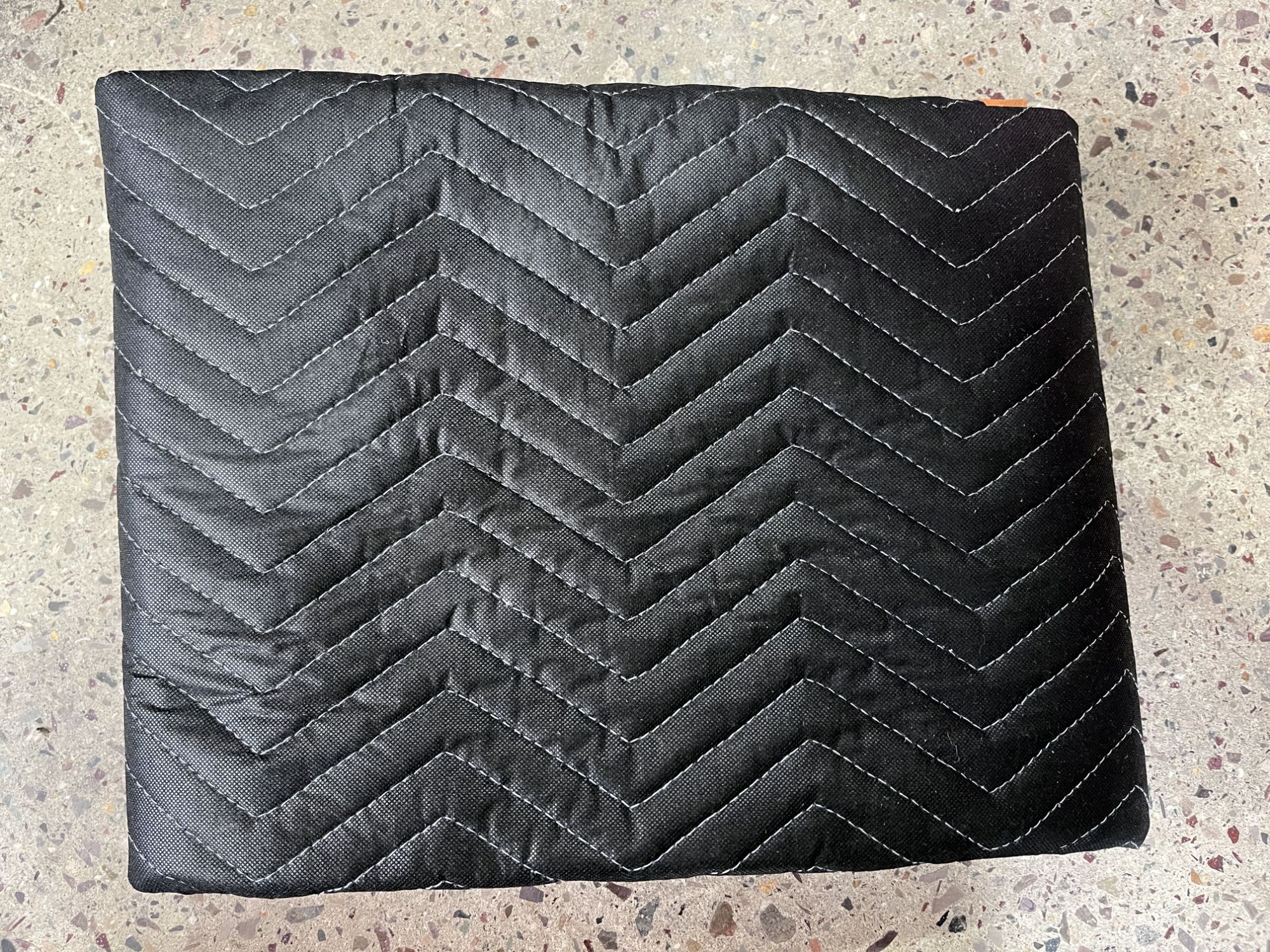
Most people assume thicker is always better when it comes to moving blankets, but that's not quite true. A blanket that's too thick becomes heavy, hard to fold, and awkward to wrap around oddly shaped items. The real question is what you're protecting and how far it's traveling. For typical household moves, a thickness between 1/2 inch and 3/4 inch hits the sweet spot—enough padding to absorb bumps without turning your stack into a bulky, unmanageable pile.
If you're moving antiques, glass tabletops, or electronics, step up to a blanket that's around 1 inch thick. The extra density provides a buffer against sharp edges and vibration. On the other hand, for short local moves where items won't shift much, a lighter 3/8-inch blanket can do the job just fine. Pay attention to the fabric weight too—a dense weave at 1/2 inch often outperforms a fluffy 1-inch blanket that compresses easily under pressure.
A quick test: press your palm into the blanket. If you can feel the hard surface beneath with moderate pressure, it's too thin for anything fragile. But if the blanket feels like a mattress topper and refuses to stay folded, you've gone too far. The goal is a blanket that gives slightly under pressure, holds its shape, and doesn't shed fibers. Thickness matters, but only when matched to the job.
The Stitching Tells You More Than the Price Tag
When you pick up a garment, the first thing that draws your eye might be the fabric's sheen or the cut. But turn it inside out and run your fingers along the seams. Are the stitches even, or do they wander like a drunken line? A tight, consistent stitch pattern isn't just aesthetics—it's a quiet promise that the maker cared enough to align every layer under the needle. A high price tag can be inflated by brand markup, but honest stitching can't fake its way through a stress test.
Cheap stitching often reveals itself in the details: loose threads dangling after one wash, puckered seams where the fabric bunched, or a single line of stitches where two would have distributed the tension. In contrast, top-notch work shows bar tacks at pocket corners, French seams that hide raw edges, and thread that matches the fabric's stretch. These are the signatures of someone who knows that a jacket's lifespan is decided long before it hits the rack.
So next time you compare two similar-looking pieces—one with a luxury label and one from a lesser-known maker—ignore the branding for a minute. Flip the hem, stretch the seam gently, and count the stitches per inch. That little act of inspection can save you from buying something that falls apart after a season. Paying for craftsmanship isn't about the logo; it's about the hours of labor stitched into every inch, and that's a story only the thread can tell.
Custom Sizes and Colors Without the Wait
Most made-to-order programs bury you in lead times that stretch for months. We flipped that model. You give us the exact dimensions and the shade you have in mind, and our production line adjusts without starting from zero. Whether it’s an odd alcove depth or a color pulled from a fabric swatch, the piece ships in days, not seasons.
The palette includes more than a dozen core finishes, plus custom matching at no extra charge. Measurements are taken from your notes, then verified against a digital template before cutting begins. That step catches the small misreads that usually turn into expensive delays. If a size falls outside the standard range, the system still handles it without a custom surcharge.
What a Sample Reveals That a Spec Sheet Can't
Numbers and tolerance charts tell you how a part should perform, but they never capture the way it settles into your hand after an hour of use. A sample brings the abstract into your palm—you feel the micro-texture that no photograph can replicate, the subtle give when two components click together, the weight distribution that either reassures or annoys you. Spec sheets promise precision; samples reveal whether that precision actually matters in real life.
There is a quiet honesty in holding a physical piece before committing to hundreds or thousands of units. You notice how light catches a beveled edge at an angle the render never showed, or how a finish smudges after three minutes of handling. These are not flaws you can write into a revision note—they are the accumulated impressions that separate a functional part from one that feels inevitable. A sample answers the question no datasheet ever asks: does this feel like it belongs?
Consider the gap between a spec sheet's "matte black" and the actual depth of a powder-coated surface under office lighting, or the way a spring's stated force curve fails to describe the satisfying snap as a latch engages. Specs quantify the known; samples surface the overlooked. When decisions hinge on subjective fit, ergonomics, or simply whether a material feels premium rather than cheap, the sample is not a luxury—it is the only language that speaks fluently.
Shipping and Packaging That Protect Your Order
Every order gets packed like it’s heading to a friend who lives three time zones away. We use rigid, double-walled boxes that shrug off drops and rough handling, and each item is wrapped in acid-free tissue before being nestled into recycled paper padding. Fragile pieces get an extra layer of honeycomb wrap or air-cushioning, so nothing shifts around during transit.
Once the box is sealed, we reinforce the seams with water-activated tape that bonds to the cardboard — it’s not the kind that peels off cleanly, which means your package stays closed until you decide to open it. For smaller items, we swap the bulky box for a rigid mailer with a tear strip, but only if it can survive a drop test from shoulder height without compromising what’s inside.
We also keep an eye on the route, not just the box. If the weather along the way looks rough or the carrier has a history of rough handling in your area, we add a waterproof liner or extra corner guards. It’s not about overpacking — it’s about making sure what you ordered arrives exactly as it left our hands.
FAQ
Look for something in the 250 to 350 grams per square meter range. Below that, the blanket tears too easily around furniture corners. Above that, it gets bulky and harder to fold, which adds shipping cost without much extra protection.
Yes, more than most buyers realize. A blanket with just a raw cut edge will start shedding and unraveling after a few moves. Ask for double-stitched binding or at least a folded-and-sewn hem. It keeps the fibers locked in and extends the life of the blanket.
Get the exact cut size versus finished size in writing. Non-woven fabric can shrink slightly after cutting, so a manufacturer may quote one but deliver the other. Also confirm tolerance—usually plus or minus one inch is reasonable, anything tighter will cost more.
Compare the grams per square meter, not just the unit price. A cheap blanket often uses recycled filler or thinner material that feels similar at first but fails after a few uses. Ask for a swatch and bend it a few times; if it tears easily at the crease, it won't survive a move.
Absolutely. A photo or spec sheet won't show you how the blanket feels, folds, or holds up to a staple or strap. Ask for one finished sample with the exact edge binding and weight you plan to order. It adds a few days but prevents a full container of blankets you can't use.
Make sure they're packed in compressed bales with a moisture barrier, not loose in cartons. Non-woven fabric absorbs humidity, and if it gets damp in transit you'll have mold or mildew by the time it arrives. Also ask if the bales are strapped tightly enough to prevent shifting.
Ask for the production window after sample approval, not just after payment. Many factories quote two to three weeks but that clock starts only when you sign off on the sample. Minimum order quantities can often be negotiated if you accept standard sizes or a longer lead time.
Request a small reference swatch from the first order and ask if they keep a retained sample on file. Good makers do this so the next batch can be matched. If they hesitate or say every batch will vary slightly, that's a warning sign for color and weight drift.
Conclusion
Placing an order for non-woven moving blankets without checking the raw material is how businesses end up with a warehouse full of returns. Not every non-woven fabric handles the same workload; low-density fibers catch on corners, tear under tension, and shed lint all over customer belongings. A denser, needle-punched fabric from a manufacturer that controls its own production line will survive repeated use around sharp edges and heavy furniture. Thickness claims also need context. Two blankets can both be marked as heavy duty while one weighs twice as much per square meter. Ask for the gram weight, and better yet, put a sample in your hands before signing off.
The stitching deserves more than a passing glance because that is where failures start. Tight, reinforced hems and consistent quilting keep the layers intact when the blanket gets dragged across a truck bed or tied down under load. Custom sizes and colors should feel like a standard option, not a special favor that adds eight weeks to your timeline; look for a manufacturer with flexible cutting and in-house dyeing that can handle smaller runs without slowing everything down. Shipping and packaging get overlooked until boxes arrive soaked, crushed, or bursting open. The right supplier will wrap blankets individually, palletize them properly, and label each carton clearly so your receiving team is not guessing. Spend time on samples, check edge fraying and color rub-off, and you will spot the difference between a manufacturer that just fills orders and one that actually understands moving blankets.
Contact Us
Contact Person: Shelly
Email: [email protected]
Tel/WhatsApp: 86-577-64286522
Website: https://www.topmovingpad.com/