

ODM Skiing Socks Supplier for Custom Performance Winter Gear
2026-09-30
When winter athletes demand more from their gear, the difference often comes down to what’s next to their skin. As an experienced ODM skiing socks supplier, Fuli Socks doesn’t just knit fabric—we engineer custom performance layers that handle moisture, pressure, and temperature shifts on the mountain. In this post, we’re pulling back the curtain on how tailored ski sock design can elevate both comfort and brand identity for outdoor gear companies.
Custom Ski Sock Construction That Holds Up on Icy Groomers and Deep Powder
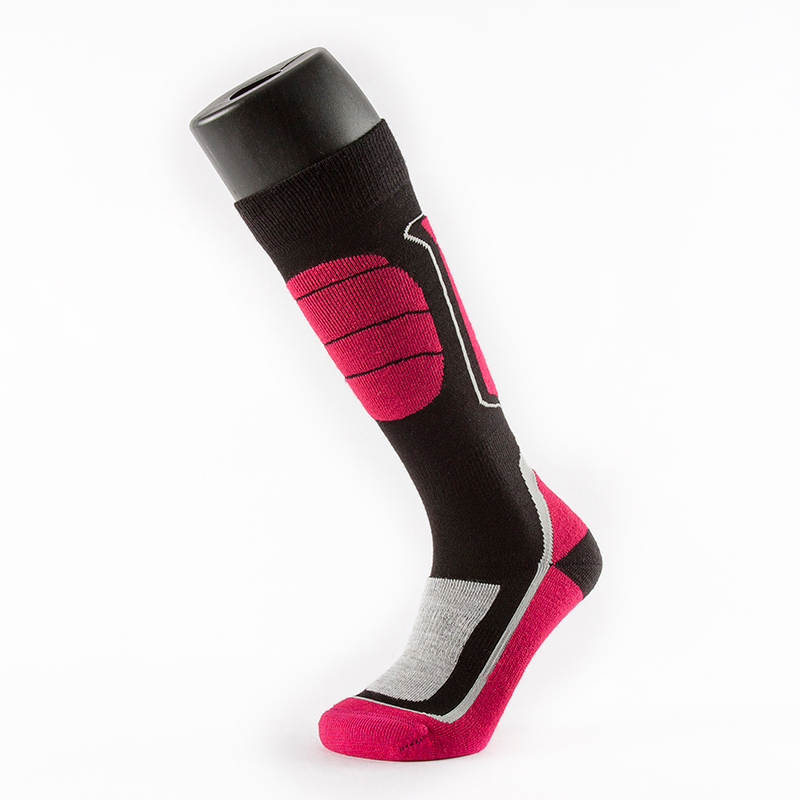
Most ski socks start to feel thin right where you need them most—shins, heels, and the tops of your feet. This construction takes a different route. We knit dense, low-profile padding into the exact flex zones that take a beating on hardpack, while leaving the rest of the sock breathable and smooth. No itchy ribs, no bunching at the ankle. Just targeted cushioning that stays put when you're driving through chop or locking into a carve.
Deep powder has its own demands: moisture builds fast, and any seam or fold becomes a hot spot after a few laps. Our merino-blend yarns are spun with a tighter twist than typical ski socks, so they wick sweat without feeling damp or heavy. The toe seam is hand-linked flat, and the heel pocket is shaped with a deeper cup to prevent slipping inside a stiff touring boot. Even after a full day of bootpacking or boot-deep turns, the sock doesn't sag or rotate.
The cuff gets a slightly looser, non-binding knit compared to the lower leg, which keeps circulation going on cold chairlift rides without sacrificing hold. On icy groomers, you get a firm, responsive feel underfoot—no dead spots. In powder, the extra loft around the metatarsals keeps toes warm without making your boots feel tight. It's the kind of sock you forget about until you switch back to an old pair.
Private-Label ODM Production Without the Usual Back-and-Forth
Most brands assume that private-label manufacturing means months of email threads, revised tech packs, and sample rounds that eat into a launch calendar. We built our ODM process to collapse that loop instead of just shortening it. You pick from a curated range of pre-engineered base products, and our in-house team handles the material substitutions, logo placement, and finish adjustments in one consolidated review. No more waiting three weeks to see if a zipper pull can be changed to matte black.
The usual back-and-forth happens because design intent gets translated through too many hands. Here, the same product developer who approves your spec also communicates directly with the production floor. That means when you request a slightly thicker drawcord or a different inner lining, the change is noted once and executed on the first revised sample, not the third.
What used to take six to nine weeks of approvals now typically closes in under three. The result is a private-label line that feels custom but moves at the speed of stock. You keep control over the details that matter to your customers, without babysitting a supply chain that should have been streamlined years ago.
Choosing Yarn Blends That Balance Warmth, Breathability, and Durability
When you're picking a yarn blend for a project, it's easy to grab the softest skein on the shelf without thinking much about how it will actually perform. But if you want a fabric that keeps you warm without turning into a sweatbox, and that survives regular wear without pilling or stretching out of shape, the fiber mix matters more than the label's colorway. Wool blended with a bit of bamboo or Tencel often nails the sweet spot: the wool provides natural insulation and bounce, while the plant-based fiber wicks moisture and lets air move through, so you don't overheat indoors. Nylon or silk thrown in at a low percentage can add toughness without flattening the hand feel.
Another route worth trying is a wool-cotton blend, especially for garments that need to work across seasons. Cotton brings breathability and a cooler touch against the skin, while wool still holds in heat when it's chilly outside. The trade-off is that cotton adds weight and can stretch out if the yarn doesn't have enough twist or ply structure, so look for a blend with at least 50% wool and a tight spin. For heavy-use items like socks or mittens, a wool-nylon blend with around 20% nylon is hard to beat—the nylon fibers take the friction that would otherwise wear down the wool, dramatically extending the life of the item without making it feel plasticky.
Don't overlook alpaca or mohair blends if you want warmth with surprisingly good airflow. Alpaca is hollow-cored, which means it traps heat while staying lighter than sheep's wool, and a 50/50 alpaca-wool blend drapes beautifully without feeling suffocating. Mohair adds a fuzzy halo that locks in air pockets but still lets your skin breathe, especially when paired with a smooth base like merino. The key is to match the blend to the actual use: a dense cowl can handle more insulating fibers, while a next-to-skin sweater needs a higher proportion of breathable, non-itchy materials like bamboo, cotton, or fine merino. Check the yarn's gauge and suggested needle size too—a loosely knit blend will always breathe better than the same fibers knitted tight, no matter the percentages on the ball band.
Cushioning Maps for Boot Pressure Points and Shin Bite
Most boot discomfort isn't random; it concentrates where the shell, tongue, or liner folds against bony landmarks. A cushioning map tackles this by replacing uniform padding with strategically placed zones of different thickness and firmness. Common hotspots like the medial malleolus, navicular, and the front of the ankle get extra relief while surrounding areas stay thin to preserve a close fit. Instead of just adding bulk, the map redistributes pressure away from nerves and tendons that sit close to the skin.
Shin bite, in particular, happens when the boot tongue digs into the tibial crest during forward flex. A well-designed map for this issue often uses a donut or horseshoe pad that surrounds the bony ridge rather than covering it directly. The center cutout leaves a channel for the tibia, while the raised rim pushes the tongue away from the shin and lets the calf and anterior tibialis absorb the load. Materials like medium-density EVA, Poron, or slow-rebound foam work better than soft gel because they hold shape under repeated flexion without bottoming out.
The real advantage shows up after a full day on snow. Riders who used to end runs with numb toes, bruised shins, or angry red marks often find that mapped cushioning lets them keep buckles snug without sacrificing blood flow. It also reduces the urge to overtighten other straps to compensate for a vague heel pocket. Whether the map is built into a stock liner or added by a bootfitter as a custom pad, the goal stays the same: keep the boot's structure working with your anatomy, not against it.
From Your Tech Pack to a Wear-Tested Sample in Weeks
Sending a tech pack off and waiting months for a sample is a thing of the past. Our process turns your detailed specifications into a physical garment within weeks, not seasons. Every seam, fabric choice, and measurement gets locked in early so there are no surprises later.
Because the turnaround is this fast, you can actually test the fit, feel, and function before committing to bulk production. That means real wear-testing happens while the design is still fresh, letting you tweak collar shapes, pocket placements, or hem lengths without derailing your launch calendar.
We keep the loop tight—you send the pack, we confirm the details, and the sample lands at your door ready for a try-on session. No chasing, no status meetings, just a sample that matches what you drew.
Scaling Custom Orders While Keeping Stitch Count and Fit Consistent
Growing a custom apparel business often means juggling more requests without letting quality slip. The real challenge isn't taking on extra work—it's making sure every order, from the first to the fiftieth, lands with the same stitch density and silhouette your customers expect. This starts with digitizing designs using a locked stitch count per color block, so no matter who runs the machine, the output stays repeatable. Build a small library of approved patterns and hoop sizes, then train operators to reference those files instead of tweaking settings on the fly.
Fit consistency gets trickier as order volume climbs, especially when customers send their own blanks. Rather than assuming every brand runs true to size, keep a physical measurement chart for the most common garment styles and update it quarterly. For each new order, confirm chest width, sleeve length, and body length against that chart before the first stitch. It takes a few extra minutes, but it prevents the costly rework that comes from a logo sitting too high on a smaller cut or too tight across a broader frame.
The trick to scaling without drift is treating consistency as a system, not a skill. Pair your stitch count library with a simple checklist for each job—hoop selection, backing type, tension check, and a quick fit test on a sample garment. When every operator follows the same short list, you stop relying on memory and start relying on process. That's how a small shop handles a hundred custom orders a week and still delivers pieces that feel like they came from a one-off studio.
FAQ
We build each order around the actual conditions your customers face. That could mean a merino-blend footbed for moisture control, a lighter compression zone around the arch, or a fully custom knit pattern that matches your brand’s color blocking. It’s not a catalog item with your logo added—it’s dialed in for fit, warmth, and durability.
Yes. We offer a pilot run option for new designs, usually from a few hundred pairs, so you can test fit, materials, and on-snow performance with real skiers before scaling. It saves you from sitting on inventory that doesn’t sell.
We lean on merino wool blends for temperature regulation and odor control, but we also use synthetic yarns like nylon and elastane where you need stretch and abrasion resistance. A common spec is about 35–45% merino, with reinforced heel and toe zones so they don’t pack out after a season.
You can be as hands-on as you like. Some clients send us a tech pack and we refine it; others give us a mood board and we propose three knit directions. You’ll get physical samples, usually within two to three weeks, and we can adjust gauge, cushioning, and cuff height from there.
Quite a bit. We do graduated compression zones, venting mesh panels over the instep, silicone grip strips at the cuff, blister-resistant toe seams, and different levels of shin padding. You can also pick the exact yarn denier to balance bulk against ski boot fit.
We can knit your logo directly into the sock, add woven labels, or use custom hang tags and polybags. Packaging can be fully branded, including size stickers and barcode labels, so the product arrives retail-ready without you having to repack anything.
Once the sample is signed off, production usually takes 30 to 45 days, depending on quantity and any special yarn orders. We build in a small buffer for holiday peaks, but we’ll give you a clear timeline before you place the deposit.
Yes. We work with a fit model that covers junior, adult, and wide-calf sizing, and we can recommend sock thicknesses based on whether your customers are in race boots, all-mountain boots, or touring setups. Too much bulk is a common issue, so we help you avoid that.
Conclusion
Working with a true ODM skiing socks supplier changes how a custom performance line comes together, especially when the goal is gear that survives icy groomers one day and deep powder the next. Instead of adapting an off-the-shelf sock, this partner builds construction around your actual use case: yarn blends are selected to keep warmth, breathability, and durability in balance, while cushioning maps target the exact boot pressure points and the shin bite zones that ruin a long descent. That level of specificity means the finished sock doesn't just look custom—it performs like it was designed for a particular skier, not a generic winter catalog.
The development side is deliberately low-friction. You send your tech pack, and a wear-tested sample lands in weeks, not after months of clarifying measurements and revising PDFs. Because the factory runs private-label ODM production as its core business, the usual back-and-forth is largely engineered out of the process. Scaling doesn't become a separate headache either: stitch count, tension, and fit stay consistent whether you order a few hundred pairs or a full seasonal drop across multiple sizes. That consistency is what lets a small brand move from first sample to repeat orders without chasing quality drift.
Contact Us
Contact Person: Ryan Li
Email: [email protected]
Tel/WhatsApp: +86 13757342500
Website: https://www.fulisocks.com/