

OEM LED Face Mask Guide for Launching Your Skincare Brand
2026-08-17
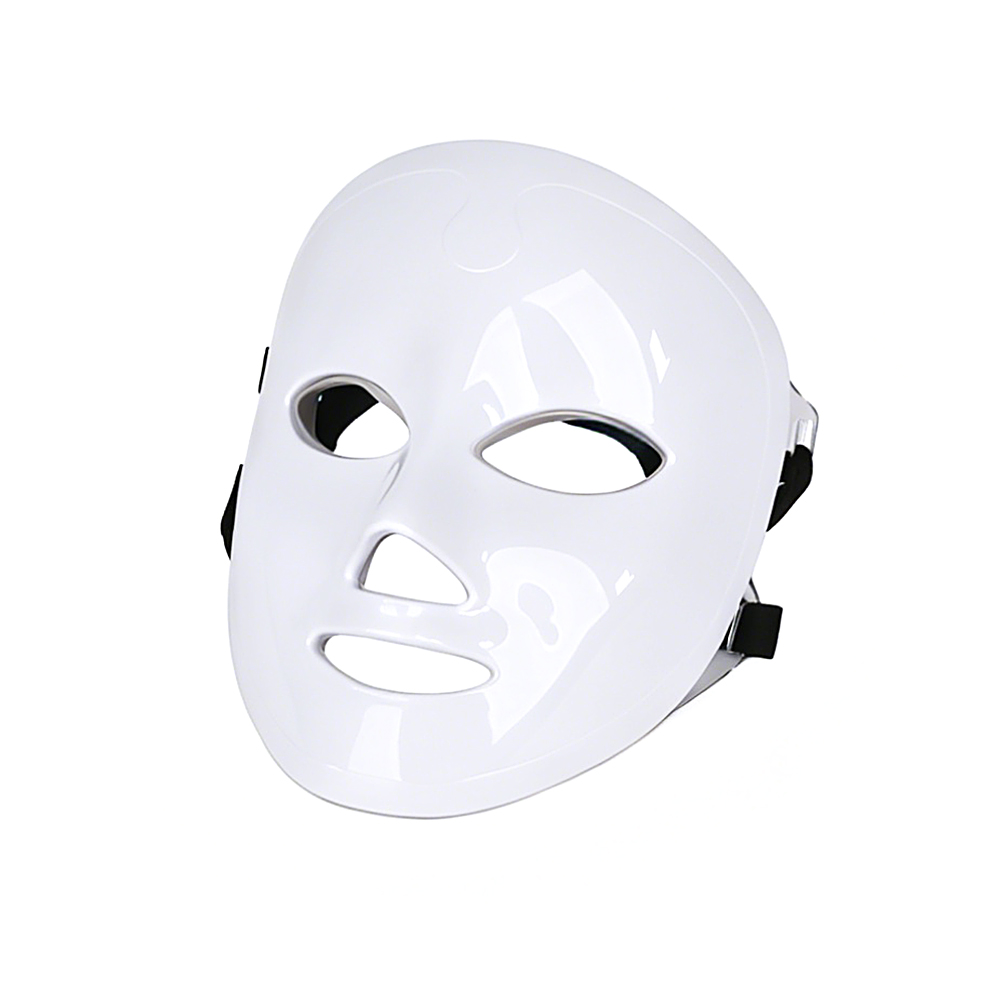
Launching a skincare brand? The LED face mask market is exploding, but standing out means more than slapping your logo on a generic device. From choosing the right wavelengths to nailing FDA compliance, there’s a lot that goes into a product people actually trust. That’s where a reliable OEM partner like Omeina comes in—they handle the technical heavy lifting so you can focus on your brand story. Ready to cut through the noise? Let’s break down exactly what you need to know before you place that first order.
Why 630nm Alone Won't Cover Every Customer Complaint
Many customers assume that a red light device operating at 630nm will fix everything from fine lines to deep muscle soreness. In reality, 630nm is excellent for surface-level skin concerns like collagen stimulation and mild inflammation, but it has a shallow penetration depth. This means complaints involving deeper tissue, such as joint stiffness or wound healing below the dermis, are often left unaddressed.
Another overlooked factor is skin tone and thickness. A single wavelength ignores the wide variability in melanin content and epidermal thickness across different clients. What works for a fair-skinned user with thin skin may produce barely noticeable results for someone with darker or thicker skin, leading to frustration and negative feedback.
Rather than relying solely on 630nm, a more robust approach combines multiple wavelengths—such as 660nm, 810nm, or 850nm—to target different layers and biological processes. Only by offering a spectrum of wavelengths can you realistically handle the broad range of complaints that customers bring to the table.
Selecting an OEM Manufacturer That Won't Disappear After the First Batch
Start by demanding proof of operational continuity, not just a polished website. Ask for a verifiable client list with contactable references, and don't settle for vague portfolio photos. A manufacturer that has survived for at least five years and can show you video walkthroughs of an active production floor is far less likely to vanish after your initial order than one that only communicates through a sales rep with stock images.
Look at how they handle money before you commit a cent. Legitimate factories will share basic financial health indicators — bank reference letters, export records, or even a simple credit report — without hesitation. Be wary of those who demand unusually large upfront payments while offering no milestone-based drawdowns, because that structure often signals a cash-strapped operation that might use your deposit to cover old debts and then disappear.
Finally, test their responsiveness under pressure during the sampling phase. Send a technically difficult change request and observe how long they take to reply, and whether they propose concrete solutions rather than excuses. A factory that goes silent for days at the first sign of trouble will likely do the same when a production issue arises. Also, insist on a contract with a clear exit clause and intellectual property protection — not because you expect failure, but because a manufacturer confident in its own continuity won't hesitate to sign one.
The Unsexy Parts of Prototyping That Decide Your Launch Date
Everyone loves the shiny part of prototyping—the clickable mockups, the animated transitions, the “aha” moment when a design finally feels real. But launch dates rarely slip because the pretty stuff took too long. They slip because of the unsexy stuff hiding underneath: version control chaos, missing edge-case states, buttons that work in Figma but not in the actual build, and the slow drip of small decisions nobody thought to write down. Those are the things that eat entire afternoons and turn a two-week polish into a six-week crawl.
If you want an honest launch date, start tracking the boring parts early. How long does it actually take to hand off assets without broken links? What happens when two people edit the same screen at the same time? Can you reproduce a bug without rebuilding the whole prototype? These aren't glamorous questions, but answering them now is what keeps you from having to explain a missed deadline later. The unsexy parts don't just decide your launch date—they decide whether anyone still trusts the prototype by the time it ships.
Pricing Strategies That Don't Make Your Mask Look Like a Toy
Slapping a rock-bottom price on a mask tells buyers it's a novelty, not protective gear. If the number sits too close to a party favor, customers quietly assume the materials are flimsy, the fit is off, and the filtration is questionable. Instead of chasing bargain hunters, anchor the price slightly above the mid-range for your category—enough to signal serious construction without veering into luxury territory that feels disconnected from everyday use.
Tiered pricing works better than a single flat rate. Offer a basic option for casual wear, a step-up with adjustable straps and better fabric, and a small-batch limited run at a higher price. The gap between tiers should feel like an upgrade in comfort and durability, not just a logo change. This way, the entry-level mask still reads as functional, while the higher tiers reinforce that the brand knows the difference between a costume piece and a daily essential.
Bundling can protect perceived value without discounting the core product. Pair a mask with a storage pouch or a set of replacement filters at a combined price that saves a couple of dollars compared to buying separately. The key is keeping the mask's standalone price stable—once you start running 'today only' half-off deals, you train customers to wait or assume something is wrong with the stock. Consistent, confident pricing does more to keep your product from looking like a toy than any feature list could.
Certification Paperwork and the Hidden Timelines You'll Face
Most people assume certification is just a matter of filling out a few forms, paying a fee, and waiting a week or two. The reality is far messier. Once you hit submit, your application enters a queue that no one really explains up front. A background check that should take three days can stretch into three weeks if the agency is understaffed or if a name match triggers a manual review. Educational transcripts get lost in the mail, employers forget to sign the verification form, and suddenly your 'simple' credential turns into a three-month odyssey.
The hidden timelines pile up because each step depends on someone else's schedule. Licensing boards only review applications on the second Tuesday of the month. A professional reference decides to go on vacation right after you send the request. Third-party credential evaluators take ten business days just to acknowledge they received your documents. And if you're moving between states or countries, you might discover that the new jurisdiction wants an original seal or a notarized copy that adds another two weeks. None of this shows up on the official checklist.
What actually helps is treating the whole thing like a project with buffers you can't see. Call the office before you submit and ask how long the current backlog is running, not what the website promises. Keep copies of every single document, including the envelope it came in, because you'll probably need to prove when something was mailed. And if you're on a deadline for a job offer, tell the employer up front that certification timelines are rarely predictable — better to set expectations early than to promise a start date you can't control.
Writing a User Guide That Actually Prevents Negative Reviews
Most user guides fail because they're written from the product's perspective, not the user's. You list every feature in logical order, but your reader just spilled coffee on their keyboard and wants to know if it's safe to rinse. Start by listing the top five frustrations your support team hears daily, then build the guide around those moments. If the guide doesn't answer a real question someone typed in anger, it won't prevent a bad review.
Clarity beats completeness. Long paragraphs and buried steps force users to skim, and skimming leads to missed details and fresh complaints. Break every task into numbered actions, each under ten words. Use screenshots with circles and arrows, not just text. If a step has three possible outcomes, show all three paths separately instead of cramming them into one paragraph. A confused reader rarely leaves a positive comment, but a guided one often forgets they were ever frustrated.
Finally, test the guide like you'd test the product. Watch a real user follow it without your help. Where they hesitate, rewrite. Where they skip ahead, reorder. And strip out any phrase that sounds like a lecture—users don't want to hear 'you must' or 'it is important to note'. They want a calm voice that says, 'Here's what happened, and here's exactly how to fix it.' That tone turns a potential one-star rant into a quiet 'oh, that worked'.
FAQ
Private-label work starts with your specs—wavelength mix, irradiance levels, mask geometry, controller interface, even firmware behavior. White-label means you pick from an existing catalog and add branding. For a skincare brand that wants clinical credibility, private-label lets you tune the device to your serum line and treatment protocol instead of forcing your formulas to fit someone else's hardware.
Ask for a tear-down of the mask they claim to manufacture, not just photos. Look at LED binning reports, PCB layout, battery certification, and the silicone cure process. Tour the line by video call and request samples from the current production batch, not pre-approved prototypes. A credible factory will also walk you through their QC gates for light output, wavelength tolerance, and charging safety.
Red at 630–633 nm and near-infrared around 830 nm cover collagen support and deeper tissue work. Blue around 415 nm targets acne bacteria. Some brands add amber 590–605 nm for surface glow. Rather than cramming every color into one mask, choose two or three wavelengths with measurable irradiance, then design treatment modes around them. Too many LEDs can lower per-wavelength power density and complicate your compliance file.
The controller experience matters as much as the light panel. A magnetic puck controller, haptic feedback, adjustable session length, and a battery that lasts multiple treatments without swelling all signal a premium product. Also consider a rigid eye shield instead of flimsy foam, a nose bridge that blocks light bleed, and strap anchors that do not tear the silicone after repeated use.
In the US, expect to file as a Class II medical device if you make acne or wrinkle claims, which requires a 510(k) unless you can fit an exemption. In the EU, the Medical Device Regulation may apply depending on intended purpose. Even if you market it as a cosmetic wellness device, you still need electrical safety testing, EMC compliance, biocompatibility data for skin-contact materials, and proper labeling for eye safety.
Unit cost climbs with wavelength count, battery quality, and tooling for custom shells. Keep the bill of materials below 30 percent of your target retail price after duties and freight. Then add a buffer for replacement batteries, returns, and warranty claims. A simple two-wavelength mask with a solid controller can retail higher than a feature-stuffed mask if the brand story and clinical testing are strong.
They ship with vague directions, ignore eye safety warnings, and treat the device as a standalone product instead of part of a routine. Also, many brands skip third-party performance testing, so customers receive a mask that looks bright but has low actual irradiance. Before launch, run a small beta group for two months, collect before and after photos under consistent lighting, and write use instructions that fit into existing skincare habits.
Yes, if the serum is tested for use before or during light exposure. Some actives, like photosensitizing retinoids or certain acids, may increase irritation under red light. Either formulate a compatible gel that enhances light penetration, or instruct a wait time between serum application and mask use. Bundling works best when the serum is designed as a conductor, not an afterthought.
Conclusion
A 630nm diode might sound like the industry standard, but if that's all your mask offers, you're leaving a lot of complaints on the table. Customers with uneven tone, stubborn texture, or post-blemish marks often expect more than a single red wavelength can deliver, so blending 830nm near-infrared or amber/blue options early in the spec conversation keeps your device from feeling one-note. Just as important is locking down an OEM partner who has a real track record with optical output and battery safety, not just a flashy catalog. Ask for previous batch reports, component traceability, and a direct line to the engineer who will handle your file—because a supplier that vanishes after the first 500 units turns a launch into a salvage operation. Prototyping is where timelines actually slip: the unglamorous back-and-forth over silicone fit, strap tension, PCB spacing, and firmware dimming curves eats weeks if you don't set revision caps and sign-off dates in writing from day one.
Pricing has to thread a very specific line. Undercutting too hard puts you next to $20 novelty masks that look like party props, so anchor the retail price to tangible differences like medical-grade silicone, replaceable controllers, or measured irradiance values, not vague luxury adjectives. Certification is the quiet schedule killer—CE, FCC, or FDA registration pathways rarely move at startup speed, and lab testing for skin safety or EMC can add months even when documentation is perfect. Build that buffer into your calendar before announcing a date. Finally, the user guide is your cheapest customer support tool. Write it with a skeptical first-time user in mind: include exact session lengths, what mild warmth feels like, how to clean the mask without damaging the LEDs, and what to do if the controller won't pair. That kind of plain-language troubleshooting defuses the negative reviews before they get typed.
Contact Us
Contact Person: Tina Liu
Email: [email protected]
Tel/WhatsApp: 8618681405932
Website: https://www.omeinabeauty.com/