

OEM Vacuum Loader: The Ultimate Guide for Efficient Material Handling
2026-06-11
When production demands soar, every second counts—yet raw material transfer often becomes a silent bottleneck. Discover how OEM vacuum loaders redefine speed and precision in bulk handling, and why industry leaders turn to Fanchang Machinery for custom-engineered solutions that seamlessly integrate into your workflow. From powder to granules, this guide unpacks the technology behind zero-dust conveying, energy-smart designs, and how the right vacuum loader can slash downtime while boosting throughput. Ready to rethink your material move? Let’s dive in.
Decoding the Magic: How OEM Vacuum Loaders Redefine Material Flow
Material handling in manufacturing often feels like an invisible orchestra—when everything works, nobody notices. But behind the scenes, OEM vacuum loaders are quietly rewriting the rules of material flow. They don't just move powders, granules, or pellets; they transform the entire rhythm of production lines. By pulling raw materials through sealed pipes with precise negative pressure, these systems eliminate the dust, spillage, and contamination that have long plagued traditional mechanical conveyance. The result is a cleaner, safer, and far more predictable journey from hopper to machine, allowing operators to focus on what matters most: quality output.
What truly sets modern vacuum loaders apart is their ability to integrate sensing and adaptive control, turning a simple transfer operation into a responsive, data-aware process. Advanced units can detect material levels, adjust suction power in real time, and even self-clean filters without human intervention. This intelligence means fewer line stoppages and dramatically reduced maintenance windows. Unlike older auger or belt-based systems, vacuum loaders can handle delicate or abrasive materials with equal finesse, maintaining particle integrity and extending equipment lifespan. The flow isn't just faster—it's smarter, adapting to upstream demand and downstream constraints without sending shockwaves through your process.
Perhaps the most underappreciated aspect is how vacuum technology unlocks facility layout flexibility. Without the rigid footprint of conveyors or elevators, engineers can route material lines overhead, around structural columns, or through tight spaces. This opens up valuable floor area and enables retrofitting into existing plants where space is at a premium. When combined with centralized vacuum systems, multiple machines can be fed from a single bulk source, slashing manual handling and the risk of cross-contamination between batches. In an era where efficiency and adaptability define manufacturing success, OEM vacuum loaders are more than a commodity component—they are a strategic lever for reimagining material flow from the ground up.
Peering Under the Hood: The Core Engineering That Powers Efficiency
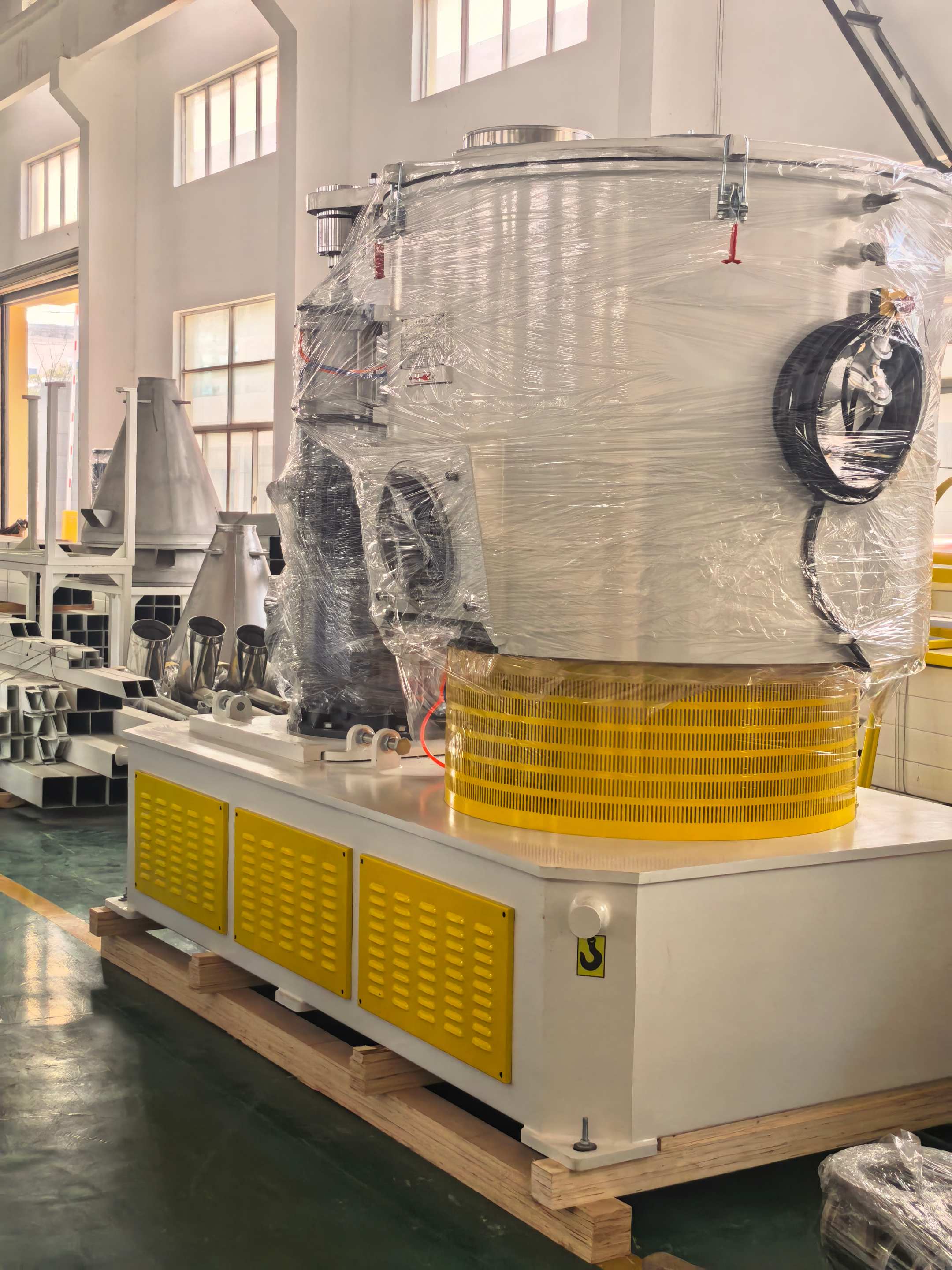
Modern efficiency isn't magic—it's meticulous design at the architectural level. Every component, from stateful session management to GPU kernel orchestration, has been rethought to minimize idle cycles. Instead of treating infrastructure as a fixed pool, the system dynamically reshapes resource allocation based on real-time demand curves. This means compute, memory, and I/O bandwidth are treated as fluid commodities, not static reservations. The result is a platform that consistently delivers sub-millisecond tail latencies without wasteful over-provisioning.
Beneath the orchestration layer, a custom-built distributed state machine ensures that data consistency never becomes a bottleneck. By employing a hybrid consensus protocol that combines the best of leader-based and quorum-based approaches, the system achieves linearizable semantics while keeping inter-node chatter to a minimum. Write-ahead logging isn't a mere afterthought here; it's integrated directly into the execution pipeline, allowing recovery from failure states in under a second. This deep integration eliminates the heavy transactional overhead that typically plagues high-throughput systems.
Perhaps the most overlooked aspect is the network fabric itself. Rather than relying on off-the-shelf TCP stacks, the transport layer has been stripped down and rebuilt around application semantics. Pacing decisions are guided by a feedback loop that monitors both in-flight data and recipient processing rates, effectively preventing micro-burst congestion. This design choice alone allows the system to sustain near-line-rate throughput even as cluster sizes scale into the thousands of nodes, all while sipping CPU cycles that would otherwise be lost to kernel context switches.
From Fine Powders to Granules: Mastering Diverse Material Challenges
Working with fine powders can be a real headache. They clump unpredictably, refuse to flow freely, and often create clouds of dust that cling to everything. These behaviors don’t just slow down production—they can compromise product quality and create safety risks. When powders misbehave, transitioning to granules often becomes the most practical path forward.
Granulation isn’t a one-size-fits-all fix. The approach must adapt to the material’s personality—whether it’s sticky, heat-sensitive, abrasive, or hydrophobic. Some powders demand gentle tumbling, while others need the force of a high-shear mixer to take shape. Finding the right balance between binder addition, moisture control, and particle size distribution is where the real skill lies.
Beyond the equipment, it’s the subtle adjustments—timing, temperature tweaks, or a slight change in raw material sourcing—that often determine success. Over time, you learn to read the material’s cues, turning unpredictable powders into uniform, free-flowing granules. That mastery transforms a processing bottleneck into a consistent, reliable step in your workflow.
Tailored Choices: Picking the Right Vacuum Loader for Unique Industrial Demands
Standard vacuum loaders rarely deliver peak performance across the wildly diverse landscapes of modern industry. A unit designed for fine powder recovery might choke on wet, heavy debris, while a system built for rugged construction sites could easily contaminate a sterile pharmaceutical line. Recognizing these contrasts is the first step toward a successful selection—every factor from particle size and abrasiveness to moisture content and temperature tolerance shapes the ideal machine configuration. Real customization hinges on dissecting your specific material flow and operating environment before any equipment catalog is opened.
Material compatibility often drives the deepest distinctions. In food or chemical processing, for instance, it’s not enough for a loader to simply move product; internal surfaces, gaskets, and filters must resist corrosion and prevent bacterial harboring. Stainless steel construction, continuous welds, and easy-access cleanout ports become non-negotiable. Conversely, in foundries or heavy demolition, the priority shifts to raw power and endurance—thick-gauge abrasion-resistant inlets, oversized cyclones, and turbine motors that can sustain high vacuum without overheating. Filter media choices alone—from PTFE-coated cartridges for sticky dusts to high-temperature Nomex® bags—illustrate why a tailored approach wins over any “general purpose” compromise.
Beyond core design, operational flexibility often seals the decision. A loader that can toggle between electric and diesel power, adjust suction force on the fly, or integrate seamlessly with existing batching controls quickly proves its worth in dynamic workflows. Some facilities demand compact, trolley-mounted units that navigate tight spaces, while others require truck-mounted behemoths capable of moving thousands of pounds an hour. Serviceability also plays a starring role: quick-release clamps, tool-free filter swaps, and remote diagnostics keep downtime minimal. By mapping each unique demand—not just what needs to be moved, but how, where, and how often—teams can pinpoint a vacuum loader that behaves more like a purpose-built tool than an off-the-shelf appliance.
Smooth Integration: A Step-by-Step Roadmap to Flawless Installation
Getting integration right starts long before any code touches the production server. We always begin by auditing the existing environment—mapping out dependencies, version constraints, and potential conflicts that could turn a routine setup into a headache. This upfront reconnaissance pays off by letting us craft a setup script tuned to the exact quirks of your stack, whether it’s handling legacy authentication modules or syncing with a custom API gateway. The goal isn’t just to avoid errors; it’s to make the installation feel almost invisible to the rest of your operations. A dry run in a sandboxed clone of the live system lets us catch subtle timing issues or resource limits that documentation rarely covers, refining the sequence until it runs like a well-rehearsed play.
From there, we layer in progressive rollouts rather than one big-bang switch. Canary deployments let us validate database migrations, cache warming, and third-party integrations under real traffic without risking the full user base. Each checkpoint comes with automated rollback triggers tied to latency spikes or error thresholds—no manual guesswork. We’ve learned that documentation only works when it’s woven into the process: inline comments in config files, a live status dashboard, and plain-language runbooks that actually match what’s happening on screen. When something veers off script, the feedback loop kicks in instantly, piping observations back to the team so the roadmap can adapt. That’s the difference between a brittle install guide and a living playbook that keeps your systems humming through every update.
Proactive Care: Simple Upkeep Routines for Maximum Uptime
Keeping things running smoothly doesn’t have to be a chore. A quick glance over your equipment each morning catches little issues before they snowball into full-blown failures. Listen for odd noises, feel for unusual warmth, and watch for warning lights that might otherwise go unnoticed. It’s the kind of habit that takes just a few minutes but saves hours of downtime later.
Software often needs just as much attention as hardware, yet it’s easy to ignore until something breaks. Set aside a regular slot for updates and patches—think of it like brushing your teeth for your systems. Automate what you can, but don’t blindly trust automation; a manual check now and then reveals forgotten errors or configuration drift that silently eat away at performance.
Cleanliness is more than a cosmetic detail. Dust buildup chokes airflow, drives up temperatures, and shortens component lifespans. A gentle wipe-down of vents, fans, and filters every couple of weeks keeps cooling efficient and your hardware humming. It’s a low-effort ritual that pays off in reliability, especially in environments that never seem to power down.
FAQ
An OEM vacuum loader is a bulk material transfer device custom-engineered by the original equipment manufacturer to fit into a larger processing line. It uses a vacuum pump to create negative pressure, drawing granular or powdered materials through an enclosed pipeline from a pickup point directly into a hopper. Once the hopper fills, the vacuum shuts off and a discharge valve releases the load, often on a timer or level sensor signal. The whole cycle is clean, fast, and keeps dust contained.
OEM units are designed to match your exact throughput, material type, and layout, so you get a seamless fit rather than retrofitting a one-size-fits-all solution. Benefits include drastically reduced manual lifting, near-zero dust spillage, gentle handling that preserves particle integrity, and the ability to move materials vertically or around tight corners without conveyors or bucket elevators. They also cut down on housekeeping and cross-contamination risks in multi-product facilities.
Start by mapping out your material: bulk density, particle size distribution, abrasiveness, moisture content, and whether it’s free-flowing or prone to bridging. Then define the required transfer rate and distance — both horizontal and vertical. Check any ATEX or sanitary requirements. An experienced OEM will run these numbers through their design algorithms to size the pump, filter area, and receiver volume. Sharing a sample of your material for lab testing is always smart; it reveals real-world flow behavior that datasheets can’t capture.
Filter health is everything. Inspect and clean or replace filter cartridges regularly — don’t rely solely on the auto-pulse cleaning, especially with sticky or hygroscopic materials. Check valve seals and gaskets for air leaks, as even a small leak cuts vacuum performance and increases energy use. Keep the pump intake clear and verify the level sensors aren’t caked with residue. Record the cycle times when the unit is new; if you see a slow drift upward, it’s an early sign that maintenance is overdue, not a failure.
Yes, if specified correctly. For abrasive materials like silica sand or glass fill, the loader can be built with wear-resistant coatings, thicker receiver walls, and ceramic-lined bends. For very fine powders — think fumed silica or carbon black — the challenge is usually dust penetration and filter blinding. Here the OEM will spec a higher-efficiency filter media with an aggressive pulse-cleaning system and possibly a secondary HEPA stage. Always confirm with wear coupons and trial runs, because a stock loader won’t last long in these conditions.
Vacuum loaders really shine when you need totally enclosed handling, flexible routing, and minimal residue. A screw or belt conveyor is fine for straight-line movement of non-hazardous bulk, but they can degrade friable materials, leave material heel in their troughs, and require more guarding. Vacuum loaders can pull material from multiple pick-up points to a single destination with just a valve network, and they’re easier to sanitize. The flip side is that vacuum systems typically use more energy per ton over long horizontal distances, so it’s a trade-off between cleanliness/flexibility and power cost.
Look for dual-level sensors to prevent overfilling, ground continuity checks that automatically shut down if static earth is lost, and an explosion vent or flameless venting panel when handling combustible dusts. The control panel should have e-stop wiring that integrates with the rest of the plant. In food or pharma, full-washdown construction with certified seals prevents bacterial harborage. Don’t overlook nuisance-safety items like an on-board relief valve to prevent the receiver from collapsing if a valve fails — it’s a simple component that avoids a dangerous implosion.
First, check the obvious: is the hopper full and the discharge opening obstructed? Then inspect the filter — a clogged filter is the number one culprit. Next, walk the vacuum line looking for splits, loose clamps, or a dislodged hose that lets air in. Listen at valves; a stuck-open air bleeder will kill vacuum instantly. If the pipes are clear, put a vacuum gauge right at the pump inlet to confirm the pump itself is pulling the expected vacuum. A sudden drop often means a torn diaphragm in a pump or a seized rotary vane, so don’t chase pipe problems if the pump output is weak.
Conclusion
OEM vacuum loaders transform material handling by creating a closed, automated flow that eliminates manual scooping and dust spillage. Their real magic lies in redefining how powders, granules, and even sensitive ingredients move—seamlessly pulled from source to destination with consistent accuracy. Under the hood, a carefully engineered combination of vacuum generation, filtration, and discharge sequences optimizes every cycle, ensuring rapid conveyance without product degradation or segregation. Whether you're dealing with fine, cohesive powders that tend to bridge, or free-flowing plastic pellets, these systems are tailored to master diverse material challenges through customized pick-up wands, receiver designs, and filter media. Choosing the right loader involves analyzing factors like conveying distance, throughput requirements, and material characteristics, then matching them with the appropriate pump size, controls, and safety features for your unique industrial environment.
A smooth integration begins long before the first startup—it requires a step-by-step installation roadmap that accounts for existing equipment layouts, utility connections, and ergonomic access. Many users achieve flawless deployment by working closely with OEM engineers who can pre-configure controls and validate performance under actual operating conditions. Once in service, proactive care becomes the backbone of maximum uptime: simple routines like regular filter cleaning, seal inspections, and checking vacuum levels prevent most unexpected failures. By embracing these efficient material handling strategies—from smart selection and thoughtful installation to consistent upkeep—facilities unlock a cleaner, safer, and more productive workflow that quietly outperforms conventional transfer methods day after day.
Contact Us
Contact Person: Darye WANG
Email: [email protected]
Tel/WhatsApp: 86-13501017897
Website: https://www.fcntd.com/