

Oil-Immersed Transformer Manufacturer: Expert Guide to Quality and Reliability
2026-08-25
Ask any plant engineer what keeps them up at night, and oil-immersed transformer failures will rank near the top. A single breakdown can trigger costly downtime, safety hazards, and a ripple of operational headaches. Yet not all oil-immersed transformer manufacturers are created equal. Some cut corners on insulation, cooling, or tank sealing—flaws that only surface under load. That’s why selecting a partner who treats quality and reliability as non-negotiables matters more than the spec sheet alone. Chang Song has built its reputation on exactly that principle, and in this guide we’ll unpack what separates a trustworthy manufacturer from the rest—so your next purchase decision is grounded in engineering reality, not marketing promises.
Why Core Steel Grade Affects Your Daily Operating Losses
Every motor and transformer has a core made of stacked steel laminations, and the grade of that steel quietly dictates how much energy you waste every hour the equipment runs. Lower-grade core steel tends to have higher hysteresis loss and eddy current loss, meaning a larger share of input power turns into heat instead of useful work. That waste shows up directly on your utility bill, and it compounds across all the machines on your floor.
Higher-grade silicon steel, especially grain-oriented or thin-gauge varieties, reduces both loss mechanisms by improving magnetic permeability and raising electrical resistivity. But the difference isn't just a lab number. A motor rewound with a cheaper core steel might pass a no-load test, yet still bleed an extra two or three percent of rated power as heat. Over a 24-hour duty cycle, that adds up to kilowatt-hours you keep paying for without any increase in output.
The daily operating loss becomes easier to see when you track it per machine. A 100 kW motor running continuously with just a 2% efficiency penalty loses 48 kWh per day. Multiply that by ten motors and your plant's monthly losses rival the output of a small generator. Choosing the right core steel grade isn't a one-time purchase decision; it's a recurring line item on every operating statement, and it never stops subtracting from your margin.
Vacuum Drying Steps That Keep Moisture Away from Windings
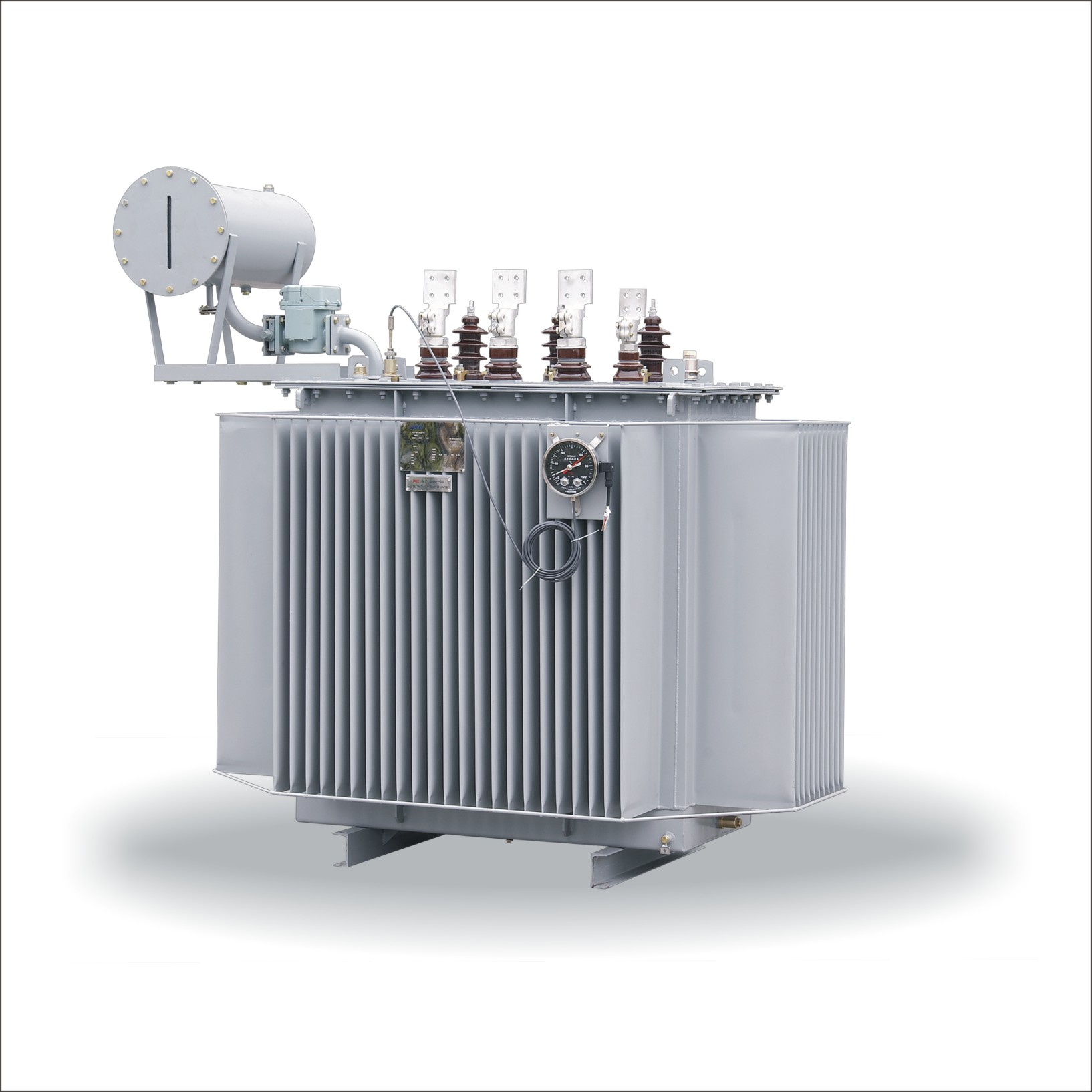
Moisture trapped inside motor windings can degrade insulation and lead to premature failure. Vacuum drying removes that moisture before it causes harm, but only when the steps are followed carefully. The process begins with placing the stator or rotor in a sealed chamber and pulling a deep vacuum. This lowers the boiling point of water, allowing trapped vapor to escape even at moderate temperatures. Without the vacuum, heat alone often leaves residual dampness in tight crevices.
After the vacuum reaches the required level, controlled heat is applied to the windings. A common approach is to alternate between vacuum cycles and warm air injection. The warm air carries away moisture released from the insulation, while the vacuum keeps pulling vapor out of the chamber. Some facilities use resistance heating or low-pressure steam to warm the windings evenly, preventing hot spots that could bake contaminants into the varnish. The key is to hold the temperature steady and avoid rushing the evaporation phase.
Finally, the chamber is gradually returned to atmospheric pressure before the windings are removed. A slow repressurization prevents condensation from forming on cool metal surfaces. Technicians often perform an insulation resistance test before and after the cycle to confirm the moisture level has dropped. When done correctly, vacuum drying extends winding life and restores the dielectric strength that ordinary oven drying cannot fully recover.
Tap Changer Durability Under Real Voltage Swings
Tap changer durability under real voltage swings is often underestimated because lab tests tend to use smooth, sinusoidal variations. In actual networks, voltage swings can be jagged, rapid, and accompanied by harmonics or transient spikes. Each tap change under such conditions produces not only mechanical wear in the selector and diverter switches but also localized heating at the arcing contacts. Over time, the cumulative effect shortens contact life and increases the risk of coking or pitting. Field data from distribution transformers show that units operating on long rural feeders with frequent voltage fluctuations can lose up to 30% of their expected tap changer life compared to stable urban installations.
Another factor that separates real-world durability from bench testing is the interaction between load current and voltage level during the switching operation. When a tap change occurs while the transformer is heavily loaded, the arc drawn at the contacts carries much more energy than during no-load tests. Repeated operations under high load with fluctuating voltage cause contact erosion to accelerate unevenly, leading to increased transition resistance. Once resistance rises, local hot spots develop, and the insulating oil around the tap changer degrades faster, producing sludge that further hampers movement. Maintenance crews often find that a tap changer that passed its routine dielectric test can still fail mechanically a few weeks later because the true durability limit was set by dozens of small overloads and voltage dips that were never recorded as abnormal events.
For asset managers, the practical takeaway is that durability cannot be judged solely by the number of operations or the age of the unit. Monitoring the actual voltage profile, including the rate of change and the frequency of large deviations, gives a far better indication of remaining life. Some utilities now install low-cost voltage recorders and use the data to adjust maintenance intervals rather than relying on fixed schedules. This shift toward condition-based care is particularly important for transformers equipped with older tap changers that lack the reinforced contacts found in newer designs.
What Thermal Aging Tests Reveal About Insulating Paper
Thermal aging tests cut through the guesswork by showing how quickly insulating paper loses its mechanical backbone. The cellulose chains that give the paper its strength break down under prolonged heat, and the degree of polymerization drops from a healthy 1000–1200 down to 200 or lower. The early stages can look almost harmless, but once that number slips below 400, tensile and tear strength fall off sharply. At that point, the winding is no longer held firmly in place, and a routine short-circuit or even normal vibration can crack the aged paper.
What makes these tests particularly revealing is that temperature is never the only actor. Moisture and organic acids released during degradation feed back into the cellulose, speeding up the process well beyond what a simple heat curve would predict. A paper sample with 2% moisture can age several times faster than one kept below 0.5%, even at the same temperature. So thermal aging data are not just about hot spots; they map how the chemical environment inside the insulation accelerates or slows the breakdown.
The most useful output is a set of markers that track remaining life. Furan compounds, especially 2-furfural, and dissolved gases like CO and CO2 in the oil correlate closely with paper condition. By combining temperature history, moisture levels, and these chemical markers, engineers can estimate when the paper will reach its end-of-life—not by waiting for dielectric failure, but by watching the slow, measurable loss of mechanical strength.
Reading Factory Test Reports Beyond the Pass or Fail
A pass stamp tells you almost nothing. The real value of a factory test report lies in the measured values, the test conditions, and the margin between your component and the failure threshold. A device that passes at 0.2% away from the limit is not the same as one that sits comfortably mid-range. I always check the distribution of readings across multiple units, not just the individual result. When you see a tight cluster near the upper tolerance, that is a process drifting, even if every unit technically passes.
Look at the fine print around the test setup. Was the ambient temperature the same as your application? Were the supply rails loaded the same way? A factory test run at 25°C with ideal power will not reveal marginal behaviour at your operating extremes. I also scan for retest indicators or handwritten corrections—those often signal a first run that failed and then passed after adjustment. That history matters more than the final box ticked.
For critical parts, keep a personal baseline. Record actual values for key parameters from each batch and watch for slow shifts over time. A parameter that moves from 70% to 85% of limit across three shipments is telling you something, though every report still says pass. When you go back to a supplier with that kind of data, the conversation changes from blame to correction. That is how you read a factory test report like it actually matters.
Tank Sealing Materials That Withstand Outdoor Temperature Cycles
Outdoor storage tanks rarely sit in stable conditions. Sun exposure, overnight cooling, and seasonal shifts push sealant joints through constant movement. A sealant that handles a mild afternoon can crack or lose adhesion after a few freeze-thaw cycles. The materials worth specifying are those with low modulus and high recovery, meaning they stretch with the tank wall instead of fighting it.
Polyurethane and silicone remain common choices, but they behave differently. Silicone holds up well under UV and stays flexible at low temperatures, while polyurethane offers better tear resistance and paintability. For joints that see heavy movement, a hybrid polymer can bridge the gap. Butyl tape and EPDM gaskets work where you need a compressible seal rather than a wet-applied bead.
Surface preparation matters as much as chemistry. Anodized aluminum, stainless steel, and coated carbon steel all expand at different rates, so primers and adhesion promoters become critical. Before settling on a product, check its movement capability and low-temperature flexibility against the tank's actual thermal range. A material that passes lab tests but can't follow real-world expansion will eventually pull away at the bond line.
FAQ
Focus on core steel grade, winding conductor material, and the precision of insulation drying. A well-built unit should have low no-load loss, uniform clamping pressure, and evidence of vacuum oil filling rather than simple immersion. Ask for routine test reports covering turns ratio, winding resistance, and partial discharge levels — these reveal more than a glossy datasheet.
The oil acts as both coolant and dielectric barrier. Moisture, dissolved gas, and particle contamination accelerate paper ageing and reduce breakdown voltage. Regular dissolved gas analysis (DGA) can spot incipient faults like partial discharge or hot spots before they become failures. For a new unit, insist on oil with low moisture content and high oxidation stability to slow acid formation.
Beyond standard routine tests, look for type-test evidence on temperature rise and short-circuit withstand. A manufacturer that has independently verified impulse voltage distribution and noise levels on similar designs shows deeper engineering control. Also check if they perform a 24-hour no-load run with continuous oil circulation before dispatch — that catches leaks and pump issues early.
Specify a conservator with a larger oil volume, add external radiators with forced air, or choose a low-loss core to reduce heat generation. In some cases, a directed-flow cooling design or a water-cooled heat exchanger is necessary. Always verify the winding hot-spot temperature under worst-case load, not just the top-oil reading, because aging accelerates sharply above 110°C.
Keep the oil dry and clean through periodic filtering or regeneration if acidity rises. Monitor silica gel breathers and replace them before saturation. Take oil samples annually for DGA and moisture, and track the moisture-in-paper trend rather than reacting to a single reading. Tightness of gaskets and bushing seals should be checked during every outage, since water ingress is the biggest silent killer.
Yes. Opt for hermetically sealed tanks with nitrogen cushioning if the transformer sits in a corrosive or humid area. Use a stainless steel tank or an epoxy-coated radiator stack. Internal arc-fault containment, reinforced bracing for seismic zones, and bushings with longer creepage distance all help. A manufacturer willing to customize these details usually has the engineering depth you want.
A local service presence shortens response time for oil processing, bushing replacement, or reconditioning. More importantly, the manufacturer should offer remote monitoring setup and assist with interpreting DGA trends. Long-term reliability depends as much on accessible support and spare parts as on initial build quality, so ask for committed response times before signing the order.
Conclusion
Choosing an oil-immersed transformer manufacturer goes far beyond catalog specs. The grade of core steel quietly shapes your monthly energy bill, as lower-loss silicon steel reduces no-load losses that accumulate hour after hour. Similarly, the vacuum drying process matters more than many buyers realize; if moisture lingers in the windings, it accelerates insulation breakdown long before any alarm sounds. Tap changers are another hidden weak point—cheap contacts or weak springs may work on a test bench but fail after thousands of real voltage swings. In short, daily operating losses and long-term reliability are set by these manufacturing details, not by the final coat of paint. That is why the choice of steel grade and drying process should never be treated as an afterthought.
A thorough factory inspection also pays off. Thermal aging tests on insulating paper reveal how quickly the transformer will lose mechanical strength under heat, which directly ties to its service life. Reading test reports carefully lets you spot marginal results that still pass on paper but point to future trouble. Finally, tank sealing materials deserve attention because outdoor temperature cycles expand and contract every joint; rigid or low-grade seals invite moisture and oxygen into the oil. A quality-focused manufacturer documents these steps and materials openly, giving you more than a pass-or-fail sheet—it gives you a clear picture of how the unit will hold up in the field.
Contact Us
Contact Person: Tonglun Chen
Email: [email protected]
Tel/WhatsApp: 8618906642555
Website: https://www.cncsele.com