

Permanent Magnet Top Types and Their Game-Changing Applications
2026-08-09
Magnets have quietly reshaped our world, from the motors driving electric vehicles to the sensors in our smartphones. But not all magnets are created equal—especially when it comes to permanent magnets, where the choice of type can make or break a design. In this exploration, we dive into the most pivotal permanent magnet top types and their game-changing applications, revealing why the right magnet isn't just a component, it's a catalyst for innovation. At the forefront of this magnetic evolution is DAWA, delivering cutting-edge solutions that power tomorrow's breakthroughs. Curious which magnet is behind the next big leap? Let's find out.
Neodymium Magnets: The Tiny Powerhouses Redefining Compact Motor Design
It’s almost surprising how something so small can pack such a punch. Neodymium magnets, often no larger than a coin, generate magnetic fields far beyond what their size suggests. This extreme energy density is what allows engineers to shrink motor designs without sacrificing torque or efficiency. In everything from drone rotors to electric power tools, these magnets are the quiet workhorses making miniaturization more than just a buzzword.
Traditional ferrite magnets simply can’t keep up when space is tight and performance is critical. Swapping them out for neodymium means you can instantly boost power output while slashing weight and bulk. That’s why you’re seeing them in places where a few millimeters and grams matter—like surgical robots, camera autofocus mechanisms, and next-gen wearables. They don’t just enable smaller motors; they fundamentally change what’s possible in constrained environments.
But the real magic lies in how they maintain strength under dynamic loads and high temperatures, especially with advanced grades like N52 or those with added dysprosium. This reliability lets designers push compact motors harder and longer, opening doors to applications that once demanded bulky setups. It’s not an exaggeration to say these tiny magnets are quietly reshaping the landscape of motion control, one miniature revolution at a time.
Samarium Cobalt: Unshakeable Performance in the World’s Toughest Environments
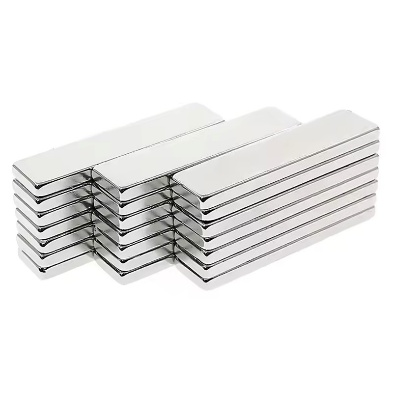
In settings that devour lesser materials—think deep-sea drilling, jet engine compartments, or the scorching vacuum of space—samarium cobalt magnets thrive without flinching. Their crystalline structure basically scoffs at thermal demagnetization, holding coercivity steady even as temperatures climb past 300°C. While neodymium alternatives start throwing in the towel around 150°C, samarium cobalt just keeps delivering that unyielding magnetic grip, making it the hidden backbone of systems that absolutely cannot fail when the heat is on.
Beyond just heat, these magnets bring a near-supernatural resistance to corrosion. No coatings, no platings, no delicate babysitting—just innate chemical defiance that laughs off salt spray, humidity, and most harsh chemicals. That alone slashes maintenance headaches in marine thrusters, downhole sensors, and medical sterilizers where every exposed surface gets a brutal workout. Designers often lean on this trait to simplify assemblies, ditching protective layers that would otherwise bulk up components or introduce failure points.
Their sturdiness goes deeper still. Samarium cobalt’s resistance to demagnetization under external fields means you can slim down generator cores and motor sections without worrying about sudden flux collapse. In cryogenic pumps or satellite reaction wheels, where temperature swings range from punishing cold to searing spikes within minutes, the magnet’s stability doesn’t waver. It’s this rare combination of raw endurance across multiple fronts—thermal, chemical, and electromagnetic—that makes samarium cobalt not just a material choice but a strategic one, quietly powering reliability in places where a magnet’s bad day could spell catastrophe.
Ferrite Magnets: The Unsung Heroes Behind Everyday Affordability and Reliability
When you flip a switch, turn a key, or feel the gentle tug of a fridge door sealing shut, there's a good chance a ferrite magnet is quietly doing the heavy lifting. These dark gray, seemingly unremarkable ceramics are everywhere, yet they rarely get the credit they deserve. Unlike their flashier rare-earth cousins, ferrite magnets aren't built for brute strength—they're built for balance. Their moderate magnetic output is more than enough for countless common tasks, and their inherent resistance to corrosion and demagnetization means they keep working year after year, no coatings or pampering required.
That balance is what makes ferrite so vital for affordability. The raw materials—primarily iron oxide mixed with strontium or barium carbonate—are abundant and dirt cheap. Production scales easily, and the magnets can be pressed into simple shapes without the need for expensive, supply-chain-vulnerable elements like neodymium. This cost advantage cascades into everything from mass-market loudspeakers and microwave ovens to the electric windows in your car. Engineers reach for ferrite when a design demands reliability within tight budget constraints, and consumers feel the benefit in products that don't break the bank.
Perhaps the most heroic trait, though, is how this low-key performer enables innovation in unexpected places. Ferrite magnets underpin the sensor systems that let modern appliances run efficiently, the motors in affordable cordless tools, and the security tags on retail goods. They thrive in damp, hot, or outdoor environments that would destroy other magnets without a second thought. It's a kind of silent dependability—the kind you never notice because it never fails. In a world obsessed with high performance and cutting-edge technology, ferrite magnets remain the steadfast workhorses that keep everyday life turning, reliably and affordably.
Alnico Magnets: Vintage Tech That Still Drives Precision in Modern Sensors
Alnico magnets, an alloy of aluminum, nickel, and cobalt, might seem like relics from the mid-20th century, but their unique blend of high magnetic flux and remarkable temperature stability keeps them firmly embedded in today’s precision sensor designs. Unlike modern rare-earth magnets that can falter under extreme heat or corrosion, Alnico holds its magnetic strength across a wide temperature range, making it indispensable for automotive speed sensors, aircraft tachometers, and industrial current clamps where consistent performance is non-negotiable.
What truly sets Alnico apart in sensor applications is its ability to generate a stable magnetic field without sudden demagnetization risks in demanding environments. Engineers still prize this vintage material for Hall-effect and magnetoresistive sensors that monitor wheel rotation, detect gear teeth, or measure current in high-voltage systems. The alloy’s inherent resistance to oxidation also means fewer protective coatings are needed, simplifying assembly and extending the lifespan of devices exposed to harsh conditions.
As IoT and smart manufacturing push sensors into more rugged and compact spaces, Alnico is experiencing a quiet renaissance. Its linear output and near-zero temperature coefficient of remanence allow for simpler calibration routines compared to some modern alternatives. From classic guitar pickups to cutting-edge satellite positioning systems, this old-school magnet proves that sometimes the most reliable technology isn’t the newest—it’s the one that’s been battle-tested for decades.
Beyond Rare Earths: Iron Nitride and the Next Wave of Sustainable Magnetism
Rare-earth magnets have long been the backbone of high-performance applications, from electric vehicles to wind turbines. Yet their supply chain is fragile, dominated by a handful of countries and marred by environmental and geopolitical risks. Iron nitride (Fe₁₆N₂) emerges as a compelling alternative—crafted from two of the most abundant elements on Earth, it sidesteps the scarcity problem entirely while offering magnetic properties that can rival or even exceed neodymium-based compounds in specific scenarios.
What makes this material so promising isn’t just its raw ingredients, but the manufacturing path itself. Traditional rare-earth processing involves toxic solvents and energy-intensive steps; iron nitride can be produced through straightforward nitriding techniques that are far gentler on the planet. The result is a magnet that doesn’t force engineers to choose between performance and sustainability—a balance the industry has been chasing for decades.
Of course, moving from lab-scale samples to commercial reality is never simple. Researchers are tackling issues like thermal stability and scalable synthesis, but early prototypes are already turning heads. If these hurdles can be cleared, iron nitride won’t just disrupt the magnet market—it could rewrite the rules of green technology, decoupling cutting-edge design from the ethical and ecological baggage of rare-earth mining.
Permanent Magnets in the Green Transition: Reinventing Energy From Wind to Wave
In the ever-evolving landscape of renewable energy, permanent magnets have emerged as silent yet powerful enablers, quietly transforming how we capture and convert natural forces into electricity. While wind turbines have long relied on these magnetic marvels to eliminate gearboxes and boost efficiency, a new frontier is taking shape beneath the ocean's surface. Wave energy converters, drawing inspiration from the same principles, are now harnessing the rhythmic motion of the sea with unprecedented reliability. This shift represents more than just an incremental improvement—it's a fundamental reimagining of what's possible when we pair advanced magnet materials like neodymium with innovative engineering.
The journey from wind to wave isn't simply about swapping one resource for another; it's about adapting a proven magnetic architecture to the harsh, corrosive marine environment. Direct-drive systems, originally perfected for offshore wind, are being redesigned with hermetically sealed magnet assemblies that resist saltwater intrusion while maintaining peak performance. These don't just survive the pounding surf—they thrive in it, converting the low-speed, high-torque motion of waves into clean energy without the complex mechanical linkages that once made marine power impractical. As research pushes the boundaries of magnet coercivity and corrosion resistance, we're witnessing a quiet revolution where the same technology that spins blades in the North Sea now bobs with the swells of the Pacific, promising a future where our power grids are fed by the very forces that shaped our coastlines.
FAQ
The most common ones you’ll encounter are neodymium (NdFeB), samarium cobalt (SmCo), ferrite (ceramic), and Alnico. Neodymium magnets pack the highest energy density and have reshaped modern tech. Samarium cobalt stands out for high-temperature resilience. Ferrite magnets are the cost-effective workhorses in everyday gadgets, while Alnico stays relevant where temperature stability matters more than maximum pull force.
They deliver an extraordinary magnetic force relative to their size, which allowed designers to shrink motors, sensors, and hard drives without sacrificing power. That miniaturization changed everything from cordless power tools to the traction motors in electric vehicles and even the tiny vibrating motors in your phone.
Samarium cobalt resists demagnetization at temperatures where neodymium would start to lose strength, and it naturally shrugs off corrosion without needing protective plating. You’ll find them in aerospace actuators, downhole drilling sensors, and military gear where reliability under thermal stress is non-negotiable.
Their biggest advantage is cost and availability. Ferrite magnets are everywhere—speakers, refrigerator seals, small DC motors, and automotive sensors. They’re chemically stable and don’t corrode easily. When you need a magnetic field on a budget and don’t need extreme pull force, ferrite is the practical choice.
Alnico has excellent temperature stability and can maintain a consistent field even when the ambient temperature swings wildly. That makes it ideal for certain sensors, guitar pickups, and legacy industrial instruments. While it’s more easily demagnetized if handled roughly, its ability to withstand heat keeps it in specialized niches.
Electric vehicle traction motors, direct-drive wind turbine generators, and MRI machines are at the top. Without strong permanent magnets, those technologies would be larger, heavier, and less efficient. In robotics, they also enable compact, high-torque actuators that make modern automation possible.
Research is pushing into iron nitride and manganese-based compounds that could reduce dependency on neodymium and samarium. Some groups are also exploring recycled rare earth magnets and improved grain-boundary engineering to boost performance while cutting material costs. These efforts target a more sustainable supply chain without sacrificing the magnetic properties that industries rely on.
Operating temperature is critical—neodymium can fall short in hot environments unless specially formulated, but samarium cobalt or Alnico might handle it with ease. You’ll also need to weigh corrosion resistance, mechanical toughness, cost, and whether the magnet requires intricate shapes. The right choice balances all those against the required magnetic field pattern and flux density.
Conclusion
Neodymium magnets have quietly revolutionized everyday technology, packing immense magnetic strength into volumes smaller than a sugar cube. Their dominance in compact motors—from electric vehicles to surgical robots—stems from an ability to deliver high torque without sacrificing efficiency, shrinking designs once thought impossible. Meanwhile, samarium cobalt magnets answer the call when conditions turn brutal: in deep-sea drilling, jet engines, or space probes, their unwavering performance under extreme heat and corrosion protects critical systems where failure is not an option. Together, these rare-earth variants have redefined what engineers expect from permanent magnets.
Yet the magnet story stretches beyond rare earths. Ferrite magnets, though modest in strength, underpin countless household appliances and automotive sensors, offering a cost-effective reliability that keeps mass production humming. Alnico magnets, with their vintage charm, still deliver the thermal stability needed for precision instruments and classic guitar pickups. Looking ahead, iron nitride promises a new chapter—harnessing abundant elements for greener, geopolitically resilient magnetism. As the world turns to wind turbines and wave energy converters, advanced permanent magnets sit at the heart of the green transition, silently converting motion into clean electricity and proving that these unseen components are true enablers of a sustainable future.
Contact Us
Contact Person: Kelvin Lo
Email: [email protected]
Tel/WhatsApp: 0769-88561131
Website: https://dawamagnetic.com/