

Polyurethane Sandwich Panel Production Line Factory: A Comprehensive Overview
2026-08-20
Every square meter of polyurethane sandwich panel hides a battle between thermal efficiency, structural strength, and production speed. Behind those panels is a factory floor where precision matters more than marketing promises. This overview pulls back the curtain on a polyurethane sandwich panel production line factory—specifically how YI ZHOU TECHNOLOGY approaches the machinery, layout, and process control that separate a reliable line from an expensive bottleneck.
What Actually Happens on a PU Sandwich Panel Line
A PU sandwich panel line is less a single machine and more a tightly choreographed sequence of steps that turns coils of steel and liquid chemicals into rigid, insulated panels. At the start, metal coils are unwound, flattened, and profiled into top and bottom skins. These skins don’t just sit there—they move continuously through a preheating zone, because the polyurethane foam needs a warm surface to bond properly. Meanwhile, the two liquid components of the PU system are metered, mixed at high pressure, and poured onto the lower skin in a carefully controlled pattern. The pour has to be precise; too much in one spot creates uneven density, too little leaves voids that kill insulation performance.
Once the liquid hits the lower metal skin, the real race begins. The foam starts expanding within seconds, climbing up the side profiles and filling the cavity between the two skins. The top skin is guided down at just the right moment, and the whole sandwich enters a heated double-belt press. Here, temperature and pressure are tuned to let the foam rise fully, cure, and grip both skins without distorting the panel shape. Operators watch the rise profile and core density continuously, adjusting catalyst levels or line speed if the foam’s reaction drifts. At the exit, the continuous panel is still warm, so it’s cooled gradually before being cut to length with a flying saw.
What surprises many first-time visitors is how little manual handling happens on a modern line. Panels are stacked automatically, edge details are trimmed in-line, and any off-spec sections are kicked out before they reach the packing area. The whole process runs at a steady pace that balances foam cure time with output—usually between 4 and 12 meters per minute depending on panel thickness. That’s why small changes in raw material temperature, ambient humidity, or belt speed can ripple through the entire day’s production. Getting it right isn’t about one clever setting; it’s about keeping dozens of small variables inside a narrow window.
The Equipment Mix That Keeps Production Flowing
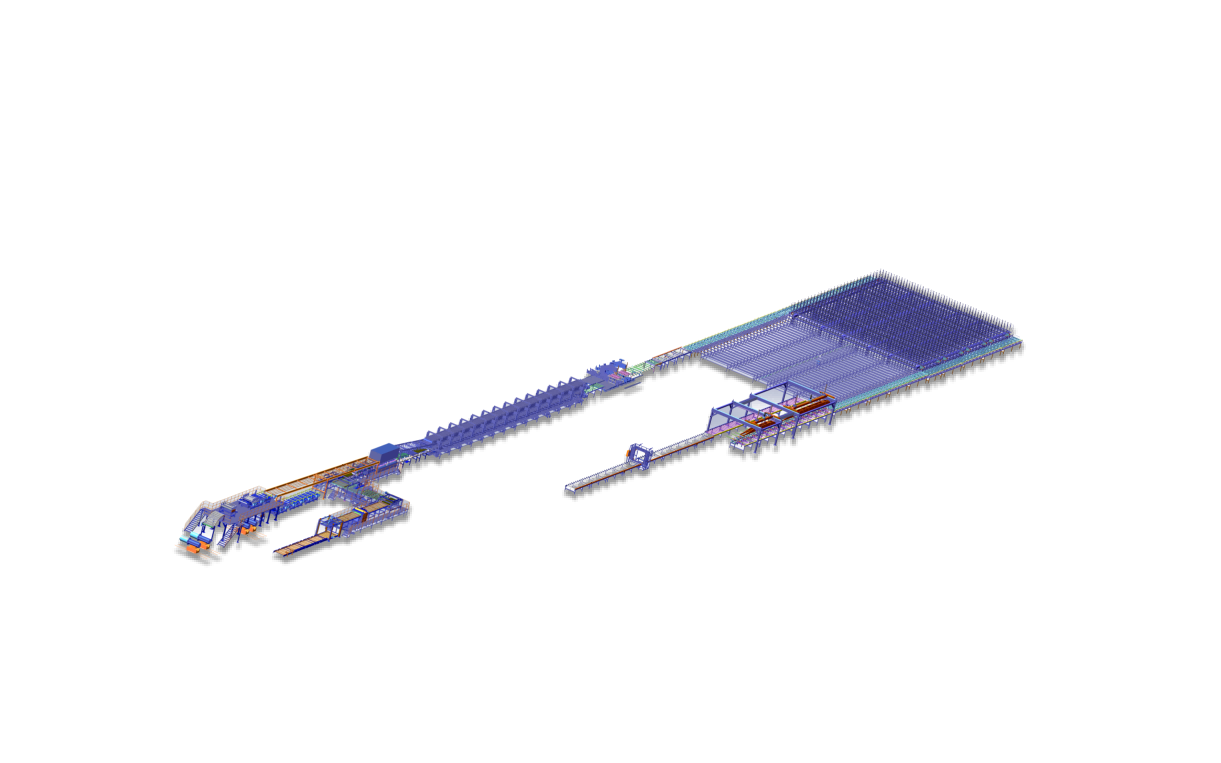
A production line rarely stalls because one machine is old. It stalls because the mix of equipment behind it was never tuned for how demand actually moves. The most reliable setups pair a few heavy, dedicated assets with enough flexible units to absorb sudden shifts, so no single point of failure gets to hold the entire schedule hostage.
That balance is less about brand names and more about matching throughput speeds. When a fast filler feeds a slower capper, the bottleneck shows up as idle time that no amount of overtime can fix. Smart teams adjust the mix by adding buffer capacity or re-timing maintenance windows, keeping each piece just slightly under its breaking point instead of running everything at full tilt.
What keeps flow steady over the long run is not having extras of everything, but knowing which machines are truly load-bearing and which can be swapped or rerouted. A well-chosen mix lets operators shift work between stations without piling up work-in-progress, and that flexibility often matters more than raw speed.
Foam Chemistry Without the Guesswork
The fastest way to waste a week in foam development is to change one ingredient, run a shake test, and hope the bubbles last longer. That's not chemistry; it's blind iteration. A reliable foam comes from mapping three things before you mix anything: the dynamic surface tension profile, the drainage rate of the liquid film, and the bubble size distribution. Once you see those numbers, you can predict collapse instead of reacting to it.
Surface tension gets too much credit. A surfactant that lowers static tension dramatically might still build a weak foam if it adsorbs too slowly or packs too tightly at the interface. What matters is whether the film can stretch under a disturbance without thinning past the point of rupture. Measure adsorption kinetics and film elasticity together, and you stop buying additives based on a single data sheet number.
Drainage is where most foams quietly die. Gravity pulls liquid from the walls between bubbles, and as those walls thin, the foam weakens until one bubble pops and triggers a cascade. Controlling viscosity, bubble size, and even the humidity around the foam changes that drainage curve. Instead of storing samples for a month to see what happens, run a forced drainage test and read the half-life from the flow rate.
Flatness and Bonding Checks That Actually Matter
Most flatness specs get copied from old datasheets without anyone questioning whether the tolerance still fits the actual assembly process. Before reaching for a dial indicator, stop and ask where the board actually contacts the tooling or heatsink. A 0.2 mm bow across a 300 mm span may pass a generic IPC check but still cause tombstoning on small passives if the warp lands between two pads. Measure at the points that carry mechanical load, not just the four corners, and record the direction of curvature, not just the peak-to-valley number.
Bonding checks fail more often from surface preparation than from adhesion strength. A pull test tells you nothing about whether the bond will survive thermal cycling if the copper was oxidized or the adhesive was mixed past its open time. Run a quick cross-cut or peel test on a coupon that went through the same reflow profile as the real board. And if the bond line looks thicker on one edge, don't average the measurements—find out why the pressure distribution was uneven before you sign off the batch.
Typical Bottlenecks and How Operators Work Around Them
Every operator eventually hits the same wall: the line that should run at ninety units an hour suddenly crawls at forty, and nobody can point to a single broken part. The most common bottleneck isn't a machine failure at all—it's a choke point where material queues pile up because one station's cycle time is just a few seconds slower than the rest. Smart operators learn to spot these quietly before they become emergencies. They watch for the operator who keeps glancing at the hopper, the conveyor that pauses for a half-second longer than it should, or the bin that always overflows while the downstream station starves.
Workarounds rarely come from the maintenance manual. A veteran might temporarily reduce feed speed upstream to keep the chokepoint from being overwhelmed, or they might run a slightly smaller batch through the troublesome station so the queue never builds beyond a manageable level. Some operators place a simple visual marker—a strip of tape on the rail, a chalk line on the floor—so anyone walking by can see when the queue is about to spill past the safe zone. These aren't fixes; they're breathing room. They buy time until a proper cycle-time analysis or a tooling change can be scheduled without shutting down the whole shift.
The trick is that workarounds have a shelf life. A bypass that works for a week will eventually become the new normal, and then the bottleneck just moves somewhere else—often hidden under a pile of half-finished parts that nobody wants to touch. Operators who last in the job don't just patch the flow; they note the patch, tag the station, and tell the next shift exactly what they did and why. That kind of handoff is rarer than it should be, but it's what separates a line that limps from one that keeps learning how to run faster without breaking.
Matching the Line to Your Output Goals
Your production line should never feel like a generic solution wearing a custom label. The real work begins when you stop asking what the machine can do and start asking what your output actually demands. Are you chasing tight tolerances on small batches, or high-volume consistency that barely pauses for tool changes? The line you choose has to reflect those priorities, not fight against them. It’s less about picking the most impressive spec sheet and more about recognizing where your process tends to drift, stall, or waste material. A well-matched line quietly compensates for your shop’s quirks instead of forcing you to adapt around it.
Matching the line to your output goals also means being honest about the end user, not just the part drawing. If your customer values repeatable surface finish over raw speed, then every upstream decision—feed rates, fixturing style, even how the line handles chip removal—should lean that direction. Too many setups underperform because they were optimized for a theoretical benchmark rather than the actual rhythm of orders coming through. Think about the dull, unglamorous moments: the shift handoff, the tooling swap at 2 a.m., the operator who has to interpret a vague work instruction. A line that fits your output goals makes those moments boring, not heroic.
Finally, don’t ignore the temptation to future-proof at the expense of today’s throughput. It feels smart to buy capacity for the job you hope to win next year, but that often leaves you with a line that’s slightly wrong for the job you have right now. The better move is to map your current bottlenecks against your actual scrap and rework data, then let that evidence shape the line’s configuration. When output goals and line capabilities genuinely align, you see it in the little things: fewer unplanned stops, less time adjusting offsets, and a shipping dock that doesn’t panic every Thursday afternoon.
FAQ
Such a facility produces continuous or discontinuous panels consisting of a rigid polyurethane foam core bonded between two metal facings, typically steel or aluminum. The output serves roofing, wall cladding, cold storage, and cleanroom construction.
A continuous line generally includes decoilers, a roll-forming unit for profiling the metal sheets, a preheating section, a high-pressure polyurethane metering and mixing machine, a double belt press for lamination and curing, a cutting saw, and a cooling/stacking system.
Liquid polyol and isocyanate are mixed under high pressure and poured onto the lower metal sheet. The foam rises and expands rapidly, filling the cavity as the sheets pass through a heated double belt press, where it solidifies into a rigid core with strong adhesion to both facings.
Most modern lines accommodate panel thicknesses from about 30 mm to 200 mm and widths up to 1,200 mm, though custom configurations can exceed these ranges. Adjustable side guides and press height settings allow rapid changeovers between product sizes.
In-line systems monitor foam density, core temperature, panel thickness, and adhesion strength. Some factories also use ultrasonic or X-ray inspection to detect voids or delamination, and samples are periodically cut for laboratory mechanical testing.
A discontinuous line produces panels one at a time in a stationary mold or press, making it suitable for lower volumes, thicker panels, or frequent size changes. Continuous lines run nonstop with higher throughput and better consistency for standard panel dimensions.
The main inputs are galvanized or coated steel coils, aluminum coils, polyol and isocyanate for the polyurethane foam, blowing agents, and sometimes adhesives or edge sealants. The exact formulation depends on fire rating, insulation value, and density requirements.
Automation reduces labor costs, improves dimensional accuracy, and allows consistent foam distribution at high speed. It also supports traceability through integrated PLC and SCADA systems, giving operators real-time data for process tuning and quality assurance.
Conclusion
A polyurethane sandwich panel production line is less a single machine than a choreographed sequence of metal forming, foam injection, and continuous lamination. Coils feed through roll formers that shape steel facings, which then pass through preheaters before entering the pouring station. Here the real work begins: a metering unit blends polyol and isocyanate at a controlled ratio and temperature, injecting the mix onto the lower facing. As the foam rises, a double belt press holds the sandwich to a precise thickness, allowing the core to cure while bonding to both facings. Operators watch viscosity, cream time, and gel time more than any theoretical formula; small shifts in ambient humidity or raw material batch can force quick adjustments to catalyst levels or line speed. The goal is not just foam that fills the cavity, but a consistent cell structure that gives the panel its insulation and compressive strength.
Downstream, flatness and bonding checks separate panels that will last from those that will delaminate on a roof. A straightedge across the width, a pull test on a cut sample, and a core density check every few hours are often more revealing than any automated scanner. The typical bottlenecks are predictable: foam cure time limits maximum line speed, changing coil or thickness takes longer than the actual run, and a cold facing can kill adhesion. Experienced operators work around these by preheating the next coil, staging tooling for the next width, and running thinner panels later in the day when the line is already warm. Matching the line to output goals comes down to this: know your panel mix, be honest about changeover frequency, and buy a slightly faster double belt than you think you need, because a line that runs flat-out every shift will eventually teach you the true cost of rushed foam.
Contact Us
Contact Person: Sophia Jiang
Email: [email protected]
Tel/WhatsApp: +86 17367381818
Website: https://yzwelding.com/