

Preserved Rose Factory Process Behind Everlasting Floral Beauty
2026-11-20
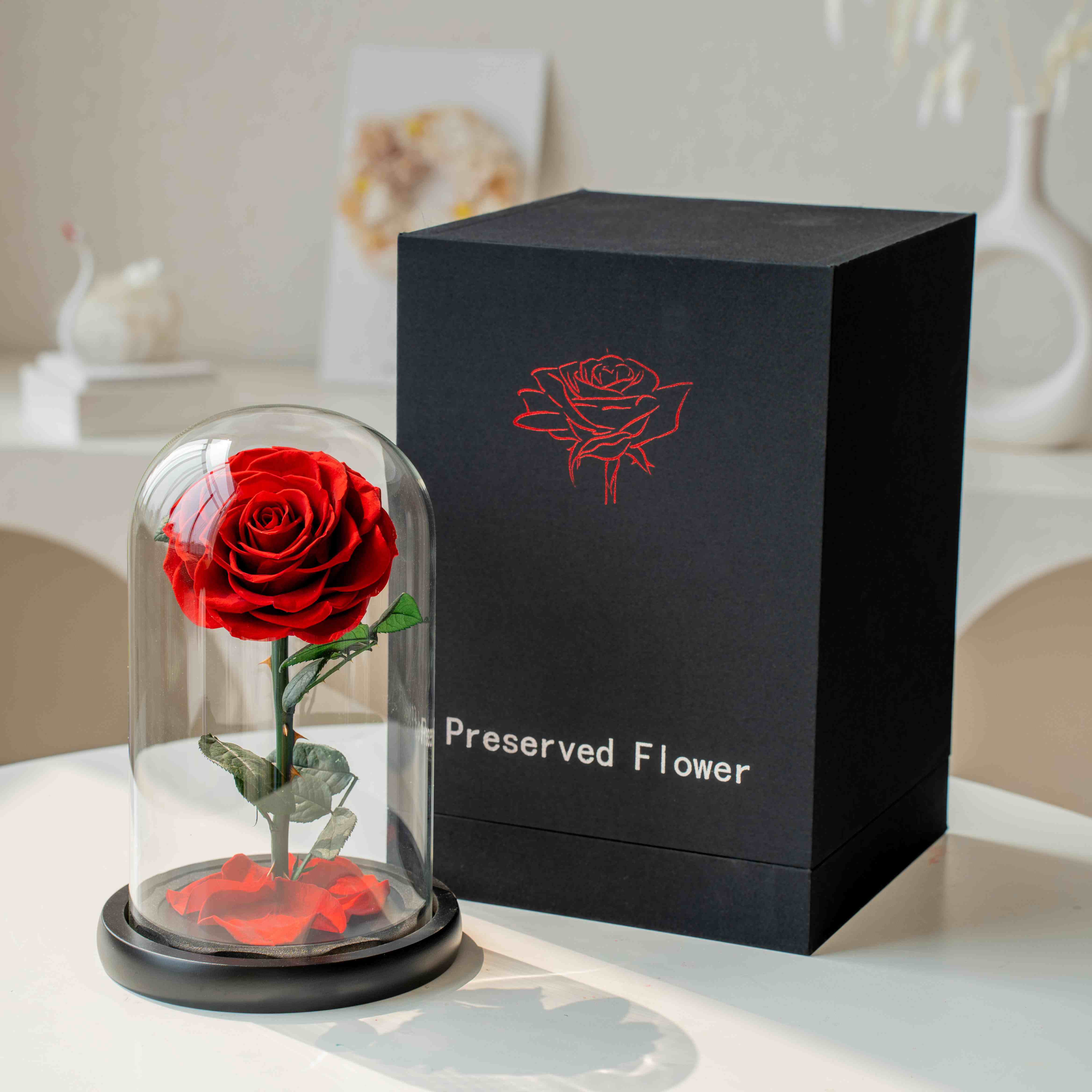
Few gifts capture timeless emotion quite like a rose that never wilts. Behind every preserved bloom lies a quiet blend of science, patience, and design—yet most people never see what happens before the petals are sealed in glass. At PHLEEYA, that hidden process shapes more than color and shape; it preserves a moment meant to outlast the season. Step inside the workshop where fleeting beauty becomes something you can hold for years.
Where Fresh Roses Begin Their Slow Transformation
The roses arrive here while their stems are still cool from the field. They are placed in single layers on wide wooden trays, not bundled or forced upright. In this room the light is kept low, and the air moves just enough to carry away the first moisture. Petals that looked almost polished at dawn begin to show faint, dry edges by late afternoon.
Over the next few days the change becomes easier to see. Outer petals curl inward as if guarding the tighter center, and the bright reds or pinks lose their slick shine. The scent shifts too, dropping its sugary top note and turning toward something closer to cut hay and dried clove.
Nothing here is rushed. The roses are not baked or pressed; they are simply given shade, a steady draft, and enough time to let go on their own terms. That restraint keeps the stems from snapping and allows each bloom to hold its shape before it moves to the next stage.
The Dehydration Room Most Visitors Never See
Most tours end at the polished display cases up front, so the dehydration room stays off the usual route. It sits behind a thick stainless door near the back corridor, where the hum of circulating fans never quite fades. The air inside is cooler than expected and faintly sharp with old salt, clean metal, and the nutty bloom of long-aged proteins. Racks of whole cuts hang in uneven rows, their surfaces darkening into something closer to bark than fresh meat.
Nothing happens quickly here. The room runs on patience: steady airflow pulls moisture out over weeks or months, shrinks each piece, and concentrates what remains. Staff slip in only to log the numbers and check the bloom, careful not to leave the door open too long. The change is almost invisible day to day, but over time the weight drops, the edges firm up, and the flavor turns dense, savory, and a little wild.
How Each Petal Keeps a Natural Feel
The natural feel starts in the uneven edges. Instead of a clean, machine-cut outline, every petal carries a slight wave and a few near-invisible dips along its rim. The veining is pressed in with varied depth, so light catches some lines more than others, and the base color shifts just enough from one side to the next to avoid that flat, printed look.
There is also a tactile layer that matters more than the shape. The surface has a faint suede-like grain on the back, while the front keeps a softer sheen that reads as moisture rather than gloss. When a petal is bent between two fingers, it gives a little at the midpoint and returns slowly, much like a fresh bloom would. That slight resistance, combined with the muted color pooling near the center, makes the flower feel picked rather than manufactured.
Locking In Color Without the Plastic Look
The plastic look usually has less to do with how much color is present and more to do with what gets sacrificed to keep it there. When saturation is pushed globally, highlights flatten, skin turns waxy, and surfaces lose the tiny luminance shifts that tell the eye something is real. Locking color in means protecting those shifts: let a red sweater stay deeper in the folds, let a cheek keep its natural blotchiness, and let a bright sky still breathe instead of becoming a solid cyan sheet.
A better route is to work with color density and luminance separation rather than saturation alone. Pull the brightness of a hue down while keeping its chroma intact, and the color feels richer without glowing from inside. Use channel curves or a color mixer to darken the midtones of a specific range, then ease the highlight roll-off so specular areas retain just a hint of the surrounding color. That slight unevenness is what separates a dyed material from a digital sticker.
Detail plays an equal part in holding the color together. Leave the pores, fabric weave, and fine grain alone instead of smoothing them into porcelain. When sharpening, keep it on edges and let the textured areas carry their own micro-contrast, which gives the color somewhere to anchor. The goal is not to make every hue shout; it is to make each hue feel like it belongs to the surface it sits on, even at higher intensity.
The Quiet Checks Before a Stem Is Sealed
Before anything is sealed, the lab goes oddly still. A technician holds the vial up against the light and looks for hairline cracks near the shoulder, then runs a gloved finger around the inside of the cap to feel for a dried ring or a nick in the silicone. The handwritten label gets read aloud against the record on screen, not just glanced at.
There is also a check most visitors never notice: the meniscus. The cryoprotectant has to sit at the marked line, because too little leaves cells exposed during freezing and too much can push against the seal as the liquid warms at room temperature. The cap is turned slowly once, just enough to feel whether the resistance stays smooth. A grind or a loose start means the tube is replaced.
Only after the paperwork and a second set of eyes have confirmed the batch code does the stem sample go into its assigned slot in the vapor-phase dewar. No alarm sounds at that moment. The lid closes with a soft click, and the quiet part is over.
Why Some Imperfect Blooms Outlast Their Perfect Neighbors
A rose with a torn outer petal often gets passed over at the market, but once it sits in a vase that same blemish signals something useful. The small tear has already sealed itself, slowing moisture loss and keeping the inner petals protected. A flawless bud may sit in the same water and sulk for days, refusing to open or collapsing the moment the room warms up.
Gardeners notice a similar pattern after a storm. Flowers that leaned, bent, or lost a leaf often root a little deeper and push out new growth faster than the ones that stood untouched. Perfection can become a kind of rigidity, whereas small damage teaches a plant where to reinforce its stems and when to close its pores.
None of this means you should choose the saddest stem on the shelf. But if a petal carries a faint bruise or a leaf shows a ragged edge, it may simply be carrying proof that it met a rough morning and kept going.
FAQ
They are sorted by bloom openness and stem condition, then rehydrated so the petals are plump before treatment. Damaged outer petals are removed, and the roses enter a glycerin-based solution that gradually replaces their natural sap over several days.
Because the preservation liquid replaces the water and sap that normally feed decay. As long as the roses are kept away from direct sunlight and high humidity, the blooms remain soft and colorful for a year or more.
Many production lines start with white or pale roses, then add dye directly to the preservation bath. The petals absorb the pigment along with the stabilizing solution, so the color reaches the inside of each petal rather than sitting on the surface.
They move into a controlled drying phase before being inspected one by one. Technicians reshape the petals by hand, reinforce the stems with wire if needed, and clean up the foliage before the roses are cleared for packaging.
They do. Most factories use low-humidity, crush-resistant packaging with soft supports around each bloom. The roses stay pliable after treatment, so they are protected from heavy stacking, sharp temperature changes, and trapped moisture in transit.
It remains a real rose, but its moisture has been replaced with a stabilizing solution to stop wilting. The petals, stem, and overall shape are natural, while the main difference is that the rose no longer needs water and will not keep growing.
Direct sunlight, steamy bathrooms, and occasional watering are the most common problems. Light and moisture can degrade the stabilizing solution or encourage mold, while a cool, dry spot and gentle dusting usually keep the blooms looking fresh much longer.
Dried flowers lose their moisture completely and often become stiff, brittle, and faded. Preserved roses go through fluid replacement instead, which keeps the petals supple and the color closer to a fresh bloom.
Conclusion
The transformation starts before the roses ever reach the main floor. Bunches arrive with their stems still carrying the chill of early harvest, then move into a low-humidity dehydration room where moisture is drawn out over several days rather than forced out in a rush. This slow pulling of water is what lets the petals shrink without turning brittle, and it sets the stage for the infusion that follows. Workers guide batches through a controlled uptake of glycerin-based solution, timed so each petal absorbs enough to stay soft and supple to the touch. The goal is not to freeze a flower in glass but to leave it with a quiet, natural give that mimics a freshly cut stem.
Color work happens in a separate, cooler area, where pigments are introduced gradually. The teams avoid heavy lacquers and shiny coatings, instead letting the rose drink in tone through its vascular system until the color sits inside the petal rather than on top of it. Before sealing, every stem passes a quiet inspection: a slight turn under soft light, a fingertip pressed near the base, a check for weak spots around the calyx. Curiously, some blooms with small scars or uneven petal edges outlast their flawless neighbors. These imperfect roses often have denser petal structures or slower opening habits, which means they hold the preserving solution longer and resist crumbling weeks after the display is made.
Contact Us
Contact Person: Mr. Luo
Email: [email protected]
Tel/WhatsApp: 86 18100895505
Website: https://www.feiliyaflowers.com/en/