

Red Light Therapy Mask Company: What to Consider Before You Buy
2026-08-26
Scrolling through red light therapy masks can feel like decoding a science experiment. There’s wavelength ranges, irradiance levels, LED counts—and every company promises the same glow. But not all masks deliver what they claim. Before you invest, you need to know which specs actually affect your skin and which are just noise. That’s where a brand like Omeina changes the conversation.
Check the Wavelength Before You Trust the Glow
That warm, rosy light coming from a device might look promising, but your skin doesn't care about aesthetics—it responds to specific wavelengths. A lamp or mask can glow beautifully and still miss the range that actually triggers collagen production or targets acne bacteria. For instance, blue light around 415 nm has solid evidence for killing Cutibacterium acnes, while red light near 633 nm or 660 nm is the one linked to skin rejuvenation. If the box only says “LED therapy” without listing nanometers, you're basically guessing.
Before buying or using any light-based tool, flip it over or open the manual and check the spectral output. Look for the peak wavelength, irradiance (mW/cm²), and whether the device delivers continuous or pulsed light. Some budget face masks use general-purpose red LEDs that look identical to therapeutic ones but emit a broader, weaker band that may not reach the dermis at a useful dose. Also, if you're taking medications that increase photosensitivity, even a “gentle glow” can cause irritation. Trust your research, not the warm and fuzzy feeling the glow gives you.
Irradiance Tells You What the Mask Actually Delivers
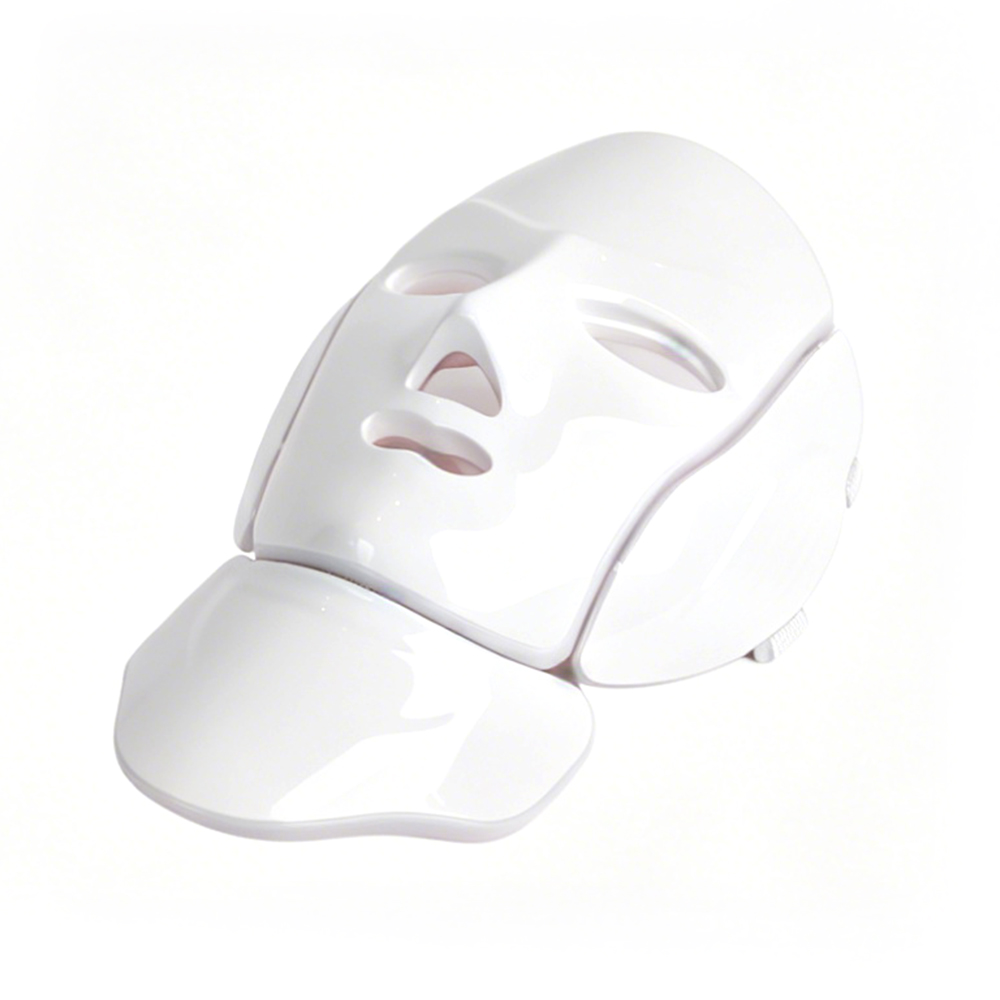
The label on the box may list total wattage or a high LED count, but neither tells you how much light actually reaches your skin. Irradiance changes that. Expressed in milliwatts per square centimeter, it measures optical power density at a given distance, so it accounts for beam spread, lensing, and losses across the surface of the mask. A device with 200 low-efficiency LEDs can have a lower useful irradiance than a smaller panel with tightly focused, brighter diodes.
For a mask, what matters is the irradiance at the treatment plane, not at the LED surface. Some brands quote figures taken almost touching the diode, where readings are flattering. When you look at the actual face-to-mask distance, the number can drop by half or more. Checking irradiance at that real working distance gives you a better estimate of dose: multiply irradiance by treatment time, and you get energy density in joules per square centimeter.
Eye Protection and Skin Safety Deserve Real Attention
Most people remember sunscreen for their face but skip the thin, delicate skin around the eyes. That area ages faster and shows fatigue sooner, so it needs more than a quick swipe of moisturizer. A dedicated eye cream with SPF or wearing sunglasses that block UVA and UVB can make a real difference over time.
Staring at screens all day doesn't just strain your vision—it can also lead to squinting, which deepens fine lines and leaves the eye area looking tired. The 20-20-20 rule (every 20 minutes, look at something 20 feet away for 20 seconds) helps reduce strain, but pairing it with a cool compress or a gentle massage around the brows can ease tension and support skin recovery.
Not all eye products are created equal. Look for fragrance-free formulas with ingredients like hyaluronic acid, ceramides, or caffeine if you deal with puffiness. And be honest about your habits: late nights, salty food, and poor sleep show up around the eyes first. Small adjustments, like sleeping slightly elevated or using a silk pillowcase, often matter just as much as the products you choose.
Fit and Comfort Change How Often You'll Use It
You might not think about fit until the second week, but that's exactly when it starts to matter. A headset that pinches behind your ears or presses too hard on the bridge of your nose has a way of quietly disappearing from your desk. The best designs distribute weight so evenly that you forget you're wearing anything at all, and that's the point. If it's comfortable, you'll grab it without hesitation for a quick call, a long playlist, or a late-night game session.
Comfort is also about the materials against your skin. Memory foam ear cushions that breathe, a headband with just the right amount of clamp, and hinges that don't creak when you adjust them—these small details add up over hours of use. When a headset disappears into the background, you stop thinking about the hardware and start engaging with whatever you're doing. That's when you begin reaching for it every single day, not just when you have to.
Fit isn't static either. Your ears and head shape are unique, and a design that works for someone else might feel wrong for you. Look for adjustable yokes, swiveling ear cups, and enough range in the headband to accommodate different sizes. Once you find that sweet spot, the headset becomes less like a device and more like a habit. You'll use it not because you need to, but because it simply feels right.
A Company's Track Record Speaks Louder Than Its Ads
Years after the billboards fade and the jingles go quiet, what remains is a paper trail of decisions. A company with a solid record doesn't need to shout about trust because it has already been tested in ways no ad campaign can replicate. The late shipments that were corrected before the customer noticed, the warranty honored without a receipt, the quiet upgrade to a safer material when nobody was watching—these moments accumulate into something far harder to fake than a slogan.
Ad budgets can buy attention, but not the kind of memory that spreads through word of mouth. When a business consistently fixes its mistakes and keeps its promises under pressure, former clients become the loudest marketing channel. Their stories carry a specificity that generic advertising lacks: the exact day a delivery arrived early, the exact person who answered the phone at 2 a.m., the exact cost saved by a supplier who refused to pass on a hidden fee. That granularity cannot be scripted.
Smart buyers know this. They read the fine print of past performance, ask for references, and check whether the company's behavior matches its messaging. A flashy launch means little if the follow-through is weak. In the end, the track record is the only ad that keeps working long after the media budget runs dry.
Warranty, Returns, and the Real Cost of a Bad Pick
Warranty cards and return slips often create a false sense of security. A product that comes with a two-year warranty might look like a safe bet, but the fine print frequently excludes the most common failure points. Shipping costs, restocking fees, and the time spent repacking and mailing a defective item quickly eat into any perceived savings. A generous return window means little if the replacement unit has the same flaw, forcing you to repeat the cycle.
The real cost of a bad pick goes far beyond the purchase price. Every hour spent troubleshooting, contacting support, or waiting for a refund is time stolen from other work or family. For business purchases, a faulty tool can delay a project by days, not hours. Customers rarely factor in the mental toll of second-guessing a decision, yet that lingering doubt often leads to a hasty upgrade purchase that could have been avoided with a bit more research upfront.
Smart buyers treat warranty terms as a tiebreaker, not a primary reason to buy. Instead of assuming a longer warranty equals better quality, compare actual defect rates and read return experiences from other users. A no-questions-asked return policy only helps if the company honors it without endless email chains. In the end, the cheapest option with a weak warranty can cost twice as much once you add your own labor and frustration.
FAQ
Check the spec sheet for the exact nanometers being emitted. Red light around 633 nm and near-infrared around 830 nm have the most clinical backing for skin rejuvenation. Anything outside those ranges might still glow, but won't penetrate past the surface the same way.
The LED count and power density matter more than the price tag. A cheap mask with sparse LEDs and low irradiance will take longer to show results, and the straps or battery pack often fail within months. Spending a bit more usually gets you better heat management and consistent light output.
Even though red and near-infrared light isn't as harsh as UV, direct exposure to your retinas can cause glare and temporary discomfort. Most reputable masks include built-in eye shields or recommend wearing goggles. If the company doesn't mention eye safety at all, that's a red flag.
Most studies suggest 10 to 20 minutes per session, three to five times a week. More isn't better; your skin cells need time to respond to the light. If a company pushes you to wear the mask for 45 minutes daily, they're probably trying to make you use it up faster rather than give you better outcomes.
FDA clearance means the device was reviewed for a specific use, like treating acne or wrinkles. Registration just means the company filed paperwork and paid a fee. A mask can be registered but not cleared, which tells you nothing about whether it actually works or is safe.
It depends on the heat output and your skin's reaction. Red light is generally gentle, but some masks emit enough warmth to trigger melasma. Start with the lowest setting and short sessions, or consult a dermatologist first. If the company claims it works for all skin types without any caveats, be skeptical.
A solid warranty covers LED burnout and battery failure for at least one year, ideally two. Since LEDs degrade over time, you want a replacement guarantee if a section stops lighting up. If the company only offers 30 days or requires you to pay return shipping for a defective unit, that's a sign they don't expect the product to last.
Conclusion
Before you hand over your money for a red light therapy mask, take a close look at the specs that actually matter. The wavelength should fall within the proven therapeutic range—typically somewhere in the 600 to 850 nanometer window—otherwise that pretty glow is doing very little for your skin. Irradiance is just as important, because a mask with weak power density won't deliver enough energy to reach deeper layers, no matter how long you wear it. Don't overlook eye protection either; a good design should shield your eyes or come with proper goggles, especially if you plan to use it regularly. Fit and comfort can make or break the habit, since an awkward, heavy mask will end up collecting dust on a shelf instead of helping your skin.
Then there's the company behind the product. A long track record with transparent testing and real customer feedback beats flashy advertising every time. Check the warranty and return policy before you commit—if the company offers only a short window or makes returns difficult, that's a warning sign. A cheap mask that breaks after a few months or fails to deliver results ends up costing more than a quality one. In short, compare the technical details, comfort, and the company's reputation side by side, and you'll be far less likely to waste money on a device that looks great in photos but disappoints in real life.
Contact Us
Contact Person: Tina Liu
Email: [email protected]
Tel/WhatsApp: 8618681405932
Website: https://www.omeinabeauty.com/