

Spring Energized PTFE Seal Solutions for Demanding Sealing Applications
2026-11-19
Most seals don't fail with noise—they fail quietly, until a pressure drop, a leak, or a contamination issue forces a shutdown. In demanding sealing applications, the difference between a reliable seal and a recurring problem often comes down to the spring energizer and PTFE jacket working together. This post explores spring energized PTFE seal solutions designed for aggressive media, extreme temperatures, and high-pressure conditions, and why more engineers are turning to TAIFNO for dependable, application-specific options.
Holding Seal Integrity Under Thermal Cycling and Aggressive Media
Thermal cycling rarely destroys a seal through temperature alone. What it does is force the housing, flange, and sealing element to expand and contract at different rates, gradually shaving away the contact stress that made the joint tight on day one. In many services, the first visible sign is not a leak but a slow drop in bolt load or a polished wear track on the sealing face—evidence that the seal has been moving, fretting, or losing recovery force every time the system swings from hot to cold.
Aggressive media accelerate the damage by attacking the material's ability to spring back. A seal that sees hot solvent followed by a cold aqueous flush may look intact on the outside while its core has hardened, swollen, or leached out plasticizer. That combination is particularly unforgiving because the mechanical demand is rising just as the material is becoming less elastic. The result is often a seal that still measures within tolerance on the bench but can no longer maintain a gas-tight barrier under real thermal movement.
The practical countermeasure is to separate the sealing function from the structural recovery function. Spring-energized PTFE assemblies, for example, use a metal spring to keep the polymer lip loaded while the jacket handles chemical compatibility. Where elastomers are unavoidable, higher fluorine grades such as FFKM tend to survive longer because they resist both chemical attack and compression set. Equally important is the groove geometry: enough room to absorb thermal expansion without extrusion, but not so much that the seal loses radial squeeze at low temperature.
Reducing Breakaway Friction Without Losing Leakage Control
Lowering breakaway friction often feels like a direct trade against sealing integrity, but the usual fix—reducing squeeze—is only one route. In many seal designs, the contact patch itself can be reshaped so that static adhesion drops while the lip remains firmly seated. A narrower footprint with a softly radiused edge keeps the intimate contact needed for leakage control, yet gives surface forces less area to grip during startup.
Compound choice changes the equation as well. Elastomers with a lower glass transition temperature begin to move with less initial resistance, but they only hold a pressure boundary if groove fill and compression set stay within tight limits. Some applications pair these materials with a low-energy or lightly textured counterface, which weakens the stick-slip cycle without forcing the lubricant film down to a risky thickness.
Lubricant placement is often more effective than adding more of it. A thin boundary film applied only to the lead-in or ramp area eases the first few microns of travel, while the main sealing band stays comparatively dry. On rotary seals this has lowered starting torque, and on reciprocating parts it has reduced actuation force, with leak rates remaining stable through extended cycling.
Custom Geometries for Worn Grooves and Non-Standard Hardware
When a pulley, sheave, or shaft has been running long enough to wear a groove past its original profile, off-the-shelf dimensions stop being useful. We reverse-engineer the actual contact surfaces from field measurements or worn samples, then rebuild the geometry around what remains rather than forcing a nominal spec that no longer exists.
Non-standard hardware usually means mixed vintages, metric and inch fasteners on the same assembly, or a previous repair that introduced an odd shoulder or taper. The replacement parts we produce follow those irregularities instead of assuming a clean factory drawing, which keeps installation straightforward and avoids re-machining surrounding components.
The goal is not to restore the original blueprint, but to match the mechanism as it actually sits today. That approach reduces the trial-and-error involved with worn equipment and keeps lead times practical when a standard catalog item simply will not seat or clamp correctly.
Matching PTFE Compounds and Spring Loads to Abrasive or High-Purity Streams
Carbon- and graphite-filled PTFE compounds hold up better in abrasive slurries because the filler carries part of the load at the sealing interface and reduces the transfer of soft PTFE to the shaft or sleeve. That benefit disappears if the spring load is cranked up too high. Excessive radial force presses abrasive particles into the polymer instead of letting them pass through a thin film, which accelerates grooving and can turn a slow leak into a sudden washout. For many abrasive streams, a medium spring load paired with a harder, low-wear PTFE compound will outperform a high-load arrangement with virgin PTFE.
High-purity streams invert the priorities. Virgin or modified PTFE grades with low extractable content usually make the best jacket material, while fillers such as glass fiber are avoided because they can shed particles and create nucleation sites. Spring selection moves toward lighter loads and cleaner alloys such as Elgiloy, Hastelloy C-276, or 316L, often with an encapsulated or non-metallic alternative when metal ions cannot be tolerated. The goal is only enough radial force to seal at low differential pressure; anything beyond that mostly generates friction heat and wear debris in a service where even faint particulate contamination is a process variable.
The practical match comes from the particle size, hardness, and carrier fluid viscosity, not from the seal size alone. Fine, hard abrasive particles in a low-viscosity stream can behave like a lapping slurry, so a slightly harder filled PTFE and a light-to-medium spring load may wear less than a soft compound under high load. Coarse particles in a viscous carrier are often less aggressive at the lip but harder to keep out of the groove, which shifts attention to fillers with better extrusion resistance. Checking spring force after thermal cycling also matters because PTFE relaxes and can lose the initial preload; calibrating the spring to the actual cold and hot running conditions prevents both bypass leakage and premature wear.
Extending Maintenance Intervals in Pumps, Valves, and Rotary Equipment
Maintenance schedules for pumps, valves, and rotary equipment rarely need to follow the conservative defaults set at commissioning. Once vibration signatures, thermal patterns, and lubricant condition are tracked over a few cycles, it becomes clear which assets can run longer without intervention and which ones genuinely need shorter attention. The trick is treating the interval as a working assumption rather than a fixed number.
For pumps and rotary assemblies, small changes in alignment and seal flush practices often buy more time than any calendar-based overhaul. Laser alignment checks, clean strainer baskets, and consistent oil sampling can reveal early wear without opening the casing. Valves respond similarly when stem torque and leak-off rates are recorded during routine rounds; those trends often show that a planned shutdown can be pushed safely beyond the original date.
The payoff comes from letting condition data set the pace. Instead of replacing bearings or packing on a fixed count of hours, maintenance teams can stretch intervals on units that show stable operation and focus resources on the few outliers that are actually degrading. That shift reduces parts consumption, frees up manpower, and still keeps unexpected failures at a low level.
Why Spring Energized Seals Outlast Elastomer Alternatives in Critical Duty
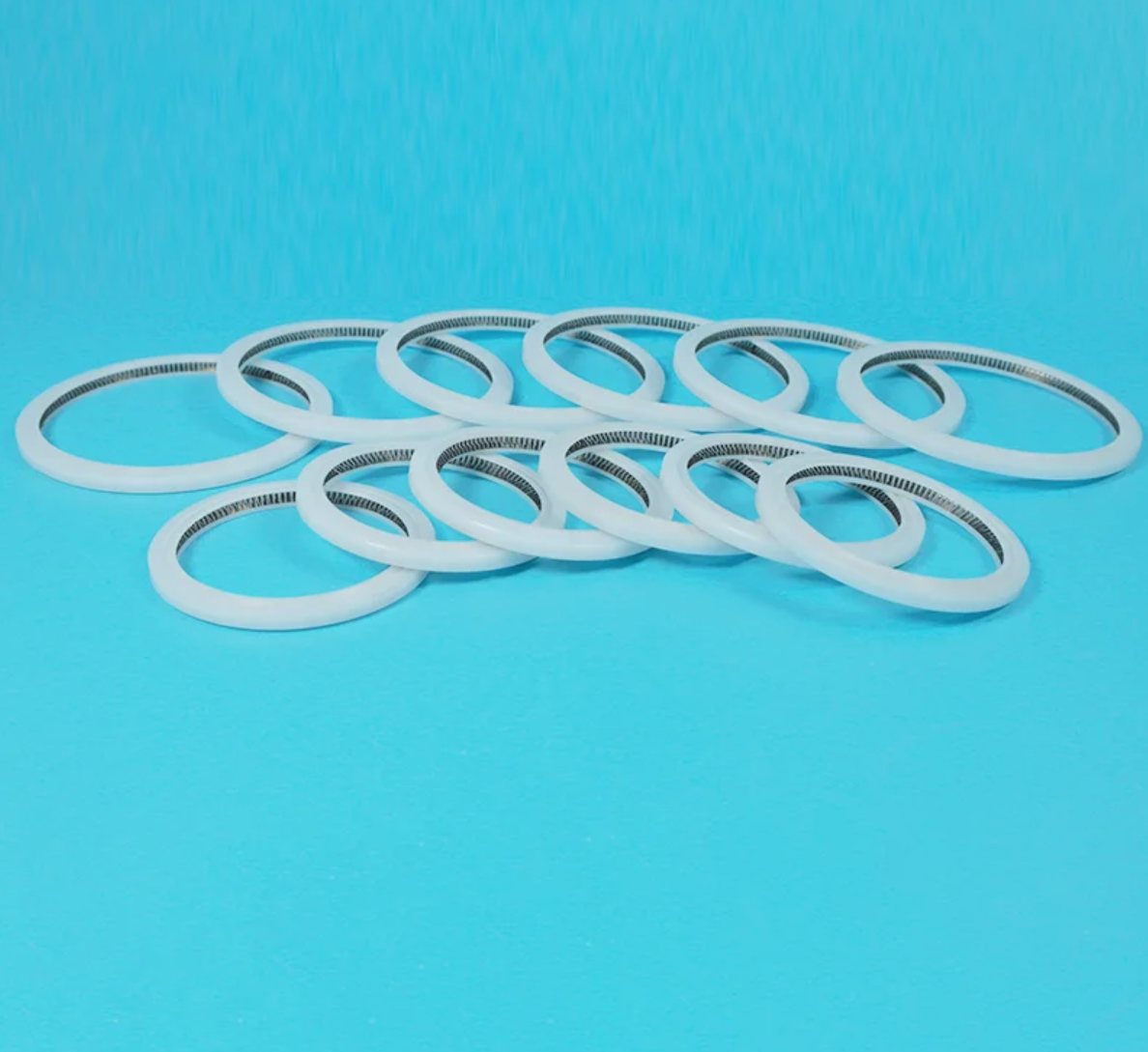
Most elastomer seals fail in critical duty not because they wear down, but because they lose their ability to push back. Heat, pressure cycling, and aggressive media gradually compress the material until it takes a permanent set. Once that happens, the seal no longer follows the hardware, and a small leak turns into an unplanned shutdown. Spring energized seals attack this problem from a different angle. The polymer jacket handles chemical compatibility and low friction, while the internal spring supplies a continuous radial load that does not depend on the elastomer's memory.
That spring also gives the design a much wider recovery window. As the jacket experiences normal wear or thermal expansion shifts the gland dimensions, the spring keeps the lip engaged instead of waiting for the material to rebound. In cryogenic service, where many elastomers turn glassy and lose compliance, the metal spring remains active. In high-temperature hydrocarbon processing, it holds sealing force long after conventional O-rings have flattened. The result is less frequent replacement, fewer leaks between maintenance intervals, and a seal that behaves more like a mechanical component than a consumable.
FAQ
A spring energized PTFE seal uses a metallic spring element inside a PTFE jacket to maintain constant contact force at the sealing lip. This helps compensate for wear, pressure fluctuations, and temperature cycling that would cause a standard lip seal to lose contact and leak. The PTFE offers low friction and broad chemical resistance while the spring keeps the lip engaged even at very low pressures or vacuum conditions.
They show up in high-pressure compressors, chemical processing pumps, rotary unions, valves, and cryogenic systems, among others. Any service where aggressive media, wide temperature swings, or low friction requirements rule out conventional elastomer seals is a candidate. Specific examples include superheated steam, liquid oxygen, aggressive solvents, and high-purity pharmaceutical lines.
Yes, but the spring type and jacket profile need to match the motion. Rotary service usually calls for a canted coil spring or a helical spring with a specific lip geometry to handle surface speed limits, while reciprocating service often uses a cantilever spring or a slanted lip design. Running the same seal in both motions without checking speed and pressure ratings is a common failure point.
It depends on the PTFE compound and the spring material. Standard PTFE jackets generally work from around -70 C to 260 C, but filled compounds and special spring alloys can shift that range. At cryogenic temperatures, the PTFE remains stable and the spring compensates for thermal contraction, while at the upper end the limiting factor is usually the jacket material rather than the spring.
Fillers like carbon, graphite, glass, or polymer additives change wear resistance, extrusion resistance, and friction characteristics. For example, carbon-graphite filled PTFE often improves wear life in dynamic applications but may slightly increase friction. Glass-filled grades can handle higher loads but may be more abrasive to soft mating surfaces. The filler choice should match the pressure, speed, and hardware material.
The groove dimensions, surface finish, and corner radii directly control extrusion gap, lip loading, and spring stability. If the groove is too deep or the surface finish too rough, the seal may not track the shaft properly or may wear too quickly. A well-designed hardware setup is just as critical as the seal itself, especially in high-pressure dynamic service.
Yes, they are often used in vacuum and ultra-high vacuum equipment because the spring keeps the lip loaded without relying on system pressure. PTFE has low outgassing compared to many elastomers, and the seal can maintain contact as components shift thermally. The spring material and PTFE grade still need to be selected for the specific vacuum level and bake-out temperature.
Some initial wear or transfer of PTFE to the mating surface is normal as the seal lip beds in. This usually produces a small temporary rise in friction or temperature before stabilizing. If friction continues to climb or leakage appears after the first hours of operation, it usually points to a mismatch in lip geometry, spring load, or surface finish rather than normal break-in.
Conclusion
In service environments where thermal swings, aggressive chemicals, and less-than-perfect hardware are the norm, sealing reliability usually hinges on geometry and material selection rather than the elastomer itself. Spring energized PTFE seals hold their cross-section when temperatures cycle because the energizer keeps a controlled contact stress on the jacket even as the polymer expands or contracts. That matters in pumps, valves, and rotary equipment where a slight leak path can form after repeated start-stop or process upsets. For abrasive or high-purity streams, matching the PTFE compound and spring load is not a one-size decision; filled grades resist wear without contaminating the media, while lighter spring forces reduce breakaway friction without giving up a tight dynamic seal. Where housings have worn grooves or non-standard dimensions, custom geometries let existing equipment return to service without rework.
The practical payoff shows up in longer maintenance intervals and fewer unplanned pull-outs. Because the PTFE jacket isolates the spring from aggressive fluids and resists chemical attack, the seal keeps its mechanical response even when elastomer alternatives would swell, harden, or tear. This is especially important in critical duty where leakage control must remain stable after thermal cycling, and where high friction would damage soft coatings or cause stick-slip in control valves. A well-chosen spring energized design spreads load across the lip and adapts to wear without losing its elastic recovery, so breakaway torque stays low and leakage remains within target. In demanding sealing applications, the combination of custom geometry, matched compound, and stable spring force often extends service life and avoids the frequent replacements that come with conventional elastomer seals.
Contact Us
Contact Person: Tommy Xiao
Email: [email protected]
Tel/WhatsApp: 8615651509888
Website: https://www.ptfe-factory.com