

Substantial Current Sense Resistor Selection Guide for Accurate Power Monitoring
2026-06-29
Getting accurate power readings starts way before you even power up your circuit. It's in the quiet component you might overlook: the current sense resistor. Pick wrong, and your data drifts with every degree of temperature change. Pick right, and your measurements stay rock-solid. But with so many options out there, how do you cut through the noise? This is exactly where a reliable partner like Milliohm comes into play, offering resistors that won't let your monitoring go sideways when it matters most. Let's unpack what actually makes a sense resistor work well in the real world—not just on paper.
Beyond the Datasheet: How a Resistor’s Hidden Thermal Personality Warps Power Readings
When engineers glance at a resistor datasheet, they see neat rows of numbers—resistance tolerance, power rating, temperature coefficient. These figures imply predictability, but resistors carry a less documented trait: their thermal personality. Even within rated limits, a resistor's actual behaviour under load can drift because heat doesn’t spread uniformly through its body. The resistive element, terminations, and surrounding PCB all fight for thermal equilibrium, each with different time constants. This hidden dance means that a “5-watt” resistor might only safely dissipate 3.5 watts in a cramped enclosure, or that a pulse-rated part can handle astonishingly high peak power if the heat has nowhere to accumulate. The gap between the neat datasheet promise and the messy thermal reality is where power readings get quietly warped.
Self-heating introduces a slow creep of error that no multimeter directly flags. As current flows, the resistive material warms, altering its resistance via the temperature coefficient. In a voltage divider or current-sense role, this shift feeds back, skewing the very measurement you’re trying to make. Worse, thermal gradients across the resistor body can generate tiny thermoelectric voltages at junctions of dissimilar materials—a microvolt-level gremlin that loves to bias precision circuits. These effects don’t sit still; they evolve as the resistor breathes through load cycles, causing long-term drift that looks like component aging but is really the resistor’s thermal memory at play.
Understanding this hidden personality means looking beyond the single-point power rating. Factors like PCB copper area, airflow, and even the resistor’s orientation matter immensely. A vertically mounted wirewound part can shed heat far better than one hugging a board, yet the datasheet rarely quantifies the difference. Designers who embrace this complexity start to treat resistors as miniature thermal systems, not ideal components. They derate with an eye toward hot spots, validate with infrared imaging, and when possible, choose resistor technologies whose resistive films inherently limit thermal runaway. Only then do power readings begin to reflect what’s truly flowing, not what the datasheet alone claimed.
Wide Copper and Tight Layouts: Taming Parasitic Inductance in Current-Sense Paths
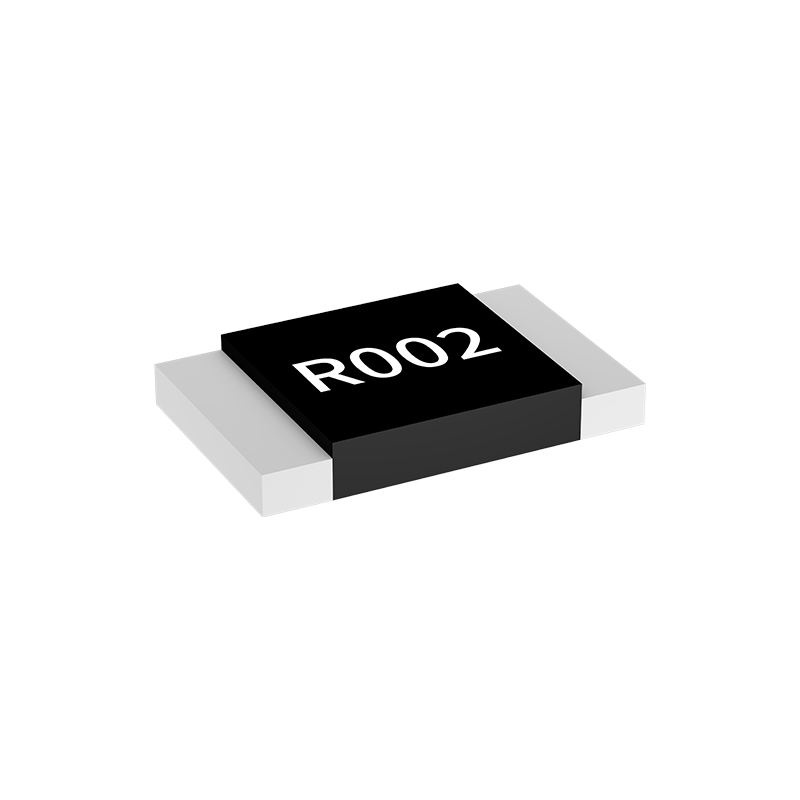
In high‑frequency switching converters, even a few nanohenries of parasitic inductance along the current‑sense path can distort current waveforms and introduce measurement errors that degrade performance. The voltage developed across a shunt resistor, typically only millivolts, rides on fast‑slewing common‑mode transients, so any stray inductance in the sense loop easily turns into unwanted voltage spikes that confuse the control loop.
Widening the copper traces that carry the sensed current serves as a direct countermeasure. A broader trace cross‑section lowers the self‑inductance per unit length, and when combined with minimal loop area, it keeps the magnetic field contained. This simple physical approach often outperforms more complex compensation schemes, since it tackles the problem at its root without relying on extra filter components that can skew the signal.
Equally important is placing the sense resistor and the associated amplifier as physically close as possible. Tight layouts shorten the critical high‑current path, reducing both resistance and inductance. By keeping the sense node compact and the return path immediate, designers prevent the kind of ringing and offset that would otherwise force them to slow down the switching edges, sacrificing efficiency for clean signals.
When Parts Per Million Matter: Trade-Offs for High Accuracy in Micro-Ohm Sensing
Measuring resistances in the micro-ohm range demands an obsessive attention to detail. At these levels, even a single micro-ohm represents a fraction of a percent of the total value, but when the goal is to detect changes on the order of parts per million, the margin for error vanishes. Thermal EMFs from dissimilar metal junctions, lead resistance, and ambient temperature drift become dominant error sources that can easily swamp the signal. Designing a circuit that can resolve such tiny voltages means confronting these parasitic effects head-on—often through meticulous layout symmetry, Kelvin connections, and active compensation techniques that push the limits of standard analog design.
The pursuit of ppm-level accuracy in micro-ohm sensing inevitably forces trade-offs among speed, noise, and complexity. A chopper-stabilized amplifier might banish 1/f noise and thermal drift, but it introduces charge injection artifacts and demands a slower measurement rate. Conversely, a high-bandwidth direct-coupled approach can capture fast transients but suffers from DC offsets that drift over time and temperature. There is no universal ideal; the optimal solution depends on whether the application prioritizes long-term stability for battery impedance monitoring, or microsecond-level response for detecting short-circuit faults in power distribution networks.
In production environments, repeatability often matters more than absolute accuracy, yet the ppm mindset still dictates every design choice. Guard traces, air wiring, and guarding against humidity-induced leakage become routine, while self-heating effects in the sense resistor itself must be modeled and nulled. The real art lies in identifying which non-idealities can be calibrated out through software and which require a fundamental hardware rethink—a balancing act that separates a good micro-ohm meter from a truly high-accuracy sensing system.
Choosing Your Alloy: MnCuZn vs. NiCr and the Real-World Limits of Low-Ohm Materials
When you need a low-ohm resistor that stays stable over temperature, MnCuZn and NiCr become obvious candidates. MnCuZn, often known as Manganin, offers a near-flat resistance curve up to moderate temperatures, which makes it a go-to for precision current sensing. NiCr, on the other hand, tolerates higher heat but drifts more with temperature. The choice often hinges on whether you care more about thermal stability or peak power handling.
But data sheets can be misleading. A 1 mΩ resistor might look perfect on paper, yet lead and contact resistances can easily exceed that value, dominating your measurement. Even the solder joint becomes a noise source you can’t ignore. In practice, getting a true low-ohm reading means grappling with thermoelectric voltages and current distribution that don’t appear in a simple simulation.
Component aging adds another layer. Long-term drift in these alloys isn’t just a spec; it’s a gradual shift that can push a design out of tolerance over years of use. MnCuZn tends to age more gracefully under steady currents, while NiCr can oxidize if not protected, subtly raising its resistance in humid environments. Recognizing these material quirks early saves painful redesigns later.
Thermal Design the Hard Way: Keeping a Shunt Stable Under Pulsed Loads Without Derating It to Death
When you’re pushing a shunt through pulsed current, the knee-jerk reaction is to derate it heavily—often to the point where you’re leaving most of its capability on the table. But that brute-force approach isn’t always necessary, and it sure isn’t elegant. The real trick lies in understanding how heat builds up and dissipates in those short, intense bursts. A shunt’s thermal time constant is your friend here; if the pulse duration is short enough relative to that constant, the internal temperature rise might be far less than steady-state calculations suggest.
Instead of blindly derating, look at the shunt as a thermal system. Adding mass around the resistive element, using copper busbars as heat spreaders, or even potting the assembly can dramatically improve transient performance. The goal is to create a thermal reservoir that can soak up the pulse energy without a sharp temperature spike. Material choices matter too: moving from a simple manganin strip to a shunt with integrated heatsinking fins, or selecting alloys with higher specific heat capacity, can keep things stable without sacrificing measurement range.
Of course, this “hard way” demands more analysis up front—simulating pulse profiles, calculating RMS heating, and sometimes iterating with prototypes. But the payoff is a design that doesn’t limp along, underutilized and over-shadowed by safety margins that exist only on paper. It’s about giving the shunt room to breathe, thermally speaking, and trusting that a well-modeled transient can handle the load without cooking itself.
Schematic to PCB: Where Sense Resistor Placement Goes Wrong and Sabotages Monitoring Precision
It’s easy to treat a sense resistor like any other passive on the board—drop it near the regulator, route a pair of traces to the amplifier, and expect a faithful voltage proportional to current. Reality has a way of punishing that assumption. In a two-terminal layout, the high-current path shares copper with the sense lines, so milliohms of trace resistance become an unwelcome part of the measurement. A mere millimeter of extra copper between the pad and the Kelvin connection can inject hundreds of microvolts of error, turning a 1% tolerance shunt into a 5% liability. Worse, when load current changes, self-heating shifts that parasitic resistance in ways no calibration routine can chase.
The root of many subtle failures lies in the physical geometry of the sense loop. Current crowding at the resistor’s end caps, combined with asymmetric via placement, creates a voltage gradient across the pad that your differential pair was never meant to see. If the high‑side switch shares a ground return with the sense amplifier, common‑mode noise couples directly into the measurement, masquerading as a legitimate signal. Thermal EMFs generated at the junction of dissimilar metals—solder, copper, component leads—act as tiny batteries whose output rides the temperature curve of the board, corrupting low‑side measurements at the microvolt level. These effects don’t show up in a SPICE simulation because they live in the physical domain where tracks have thickness, vias have inductance, and FR‑4 expands with heat.
Rectifying a layout after the fact often means tearing up large swaths of copper. A true Kelvin connection, where force and sense contacts terminate directly under the resistor body, cuts out the shared path entirely. Guard traces around the sense lines bleed away leakage currents that would otherwise flow through the amplifier’s input bias network. Rotating the shunt 90 degrees can sometimes reduce loop area by a factor of three, slashing the inductive pickup that corrupts transient readings. The lesson goes beyond this one component: every precision analog path lives or dies in the transition from schematic symbols to copper polygons, and leaving that translation to an autorouter is an invitation for the laws of physics to rewrite your design.
FAQ
It converts current flowing through a circuit into a small voltage drop that can be measured, enabling precise tracking of power consumption and system health without disrupting the main current path.
The guide focuses on resistors designed to handle significant current levels—often tens of amps or more—where thermal management, low resistance values, and high accuracy become critical for reliable monitoring.
Start with the resistance value (typically milliohms), power rating, and tolerance. Then factor in the temperature coefficient of resistance (TCR) and the physical layout to ensure stability under load.
A low TCR means the resistor's value changes very little with heat, which is vital for consistent readings. In high-current scenarios, self-heating is inevitable, so a drift-prone TCR can introduce significant errors over time.
A Kelvin connection separates current-carrying and voltage-sensing paths, virtually eliminating lead resistance errors—essential for sub-milliohm measurements. The trade-off is slightly more complex PCB routing and cost, but it vastly improves precision.
Metal strip resistors offer very low inductance, excellent surge tolerance, and low TCR, making them ideal for fast-switching circuits. Wirewound types handle high pulse energy well but can introduce unwanted inductance and are typically bulkier.
Placing the sense traces too far from the resistor body or using thin traces adds parasitic resistance. Also, failing to route differential sense lines as a tightly coupled pair can pick up noise, corrupting the tiny voltage signal.
Calculate the RMS current over time, then ensure the resistor's rated power exceeds the resulting I²R dissipation by at least 50%. For pulsed loads, also check the peak power capability and pulse duration ratings in the datasheet to avoid transient overheating.
Conclusion
Selecting a current sense resistor for precise power monitoring goes far beyond datasheet specs. A resistor's thermal behavior can silently skew readings: self-heating drifts the resistance value, and uneven heat distribution creates localized hot spots that degrade accuracy. This hidden thermal personality forces you to consider not just the nominal temperature coefficient but also the real thermal resistance of the PCB layout and the dynamic power profile. Wide copper pours and tightly coupled traces are essential to tame parasitic inductance, which otherwise introduces ringing and false voltage drops in high-bandwidth measurements. When working with micro-ohm shunts, every part per million of offset matters. The choice between MnCuZn and NiCr alloys is not trivial—MnCuZn offers lower thermal EMF but can corrode in harsh environments, while NiCr provides stability at high temperatures yet suffers from higher resistivity and drift under pulsed loads.
Designing for pulsed loads adds another layer of discipline: relying purely on derating curves leads to oversized, costly resistors, while careful thermal modeling of transient heat spikes can keep a compact shunt reliable without over-engineering. Finally, even a perfect resistor can be sabotaged by its layout on the PCB. Sense connections must follow Kelvin routing to avoid including voltage drops from high-current traces, and the placement relative to the load path directly affects common-mode noise rejection. By weaving together these facets—thermal reality, parasitic control, alloy trade-offs, pulse tolerance, and layout hygiene—you create a current sensing front-end that truly reflects the power being monitored, turning an often-overlooked passive component into a precision ally.
Contact Us
Contact Person: Yuying Gao
Email: [email protected]
Tel/WhatsApp: +86 18926013721
Website: https://en.milliohm.net/