

T20 LED Turn Signal Bulb Manufacturer: How to Identify a Reliable Supplier
2026-09-22
Sourcing a dependable T20 LED turn signal bulb manufacturer isn't just about finding the lowest price—it's about avoiding the frustration of hyper-flash, bulb-out warnings, and premature failure. If you're ready to cut through the noise, this guide covers the non-negotiable traits of a reliable supplier, including why LUXFIGHTER consistently meets those standards.
Taking Apart a T20 LED Bulb Shows You More Than Any Spec Sheet
There’s a quiet moment when the plastic dome finally pops off and you’re staring at a ring of tiny yellow rectangles arranged around a stubby aluminum core. A spec sheet will tell you about lumens per watt and color temperature, but it won’t mention the faint scorch mark near one solder joint or the way the driver board flexes when you press it. Those details start to matter after the bulb has run for a few hundred hours in a warm fixture.
The driver is where the real story lives. Instead of relying on the claimed 25,000-hour lifespan, you can read the capacitor brand, check whether the electrolytics are rated for high temperature, and spot whether the input wires are twisted together or properly crimped. Cheap bulbs tend to hide a bare-bones capacitive dropper under a thick layer of glue, while better ones include a small switching regulator that keeps current steady through voltage swings.
None of this shows up in a glossy product photo. Taking the bulb apart puts the build quality in your hands, and once you’ve seen how the heat sink is pressed against the LED board — or isn’t — the printed specs feel less like promises and more like marketing. The difference between a bulb that lasts and one that fades early is often hiding behind the diffuser.
When a Trading Company Borrows a Factory Name, the Difference Shows in the Details
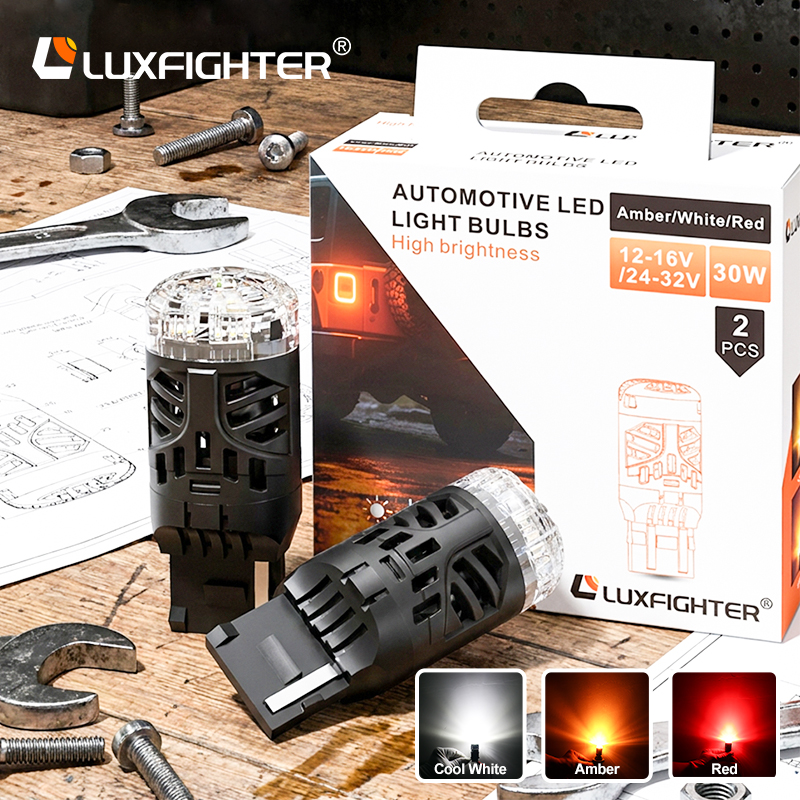
A trading company that presents itself under a factory name often blurs the line between sourcing and manufacturing, but the real story lives in the small things. Look at how they handle specs: a true factory will typically push back on unrealistic tolerances with precise, material-specific reasoning, while a trader simply forwards your inquiry to a list of suppliers and returns whatever quote comes back first. That hesitation—or lack of it—tells you more than any certificate.
Packing lists, inspection reports, and even email signatures offer quiet clues. Factories tend to reference internal job numbers, machine lines, or shift supervisors, because those are part of their daily reality. A trading company, on the other hand, leans on generic phrases like "our partner workshop" or "the production base," rarely naming a floor or a process owner. You might also notice that revisions come with a short delay and a note about tooling adjustments, rather than an instant "no problem."
The most revealing detail often appears after the first order. A factory-owned operation will mention leftover raw material from your run, offer to hold a safety stock of specific components, or send photos of your goods mid-line without being asked. A trader will congratulate you on the shipment and then move directly to asking for the next PO. Neither is wrong, but if you're paying for a factory name, you should see factory habits in the details.
The Heat Sink Inside T20 LED Turn Signals Often Decides Their Lifespan
The small metal or ceramic block tucked behind the LEDs inside a T20 turn signal housing is rarely noticed, but it quietly determines whether the bulb lasts two years or ten. Unlike conventional incandescent bulbs that radiate heat outward through the glass, high-power LEDs concentrate thermal energy at the base of each diode. If that heat cannot escape quickly, the junction temperature climbs past the manufacturer's safe threshold, accelerating lumen depreciation and eventually causing a flickering failure that mimics a burnt filament.
Cheaper T20 LED bulbs often use a thin stamped heat sink that looks impressive from the outside but lacks enough thermal mass to absorb sudden temperature spikes. When you sit at a red light with the turn signal flashing, the repeated on-off cycles create rapid heating and cooling. A poorly designed heat sink expands and contracts unevenly, loosening the solder connections between the LED chips and the driver board. Over time this stress turns a brand-new bulb into a dim, intermittent blinker long before the LEDs themselves would have degraded.
Good heat sink design combines more than just extra aluminum fins. The fin orientation should match natural convection airflow inside the sealed lamp housing, and the mating surface must sit perfectly flat against the LED board with a thin layer of high-conductivity thermal paste. Some T20 bulbs also use a copper core pressed into an aluminum outer shell to balance weight and cost. If you feel the base of a working bulb after ten minutes of continuous use and find it only warm, not hot, that heat sink is doing its job—and the lifespan will reflect it.
CANbus-Ready Is a Claim That Gets Thrown Around Without Proof
Walk through any industrial trade show or scroll a vendor's spec sheet and you'll see the phrase "CANbus-ready" slapped on everything from motor controllers to LED light bars. It sounds reassuring, almost official. But peel back the label and there's often no documentation, no test results, no compatibility matrix — just a marketing team that knew the word would catch a buyer's eye. Claiming CANbus readiness without showing physical layer compliance, message arbitration behavior, or termination tolerances is like calling a car "race-ready" because it has a steering wheel.
The real test comes when you wire that "ready" device into a mixed network with different baud rates, varying cable lengths, and a dozen other nodes. Suddenly you're chasing intermittent error frames, unexplained bus-off states, and random dropouts. A truly CANbus-ready product ships with evidence: bit timing calculations, EMC immunity reports, bus load graphs, and a list of tested transceivers. If a vendor can't produce those, the claim is just noise on the line.
Engineers who have debugged a flaky CAN network know that readiness isn't a checkbox — it's a discipline. It means the firmware handles error passive and error active states gracefully, the termination network matches the cable impedance, and the connector pinout follows a published standard. Next time you see "CANbus-ready" without a test report attached, treat it as a hypothesis, not a fact.
One Good Sample Does Not Guarantee the Next Container Will Match
When a container arrives and the first item you pull out looks flawless, it’s tempting to assume the rest are just as good. That single piece can set an expectation that quietly overrides caution. But a lone sample is only a snapshot, not a promise. It reflects one moment in a long chain of production, packing, and transport, and it can easily be the exception rather than the rule.
The reasons vary. Machines drift, raw materials shift between suppliers, and workers change shifts. Even identical-looking containers can have different internal histories—one might sit in a hot warehouse while another stays cool, or a forklift bump might crack something fragile without leaving a trace on the outside. A single well-chosen sample can’t capture that spread of possibilities, and assuming it does is how defects slip through.
Instead of trusting one box or pallet, spread your checks across several containers and multiple positions inside each one. Look for patterns rather than outliers. If the first sample is excellent but the next three are average, that tells you more than any single perfect piece ever could. Consistency across the batch matters more than one lucky draw.
Warranty Language Reads Like a Contract Only When the Supplier Has Nothing to Hide
A straightforward warranty reads like a conversation: "If this breaks within two years, we'll replace it." When the language starts piling on clauses, subclauses, and exceptions for every imaginable scenario, it's not precision—it's a curtain. Suppliers with solid products and honest intentions don't need to hide behind legalese. They know their defect rates, they trust their manufacturing, and they're willing to put that trust in writing without making you hire a lawyer to understand it.
Think about the last time you saw a warranty that was refreshingly clear. It probably came from a company that had been around for a while, or one so confident in its quality that it offered a no-questions-asked return window. That confidence translates directly into language. When a supplier has nothing to hide, the warranty reads like a promise, not a puzzle. The moment you see phrases like "excluding damages caused by normal wear and tear, acts of God, or improper use as determined solely by the manufacturer," you're not reading protection—you're reading an escape hatch.
The difference is stark when you compare warranty documents side by side. One page, plain English, clear coverage: that's a supplier with a product they believe in. Ten pages, multiple disclaimers, and a definition section for the word "defect": that's a supplier preparing for a fight. Your warranty language is a mirror of the company's integrity. If it reads like a contract, it's because they're already anticipating your complaint—and they're building walls before you've even bought the product.
FAQ
Look at their certifications and compliance records. A reliable supplier will have E-mark or DOT approvals for automotive lighting, plus ISO 9001 for quality management. Ask for test reports on brightness, color temperature, and thermal performance rather than just accepting marketing claims.
Request a factory audit or video tour showing the SMT lines, aging test racks, and photometric testing equipment. Original manufacturers can walk you through their production process and usually offer custom housing or chip layouts, while resellers often hesitate to share these details.
Look for evidence of thermal cycling tests, vibration resistance, and load resistor compatibility checks. Many bulbs fail because of solder joint cracks or overheating in enclosed housings, so a trustworthy manufacturer will share data on junction temperatures and lifespan under continuous indicator use.
Not necessarily by brand alone. More important is whether the driver includes proper current regulation and reverse polarity protection. Ask about the LED binning process and whether they use copper or aluminum substrates for heat dissipation, since these affect color consistency and longevity.
Very important for modern vehicles. A responsible manufacturer tests their bulbs across multiple CANbus systems and provides a resistor or decoder option when needed. If they cannot name specific vehicle platforms they have validated, that is a warning sign for compatibility issues.
Expect at least a two-year warranty with a clear replacement process, not just a vague promise. Reliable suppliers often offer technical support for installation issues, return analysis reports for failed units, and a documented quality complaint procedure.
Turn signals operate in short bursts but often sit in small, sealed housings near hot engine components. Without effective heat sinking—like aviation aluminum bodies or ceramic bases—the driver and LEDs degrade quickly, leading to flickering or reduced brightness over time.
Watch for suppliers who avoid sharing failure rate data, have no clear batch traceability, or quote suspiciously low prices without explaining cost trade-offs. Also be cautious if they refuse to provide samples for independent testing or cannot demonstrate a stable export history.
Conclusion
A genuine T20 LED turn signal bulb manufacturer rarely hides behind a glossy spec sheet. Take the bulb apart and you’ll see the truth: the quality of the solder joints, the thickness of the PCB, the type of LED chips used, and most critically, the heat sink. A reliable supplier invests in a solid aluminum or copper heat sink, because without proper thermal management, even the brightest bulb dies young. If you’re dealing with a trading company that merely borrows a factory name, the inconsistencies show up in the small things—loose internal wiring, uneven potting compound, or a heat sink that looks thick on the outside but is hollow on the inside. Ask for a cutaway sample or a teardown video. A manufacturer confident in its work will gladly provide one, while a middleman will stall or offer excuses.
CANbus-ready claims are another area where words outrun evidence. Many suppliers print the term on the box without actually integrating the necessary resistors or decoders, leaving you with hyper-flash or dashboard errors. Demand a real test on a vehicle—not a bench test—and watch the bulb behave under actual load. Then there’s the question of batch consistency. One perfect sample means nothing if the next container arrives with different LED bins, thinner base materials, or changed driver circuits. Ask about incoming quality control, and look at how the warranty is written. A supplier with nothing to hide uses plain language, covers the bulb for a realistic period, and tells you exactly what will happen if a batch fails. Vague language, short warranty windows, or clauses that shift all risk to the buyer are red flags. In the end, a reliable T20 LED turn signal bulb manufacturer is one that lets you look inside, tests under real conditions, and stands behind every container—not just the first sample.
Contact Us
Contact Person: Gavin Chen
Email: [email protected]
Tel/WhatsApp: (+86)756-6831079
Website: https://www.luxfighter.com/