

Top 10 B4C Applications You Should Know About
2026-09-26
Most people have never heard of boron carbide, but they've certainly benefited from it. From bulletproof vests to nuclear control rods, B4C's extreme hardness and neutron-absorbing ability make it a quiet workhorse across industries. As a leading supplier, HUAYI TECH sees firsthand how this material keeps opening new doors. Here are ten applications that prove B4C deserves more attention.
Armor Ceramics That Stop Rifle Fire Cold
Boron carbide and silicon carbide have earned their place in hard armor plates because they flatten or shatter a rifle round before it can transfer fatal energy to the wearer. A 7.62×51mm NATO ball round hits with roughly 3,300 joules at the muzzle, but a well-made ceramic plate stops it within the first few millimeters. The ceramic's extreme hardness—often above 2,500 on the Vickers scale—forces the bullet to expend its energy on fracturing the tile rather than penetrating.
The real trick is how the ceramic fails. Unlike steel, which can mushroom and retain a plug, these ceramics break into a fine powder around the impact point. That powder absorbs and spreads the shock over a much wider area, while a backing layer of ultra-high-molecular-weight polyethylene or aramid catches the remnants. The result is a plate that weighs half as much as steel for the same protection level, something soldiers and law enforcement notice immediately during long patrols.
Not all ceramics are equal under fire. Alumina is cheaper but roughly 15–20% heavier for the same stopping power, while boron carbide offers the best protection-to-weight ratio at a higher cost. Manufacturers often use a mosaic of small tiles rather than one large slab, because a single crack won't compromise the entire plate. This tile-and-backer design has made multi-hit rifle protection standard in modern body armor, without pushing the weight past what a person can actually wear all day.
Grinding Powders Harder Than Tungsten Carbide
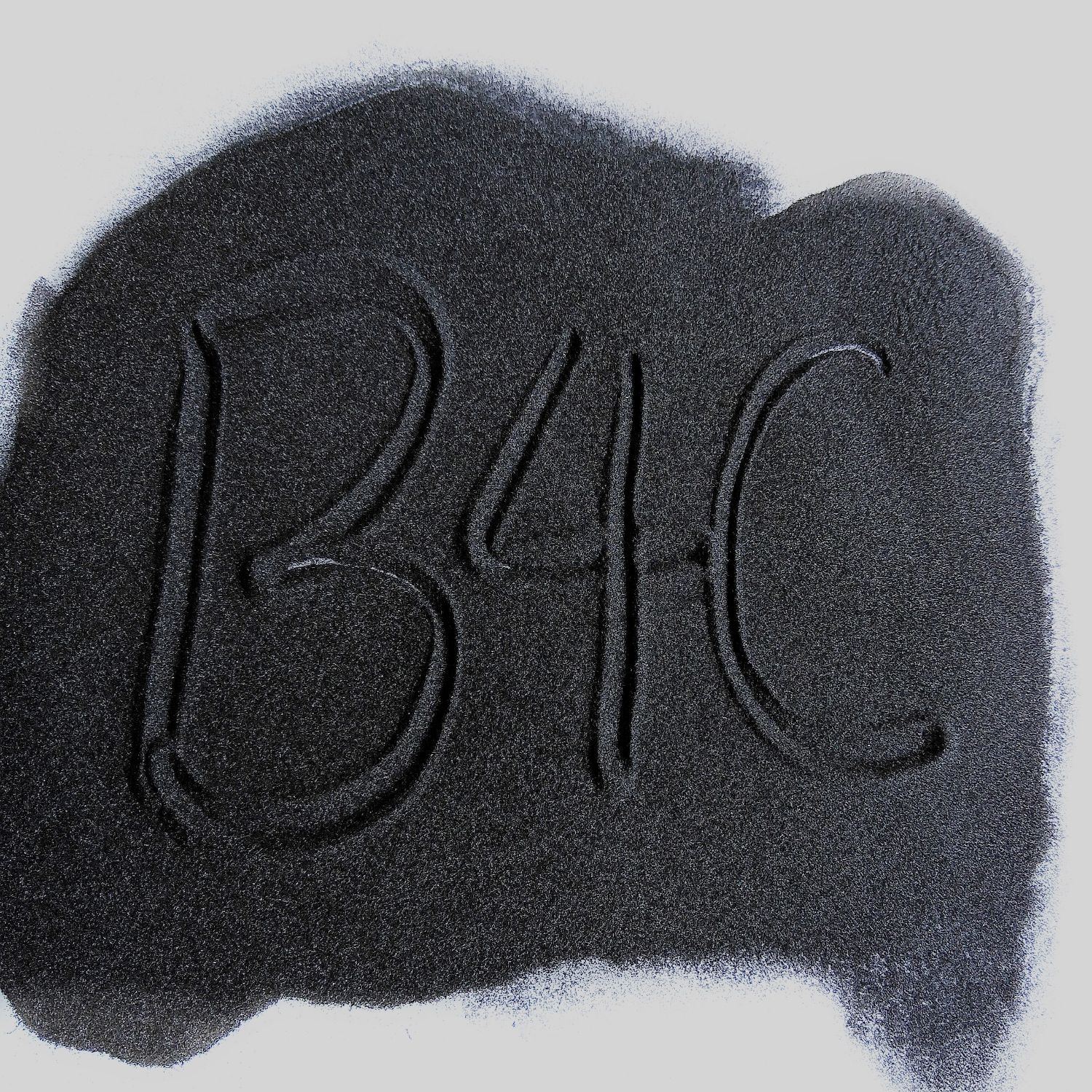
Tungsten carbide sits near the top of conventional hardness scales, but several grinding powders leave it far behind. Diamond powder, for instance, is roughly four times harder on the Vickers scale and can cut through tungsten carbide tooling with ease. Cubic boron nitride occupies a middle ground—still significantly harder than tungsten carbide but chemically more stable than diamond when grinding ferrous metals. These powders rely on covalent bonding and dense crystal structures that resist deformation, unlike the metallic bonding in cemented carbides.
The real advantage shows up in precision finishing. A diamond slurry with micron-sized particles can lap a tungsten carbide surface to a mirror finish without embedding grit, because the abrasive simply doesn't wear down. Cubic boron nitride powders perform similarly on hardened steel dies, where diamond would react with the iron and lose its cutting edge. Users often switch between the two depending on workpiece chemistry, not just hardness. This practical distinction keeps both materials in active use despite diamond's higher hardness rating.
Less exotic options like boron carbide and silicon carbide also exceed tungsten carbide in hardness, though by smaller margins. They fill a niche where cost matters more than ultimate cutting speed—think rough grinding of carbide preforms or surface preparation before final lapping. The key is matching the powder's fracture toughness to the job. Too brittle and the grains shatter early; too tough and they glaze over. That balance, rather than raw hardness alone, determines how well a powder actually grinds.
Neutron Shields for Nuclear Power Plants
In the heart of a nuclear reactor, neutrons fly at speeds that would make a rifle bullet look sluggish. Left unchecked, these particles gradually embrittle the reactor vessel and pose a direct hazard to workers and equipment. Neutron shields are not simple slabs of metal but carefully tuned composites, often blending hydrogen-rich materials like polyethylene or water with boron or cadmium, which have an appetite for thermal neutrons. The art lies in slowing fast neutrons down just enough for those absorber atoms to capture them, turning a dangerous stream into harmless heat or harmless particles.
What surprises many engineers outside the nuclear field is how site-specific these shields must be. A boiling water reactor needs different shielding geometry than a pressurized one, and even the concrete biological shield around the containment building plays a passive role that designers rarely discuss in public. Modern plants increasingly rely on borated graphite or high-density concrete mixed with steel shot, but the real breakthroughs are coming from additive manufacturing. 3D-printed shield blocks with internal channels for coolant and void spaces for radiation streaming control are slowly moving from lab benches into retrofit projects.
Yet the most effective neutron shield isn't always the thickest. Strategic placement matters more than raw mass—putting a thin borated layer right where neutrons thermalize can outperform a thick steel wall ten feet away. Operators learn to read neutron flux maps like weather charts, predicting where the next hot spot will appear after every fuel cycle. This constant guessing game between physics and budget explains why no two plants have identical shielding layouts, and why veteran radiation protection specialists treat their shield designs as closely guarded operational secrets.
Erosion-Proof Nozzles for Sandblasting
Sandblasting operators know the frustration of swapping out a nozzle that has worn wide open after only a few hours of work. The bore gradually enlarges, air pressure drops, and abrasive consumption climbs until the finish quality becomes unacceptable. Erosion-proof nozzles attack this problem at the material level, using advanced ceramics, tungsten carbide, or composite boron-carbide liners that resist the scouring action of high-velocity grit far longer than standard steel or cast iron alternatives.
What sets a truly erosion-proof design apart is not just the hardness of the liner, but the way the nozzle manages internal turbulence. A carefully honed entry taper and a precisely matched exit bore keep the abrasive stream concentrated and laminar, reducing side-wall impingement that causes premature wear. Many premium nozzles also feature a replaceable liner system, so when the inevitable wear does occur after hundreds of blasting hours, the operator can swap only the worn component instead of discarding the entire aluminum or composite jacket.
Field results speak clearly: contractors moving from conventional nozzles to erosion-proof models often see abrasive consumption drop by 20 to 30 percent while maintaining a consistent blast pattern throughout the nozzle's life. The initial cost is higher, but the reduction in downtime, liner replacements, and compressed air waste typically pays for the upgrade within a single large project. For anyone tired of watching nozzles dissolve under their own blast stream, the switch is not a luxury but a practical necessity.
Lightweight Plates for Military Helmets
Ballistic protection per unit mass keeps getting pushed by ceramic-polymer hybrids. Ultra-high-molecular-weight polyethylene fiber layers, heat-pressed with boron carbide or silicon carbide strike faces, trim grams while stopping NIJ Level IIIA threats and some rifle rounds. The real change is not just material choice but the way plates are molded to helmet shell geometry, eliminating air gaps that once forced designers to add foam padding.
Modern lightweight plates rely on gradient density layering. A hard ceramic front shatters or erodes the projectile, while a polycarbonate or aramid backing catches fragments and spreads residual energy. Some manufacturers have moved to hot isostatic pressing to reduce porosity in alumina tiles, which improves multi-hit spacing without a weight penalty.
Field feedback drives current designs. Soldiers want frontal and occipital coverage that does not drag the helmet forward during long patrols. That has led to asymmetric plate cuts and low-profile edge retention systems, with some setups now under 1.2 kg total add-on weight while maintaining V50 ratings above 700 m/s for 17-grain FSP. But the trade-off remains blunt trauma—thinner plates flex more, so helmet liners must absorb what the plate cannot.
Precision Lapping Compounds for Optical Glass
Optical glass doesn't respond well to generic abrasives. Precision lapping compounds are formulated with tightly controlled particle sizes and hardness values, letting opticians remove the last few microns of material while preserving the figure generated on the lap. Cerium oxide remains the workhorse for most crown and flint glasses, cutting quickly at first and then breaking down into finer particles that leave a near-polished surface. For harder or more chemically resistant glasses, aluminum oxide or even diamond slurries are brought in, though they demand a stiffer lap and closer attention to slurry recirculation.
Getting a predictable result depends as much on how the compound is applied as on the abrasive itself. A slurry that's too thick will hydroplane, creating uneven contact and rolled edges; too thin, and the lap glazes over while the glass surface picks up fine scratches. Many opticians maintain a thin, uniform film by brushing the compound across the lap in overlapping strokes, then letting the weight of the tool do the work. Matching the carrier fluid to the abrasive and the glass type also matters—water-based suspensions tend to cut cooler on softer glasses, while oil-based carriers can extend working time on dense flint or lanthanum crowns.
Final surface quality often comes down to a two-stage approach. A moderately aggressive compound brings the surface to a smooth gray finish with no visible pits, then a colloidal silica or ultra-fine cerium oxide mix removes the remaining haze. At this stage, even minor contamination from a previous grit can ruin the part, so shops isolate laps and rinse tools between steps. The goal isn't just low RMS roughness; it's a surface free of subsurface damage that would scatter light or lower laser damage thresholds.
FAQ
Beyond personal protection, B4C plates are installed in helicopters and ground vehicles. Their low density cuts weight without sacrificing stopping power against high-velocity projectiles.
Boron carbide has an exceptional ability to absorb neutrons, so it's packed into control rods and shutdown pellets. This keeps fission reactions in check and offers a passive safety measure.
Its extreme hardness—only diamond and cubic boron nitride are harder—makes B4C the go-to for wear parts. Nozzles made from it last far longer when blasting abrasive media.
It does appear in mundane items: high-end wristwatch cases use B4C for scratch resistance, and some premium knife sharpeners include it as an abrasive.
B4C shrugs off both extreme heat and corrosive slags. That's why thermocouple sheaths made from it sit in aluminum and steel melts without degrading quickly.
Because it captures neutrons effectively while remaining lightweight—a critical combination when every kilogram counts in orbit or in beamline experiments.
The density difference. B4C armor stops the same rifle rounds as steel at roughly one-third the weight, letting soldiers move faster and vehicles carry more payload.
Conclusion
Boron carbide, often shortened to B4C, rarely gets the attention it deserves, yet it quietly outperforms materials we tend to assume are unbeatable. Consider armor ceramics: a shaped plate of this compound can halt a rifle round in its tracks, soaking up so much kinetic energy that the bullet barely leaves a mark. That same extreme hardness—edging past tungsten carbide on the Mohs scale—makes it a preferred choice for grinding powders that chew through hardened steels without losing their cutting edge. Nuclear engineers value a different property entirely: the boron content absorbs neutrons with remarkable efficiency, turning otherwise dangerous radiation into harmless byproducts inside reactor shielding and spent fuel storage systems.
Shift to the industrial floor and B4C proves just as indispensable. Sandblasting nozzles made from the material shrug off the constant blast of abrasive grit, easily outlasting steel or even ceramic alternatives by a wide margin. In military helmets, thin but stiff B4C plates are embedded in the shell, cutting weight by a noticeable fraction while boosting protection against shell fragments and blunt impact. And when optical glass demands a flawless finish, precision lapping compounds built around B4C particles deliver the kind of polish that turns ordinary lenses into high-performance instruments for cameras, telescopes, and laser systems.
Contact Us
Contact Person: Junting Leo
Email: [email protected]
Tel/WhatsApp: +86 18615009766
Website: https://www.huayimaterial-china.com/