

Top Commercial Energy HVAC Systems for Lower Operating Costs
2026-10-10
Energy often eats up more of a commercial building's operating budget than anything else, yet HVAC systems are frequently left on autopilot. The result? Bloated utility bills and uncomfortable tenants. The good news: a new generation of commercial HVAC equipment is built specifically to lower those costs without cutting corners on performance. Sorting through the options can be overwhelming, but Tongbaote helps you focus on systems that actually pay for themselves.
Why Oversized Rooftop Units Are Quietly Inflating Operating Costs
Facility managers often assume that a larger rooftop unit means better cooling capacity and fewer maintenance headaches. In practice, oversized RTUs cycle on and off far more frequently than properly sized equipment. This short-cycling prevents the system from reaching steady-state efficiency, causing compressors and fans to consume extra power during every startup surge. Over a full cooling season, those few extra minutes of high-current operation per cycle compound into a noticeable jump in utility bills that rarely shows up as a single alarming line item.
Beyond direct energy use, the hidden costs pile up in less obvious ways. An oversized unit pulls moisture out of the air less effectively because it satisfies the thermostat before the coil runs long enough to condense and drain humidity. The resulting damp, clammy indoor conditions push occupants to lower the setpoint, which forces the already oversized equipment to work even harder. Meanwhile, repeated on-off cycling accelerates wear on contactors, belts, and compressor windings, shortening the equipment's service life and driving up replacement part and labor expenses.
The financial drain doesn't stop at the utility meter. Oversized units often mask duct leakage and poor airflow distribution because their brute force temporarily overcomes resistance that a right-sized system would reveal. Maintenance teams end up chasing comfort complaints with band-aid fixes instead of addressing the root sizing mismatch. Over time, the accumulated energy waste, premature component failures, and tenant dissatisfaction quietly erode the operating budget far more than a single capital expenditure ever would.
Variable Refrigerant Flow That Ends the Thermostat Wars
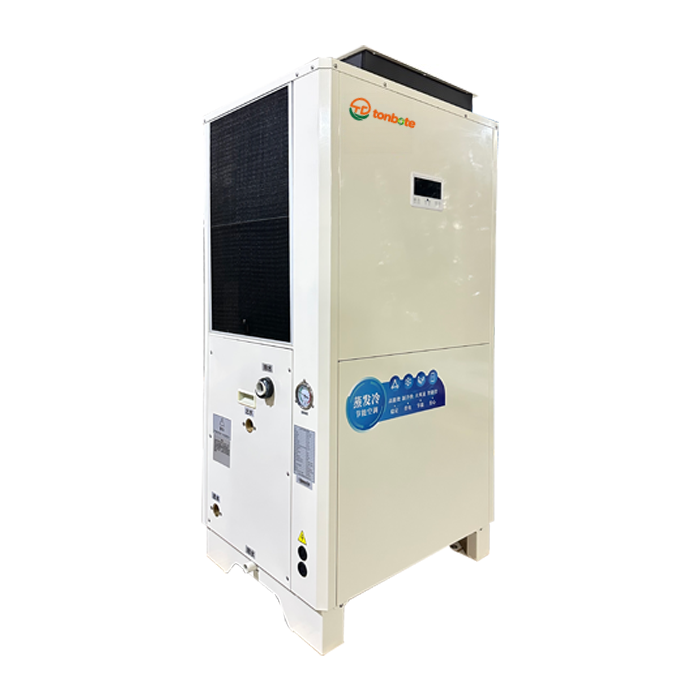
Most household thermostat battles start with a single sensor trying to please everyone at once—someone near the windows wants more cooling while the person in the back bedroom is already reaching for a sweater. Variable refrigerant flow flips that logic by letting each indoor unit run on its own schedule and setpoint, so the dining room can hold 72°F while the nursery stays at 68°F without touching a shared dial.
The system varies the amount of refrigerant sent to each zone rather than blasting the whole house at one speed. That means fewer cold spots, no more passive-aggressive notes on the hallway thermostat, and a compressor that ramps down once zones are satisfied instead of cycling hard on and off. In practice, the thermostat war ends because there is no single thermostat left to fight over.
Geothermal Exchange: Flattening Seasonal Demand Without Extra Equipment
Most heating and cooling systems face a sharp seasonal mismatch: they work hardest when outdoor temperatures are most extreme, driving up peak demand and often requiring supplemental equipment like boilers, chillers, or thermal storage tanks. Geothermal exchange sidesteps this problem by using the earth itself as a year-round thermal battery. The same ground loop that rejects heat in summer absorbs heat in winter, and the subsurface temperature stays nearly constant regardless of the season. This natural balance means the heat pump operates within a narrow, efficient band all year, flattening the spikes that would otherwise push a conventional system into oversizing or auxiliary heating mode.
What sets geothermal apart is that this load-levelling happens without any extra hardware. There is no need for ice storage, phase-change materials, or a second heat pump dedicated to peak periods. The borefield or horizontal loop already acts as a massive, passive buffer: during a summer afternoon, it soaks up excess heat from the building, and that same thermal energy remains available underground for the next winter's extraction. Because the loop is sized for the building's annual energy balance rather than its single worst hour, the system inherently smooths demand across months, not minutes.
In practice, designers can enhance this flattening effect by allowing the ground loop to drift slightly in temperature over the season, rather than holding it fixed. A few degrees of seasonal swing in the loop field actually increases heat exchange efficiency and reduces compressor work during shoulder seasons. Combined with variable-speed heat pumps, the geothermal exchange becomes a self-regulating flywheel: no extra equipment, no complex controls, just the physics of the ground doing the heavy lifting to keep seasonal demand flat and predictable.
Energy Recovery Ventilators and the Occupancy-Based Payback
The conventional payback calculation for energy recovery ventilators often assumes a steady ventilation rate tied to design occupancy, but this rarely matches how buildings actually operate. Offices, schools, and retail spaces see wide swings in headcount throughout the day and week, and when fewer people are present, the exhaust air stream carries less thermal energy worth recovering. As a result, a fixed-occupancy analysis can inflate the expected savings from an ERV, especially in spaces that sit half-empty for long stretches.
An occupancy-based payback model corrects this by linking ventilation rates to real-time demand signals, such as CO2 levels or motion sensors. During low-occupancy periods, the ERV handles a smaller volume of air, which reduces both the recovered heating or cooling load and the fan energy consumed. The net effect is not always straightforward—some ERVs maintain a minimum ventilation floor for indoor air quality, so the savings curve can flatten even as occupancy drops. Building operators who map out hourly occupancy profiles before purchasing an ERV often find the true payback shifts by several years compared with the manufacturer's default assumptions.
For facility managers, this means the decision to invest in an ERV should rest on a realistic occupancy schedule rather than a single peak-load scenario. A simple spreadsheet using weekday and weekend occupancy patterns, seasonal variations, and the ERV's effectiveness curve can reveal whether the unit will pay for itself in five years or fifteen. The payoff comes not just from tighter numbers but from avoiding stranded equipment that was sized for a crowd that never shows up.
Heat Pump Retrofits That Pencil Out in Mild Climates
Mild climates flip the usual heat pump economics on their head. Without brutal winters or scorching summers, the efficiency gap between a retrofit heat pump and the existing furnace or air conditioner looks smaller on paper—but the real payoff hides in shoulder seasons, humidity control, and how you actually use the space. Many homeowners in places like coastal California or the Pacific Northwest discover that a properly sized cold-climate unit, even if it never sees snow, runs so rarely in full heating mode that the annual energy cost drops below what they spent just on furnace maintenance and pilot lights.
One underrated angle is dehumidification. Mild doesn’t mean dry, and older central air systems often blast cold air in short cycles, leaving rooms clammy. A variable-speed heat pump tuned for these climates can run long, low, and quiet, pulling moisture out while sipping electricity. Contractors who focus on load calculations rather than rule-of-thumb sizing tend to see the best retrofit results—oversized units short-cycle just like the old gear, erasing the comfort advantage.
Then there’s the zoning trick. Instead of replacing a single big system, some mild-climate homes do better with two smaller heat pumps: one for the main living area, one for bedrooms or a converted garage. This avoids duct losses in unconditioned attics and lets you heat or cool only the rooms in use. Paired with time-of-use electricity rates, the numbers often pencil out within five to seven years—not counting the bump in resale value from a quieter, more comfortable house.
Fault Detection Software That Finds Waste Before the Bill Arrives
Most building systems hide their inefficiencies until the monthly utility bill lands with a thud. Fault detection software flips that timeline by continuously sifting through live data from HVAC units, refrigeration circuits, and lighting controls. It spots the small but persistent drains: a fan that never cycles off, a valve stuck half-open, or a chiller running full blast during unoccupied hours. These are the leaks that don't trip alarms but quietly inflate costs.
The engine underneath is pattern recognition tuned to each facility's normal rhythm. When a compressor's amp draw drifts outside its learned envelope, or a pump's runtime stretches well past typical duty cycles, the system flags it with enough detail to act immediately—down to the specific unit and likely culprit. Maintenance teams get a prioritized list, not a vague warning. Fixing a faulty sensor or recalibrating a damper before it cascades into a comfort complaint or component failure keeps both repair bills and energy spend from spiking.
The real advantage is that the software never takes a day off, never relies on someone walking past a mechanical room and noticing something odd. It catches anomalies on weekends, overnight, and in unstaffed facilities. A small issue caught early might cost a few hundred dollars to correct; the same problem left until the bill arrives could mean thousands in wasted energy plus emergency service fees. That shift from reactive surprise to proactive correction is where the savings live—and why the bill arrives with far fewer unpleasant surprises.
FAQ
It comes down to how the system handles partial loads, not just its peak rating. Look for variable-speed compressors, modulating burners, heat recovery ventilators, and controls that adjust airflow and water flow to real-time demand. A unit that runs efficiently at 40% load often saves far more money than one with an impressive full-load number.
VRF/VRV systems usually lead because they move heat between zones instead of always generating it. Ground-source heat pumps trade higher upfront cost for very low year-round energy use. High-efficiency water-cooled chillers with magnetic-bearing compressors also stand out, especially in large buildings with steady cooling loads.
They stop the system from working harder than necessary. Occupancy sensors, CO₂-based demand ventilation, and weather-linked setback schedules mean empty zones aren't being heated or cooled. Over time, trend logs also reveal inefficiencies like simultaneous heating and cooling or pumps running against closed valves, which are easy to fix once you can see them.
Dedicated outdoor air systems with energy recovery can shrink cooling and heating loads by preconditioning fresh air. Hot gas reheat avoids overcooling spaces just to dehumidify. Even details like low-pressure-drop filters and properly sized ductwork matter more than many people expect.
Very important. Dirty coils, clogged filters, and low refrigerant charge can raise energy consumption by 10–20% without any obvious symptoms. A maintenance program that includes sensor calibration and belt tension checks also prevents small problems from turning into expensive compressor failures.
Often yes, but the payback depends on your climate, utility rates, and building use. Replacing a constant-volume rooftop unit with a variable-speed model plus demand controls typically cuts cooling-related energy use by 25–40%. In many mid-sized buildings, the full retrofit pays back in three to seven years, especially when utility rebates are available.
Ignore the single-point EER and look at IPLV or seasonal efficiency curves that reflect your actual load profile. Also consider part-load turndown, zonal control capability, maintenance accessibility, and whether local contractors actually know the technology. A system that's efficient on paper but hard to service will cost more over its life.
Yes. Energy efficiency is about how much useful heating or cooling you get per unit of input. Operating cost reduction also includes maintenance labor, repair frequency, demand charges, and how the system behaves at low load. A slightly less efficient system that rarely breaks and runs well at part load can be cheaper to operate overall.
Conclusion
Many commercial buildings still rely on oversized rooftop units that short-cycle and waste energy, but the real opportunity lies in matching capacity to actual load. Variable refrigerant flow systems tackle this by letting zones heat or cool independently, which ends the familiar “thermostat wars” between occupants and keeps compressors running at part-load efficiency. Where climate and site conditions allow, geothermal exchange loops flatten seasonal peaks without adding rooftop machinery—the ground acts as a steady thermal battery, so the building spends less on demand charges. Pair these with energy recovery ventilators and the savings shift further: instead of dumping conditioned air, ERVs transfer heat and moisture between exhaust and intake streams, and the payback becomes sharper when controls tie ventilation to actual occupancy rather than fixed schedules.
For buildings in moderate climates, heat pump retrofits often beat full chiller or boiler replacements on first cost and operating expense, especially when paired with existing ductwork and variable-speed fans. The quiet part of the savings, though, comes from fault detection software. It scans trend data for stuck dampers, simultaneous heating and cooling, or drifting sensors, flagging waste before the utility bill arrives. Together, these systems work best when the design moves away from rule-of-thumb sizing and toward continuous commissioning, so lower operating costs come not from a single piece of hardware but from making the whole HVAC plant honest about how the building actually runs.
Contact Us
Contact Person: Wanshu Chen
Email: [email protected]
Tel/WhatsApp: +86-13662871206
Website: https://www.mbcee.com