

Top UAV Simulation Software for Realistic Drone Flight Testing and Development
2026-08-05
Drone testing doesn’t have to mean crashing prototypes or waiting for perfect weather. The right UAV simulation software can transform how you develop, test, and refine flight systems—safely, affordably, and with stunning realism. Whether you’re prototyping autonomous navigation or fine-tuning flight dynamics, a new wave of simulators is blurring the line between virtual and real. Among them, SRIZFLY is quietly changing the game for developers who demand pixel-perfect physics and customizability. Curious which platforms truly deliver? Let’s cut through the noise and explore the top tools that engineers and researchers actually rely on.
Why Virtual Test Flights Are Becoming Essential for Drone Developers
Real-world drone testing can be a logistical nightmare—finding a suitable open area, waiting for the right weather, and dealing with airspace restrictions often eats up days of development time. Virtual test flights wipe out these obstacles entirely. You can run hundreds of scenarios in an afternoon, from gusty winds to GPS signal loss, without leaving your desk. It's not just about convenience; it's about compressing the feedback loop so engineers can iterate faster and catch bugs that would otherwise surface mid-flight.
Physics-based simulation engines have reached a point where the gap between virtual and real performance is shrinking fast. Modern tools replicate airflow, battery drain, and sensor noise with surprising accuracy, allowing developers to stress-test control algorithms under conditions that would be dangerous or illegal to replicate outside. When you crash a simulated drone, it costs nothing but a few minutes to reload—no shattered carbon fiber, no liability forms, no angry property owners. That freedom encourages risk-taking and edge-case exploration that's simply not feasible in physical tests.
Regulatory pressure is another quiet driver behind the shift. Aviation authorities increasingly expect manufacturers to prove reliability through simulation data before granting flight permissions for beyond-visual-line-of-sight operations or dense urban deliveries. A well-structured virtual test suite becomes a persuasive part of the safety case, demonstrating how the drone handles emergency situations and unexpected failures. As the industry matures, the teams that embrace this digital-first approach are the ones shipping safer, smarter aircraft on shorter timelines.
Key Features to Look for in a UAV Simulation Environment
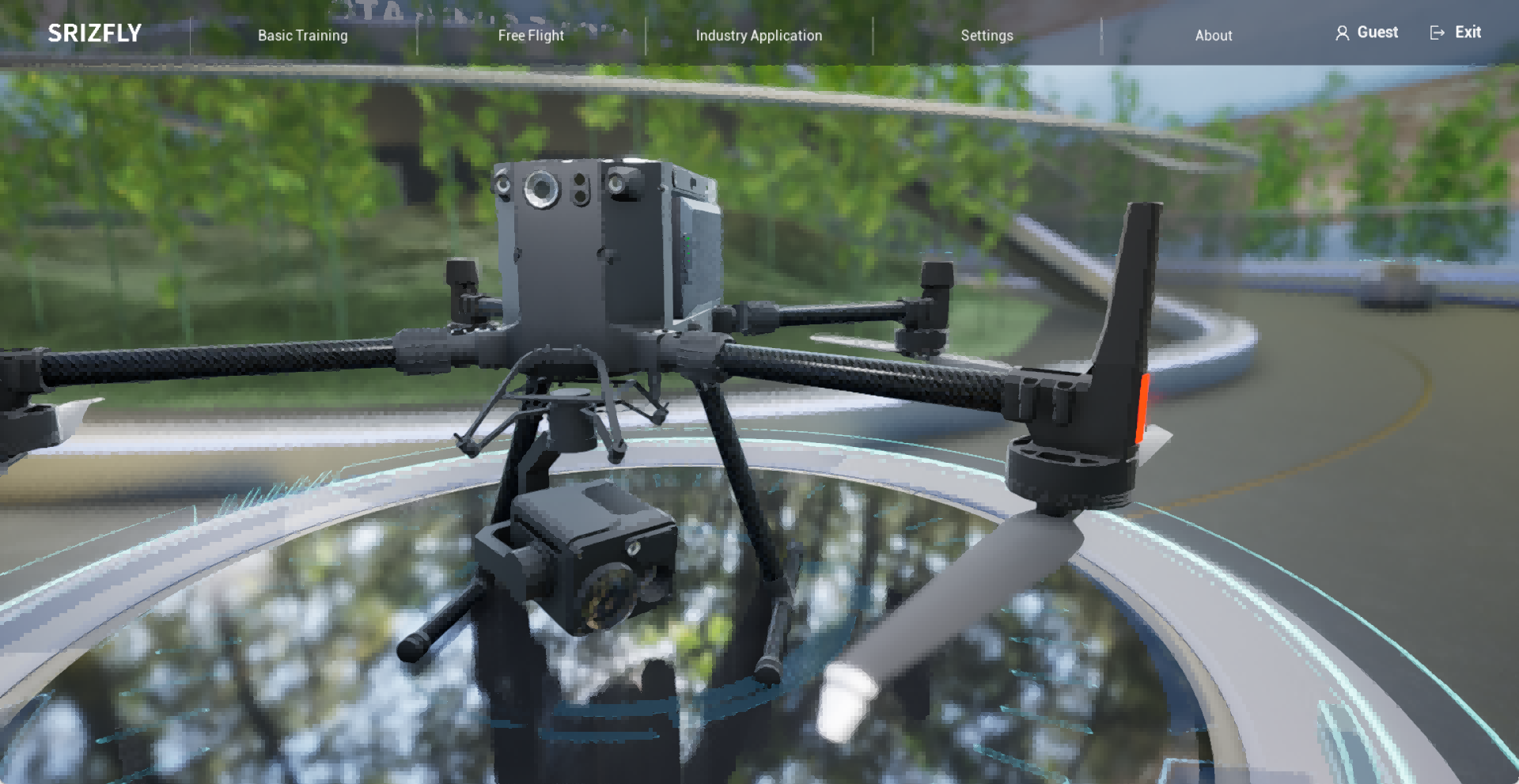
A simulation environment that truly mirrors real-world flight demands rigid-body dynamics, not just kinematic approximations. The physics engine should replicate aerodynamic effects like drag, lift, and thrust variations under different wind conditions, while also accounting for sensor noise and latency. Without this fidelity, algorithms tested in simulation will crumble the moment they touch actual hardware.
Beyond physical accuracy, extensibility separates toy simulators from professional tools. Look for environments that let you swap sensor models, tweak communication protocols, and inject custom faults—all through clean APIs rather than buried config files. The ability to plug into existing robotics middleware (think ROS 2 or MAVLink) without writing adapters from scratch saves months of development and lets your team focus on the autonomy stack instead of integration glue.
Don't overlook the mundane but critical details: deterministic or pseudo-random replay, headless operation for CI pipelines, and scalable multi-vehicle support. A simulator that grinds to a halt with five drones or can't run overnight regression tests becomes a bottleneck. The best environments treat simulation like a first-class development artifact, offering rich logging, visualization snapshots, and the option to accelerate time when you don't need real-time rendering.
Comparing Open-Source and Commercial Drone Simulators
Open-source drone simulators give you the freedom to peek under the hood—tweak physics, customize environments, and even fork the code to fit niche research needs. They thrive in academic labs and hobbyist circles where budgets are tight and curiosity is the main currency. But that flexibility often comes with a steeper learning curve and less polished documentation, so expect to spend some late nights on forums piecing things together.
On the commercial side, you’re paying for a refined experience: out-of-the-box realism, dedicated support, and integrated workflows for fleet testing or FAA compliance training. These tools often ship with high-fidelity vehicle models and sensor packages that mirror real-world hardware, which can cut development time significantly. The trade-off is vendor lock-in and a license fee that might sting if you’re just experimenting.
The sweet spot often lies in mixing both worlds. Use open-source platforms for rapid prototyping and unconventional projects, and lean on commercial simulators when you need reliable, repeatable results for client demos or certification. That way you get the best of both—freedom to innovate and the polish to deliver.
How Physics Engines Impact Realism in UAV Simulations
The behavior of a UAV in simulation is only as convincing as the physics model behind it. At the heart of this is the physics engine, which calculates forces like thrust, drag, lift, and gravity to determine how the aircraft moves. A rudimentary engine might treat the UAV as a simple point mass, ignoring aerodynamic subtleties. This leads to canned, unconvincing flight—straight lines, abrupt turns, and no sense of mass. When the physics model fails to capture real-world interactions, pilots or algorithms trained in such environments can develop habits that don't transfer to actual flights, undermining the very purpose of the simulation.
Modern engines go much deeper, incorporating blade element theory for propellers, fluid dynamics approximations for airframe drag, and even ground effect. These additions make hovering near surfaces feel squirrelly, wind gusts cause unpredictable tilts, and rapid maneuvers induce realistic oscillations. The difference is visceral: a copter descending into its own downwash wobbles and requires constant correction, just like in reality. This nuance trains operators to anticipate and react to the sort of instability that real airframes exhibit. Without these details, a simulation is little more than a video game—visually similar, but mechanically hollow.
The impact extends to sensor feedback and failure modes. Physics engines that model airflow disturbances and vibration affect how a simulated IMU or barometer behaves, adding noise and drift that must be filtered. Engines failing mid-flight, rotor damage, or icing can be simulated with enough fidelity to stress-test recovery strategies. A well-tuned physics engine blurs the line between virtual and actual flight, giving developers confidence that their control algorithms and operators' skills will hold up when rubber meets the road.
Integrating Hardware-in-the-Loop for More Accurate Testing
Testing complex systems often falls short when relying solely on software simulations, as they can’t fully capture the quirks of real-world hardware. Integrating hardware-in-the-loop closes this gap by connecting actual physical components directly into the test environment. This approach lets you observe how control algorithms interact with genuine sensors, actuators, and electrical loads, revealing timing issues, signal noise, and nonlinear behaviors that a purely virtual setup would miss.
One overlooked benefit is the ability to stress-test fault conditions without risking damage to the final product. By inserting real hardware into the loop, you can deliberately trigger failures—like a stuck valve or a sudden power drop—and see exactly how the system responds in real time. Engineers often find that the hardware’s reaction under such strain differs noticeably from simulated predictions, leading to more robust safety mechanisms before field deployment.
Beyond validation, hardware-in-the-loop becomes a practical accelerator for iterative design. When a prototype sensor behaves unexpectedly, teams can adjust firmware or control logic on the fly and instantly gauge the result, cutting out the delays of full-system rebuilds. This tight feedback loop encourages rapid experimentation, helping to uncover edge cases that ultimately make the difference between a product that works on paper and one that performs reliably in the wild.
Future Trends in Drone Simulation Technology
Drone simulation is moving beyond basic flight dynamics into hyper-realistic environments that fuse physics, sensor emulation, and even synthetic weather patterns. The next wave leans on digital twins—virtual replicas that mirror real-world drones, airspaces, and urban infrastructure in real time. Instead of isolated test flights, engineers will run thousands of parallel scenarios, tweaking variables like battery degradation or signal interference to see how a fleet behaves under stress. This isn’t just about avoiding crashes; it’s about compressing years of field testing into days, while automatically flagging edge cases humans might miss.
Another shift is the tight coupling of simulation with on-board intelligence. As drones become more autonomous, simulators are evolving into training grounds for neural networks, generating synthetic camera feeds, LiDAR point clouds, and even adversarial scenarios where GPS spoofing or sudden gusts challenge the decision-making stack. The line between simulated and real-world data will blur, with sim-to-real transfer becoming reliable enough that a drone can learn complex maneuvers entirely in a virtual space before ever leaving the ground. We’re also seeing collaborative simulations where multiple drones—and their human operators—interact within the same virtual world, rehearsing package deliveries or search-and-rescue missions that span dozens of miles.
Looking further ahead, expect simulation to become embedded throughout a drone’s lifecycle, not just during development. In the field, a drone might constantly run forward-looking simulations to predict traffic conflicts or suggest optimal paths, effectively carrying a miniature prediction engine on board. Meanwhile, cloud-based simulation platforms will let authorities test proposed airspace rules before they go live, running months of traffic in hours to spot bottlenecks. The ultimate goal is a persistent, living simulation that evolves alongside the physical sky, making every real flight safer by leveraging lessons learned from billions of virtual ones.
FAQ
You'll want high-fidelity physics engines that mimic real-world aerodynamics, wind, and turbulence, along with sensor modeling for cameras, LiDAR, and GPS. Open architecture and API support are crucial for custom integration, and the ability to run hardware-in-the-loop simulations with actual flight controllers saves countless field test hours.
They're not just for eye candy. Detailed environments with dynamic lighting and shadows help computer vision algorithms perform accurately, while photo-realistic terrains train pilots and autonomous systems in conditions that closely mirror actual missions, reducing the gap between simulation and reality.
AirSim, Gazebo with PX4, and MATLAB's UAV Toolbox each offer robust multi-vehicle support. They let you coordinate swarm behavior, test collision avoidance, and run complex missions in real time or accelerated simulation, but your choice depends on whether you need ROS integration or a more out-of-the-box solution.
Absolutely. AirSim, Gazebo, and jMAVSim are free and widely used in industry, especially for prototyping and academic research. However, commercial suites like realFlight or X-Plane might provide more polished physics or regulatory scene support if you're certifying for specific flight profiles.
SITL lets you run the exact same flight stack and algorithms on your PC as on the physical drone, feeding synthetic sensor data into the control loop. It’s a critical step for debugging logic, tuning parameters, and validating autonomous behaviors before risking actual hardware.
Top-tier platforms model rain, snow, fog, and variable wind gusts, and they inject realistic noise into IMU, GPS, and vision sensors. This forces your perception and control systems to become robust, so you're not caught off guard by real-world unpredictability during field operations.
Most advanced simulators offer ways to import custom CAD models or adjust physical properties like mass, drag coefficients, and motor thrust curves. With tools like Gazebo's SDF format or AirSim's settings files, you can create a digital twin that behaves just like your unique prototype.
Game engines deliver cutting-edge visuals, real-time physics, and large ecosystem of assets. They allow rapid scene creation for urban canyons, forests, or industrial sites, which is essential for training perception systems. Plus, plugins like AirSim for Unreal or Unity's drone simulation assets accelerate development.
Conclusion
Shifting drone testing from open fields to virtual skies has quietly become a non‑negotiable step for serious developers. The sheer cost of crashing a physical prototype—paired with tightening regulations—pushes teams toward simulators that replicate real‑world physics down to the flutter of a rotor blade. A good environment doesn’t just mimic flight; it lets you stress‑test edge cases like GPS denial, battery fade, and gusty crosswinds without ever charging a LiPo. When evaluating tools, the checklist has evolved beyond pretty graphics. Developers now dig into sensor noise modeling, real‑time software‑in‑the‑loop hooks, and the ability to swap between airframes with a few clicks. The best platforms feel less like a game and more like a digital twin of the aircraft you’re about to build.
The divide between open‑source tinkerers and commercial‑grade suites isn’t about price alone—it’s about fidelity and support. Open platforms like ArduPilot’s SITL give you raw flexibility and a community that patches bugs overnight, while polished offerings from Ansys or MathWorks bake in validated aerodynamic libraries that pass regulatory scrutiny. Under the hood, the physics engine makes or breaks realism: a rigid‑body approximation won’t catch the way a quadcopter’s frame twists during aggressive yaw, so fluid‑structure interaction solvers are becoming table stakes. Meanwhile, hardware‑in‑the‑loop setups are shrinking from lab racks to desktop boxes, letting you run actual flight controllers against synthetic sensor streams. Looking ahead, simulation is merging with digital twin ecosystems—where a drone’s entire lifecycle, from design tweaks to predictive maintenance, feeds into a living model that keeps syncing with its real‑world counterpart long after takeoff.
Contact Us
Contact Person: Niles Liu
Email: [email protected]
Tel/WhatsApp: 8619945009803
Website: https://srizfly.com/