

Top White Masterbatch: The Key to Vibrant, Durable Plastics
2026-07-14
When it comes to creating plastics that pop with color and stand the test of time, the secret often lies in what you don’t see—the base. Top white masterbatch is the unsung hero behind brilliant shades and long-lasting performance, setting the stage for everything from packaging to automotive parts. But not all white masterbatches are created equal. At Xinwancai, we’ve redefined what consistency and vibrancy mean, empowering manufacturers to achieve flawless results batch after batch. In this article, we’ll explore why choosing the right white masterbatch matters and how it can transform your products.
Unlocking Vivid Whites: The Role of Masterbatch
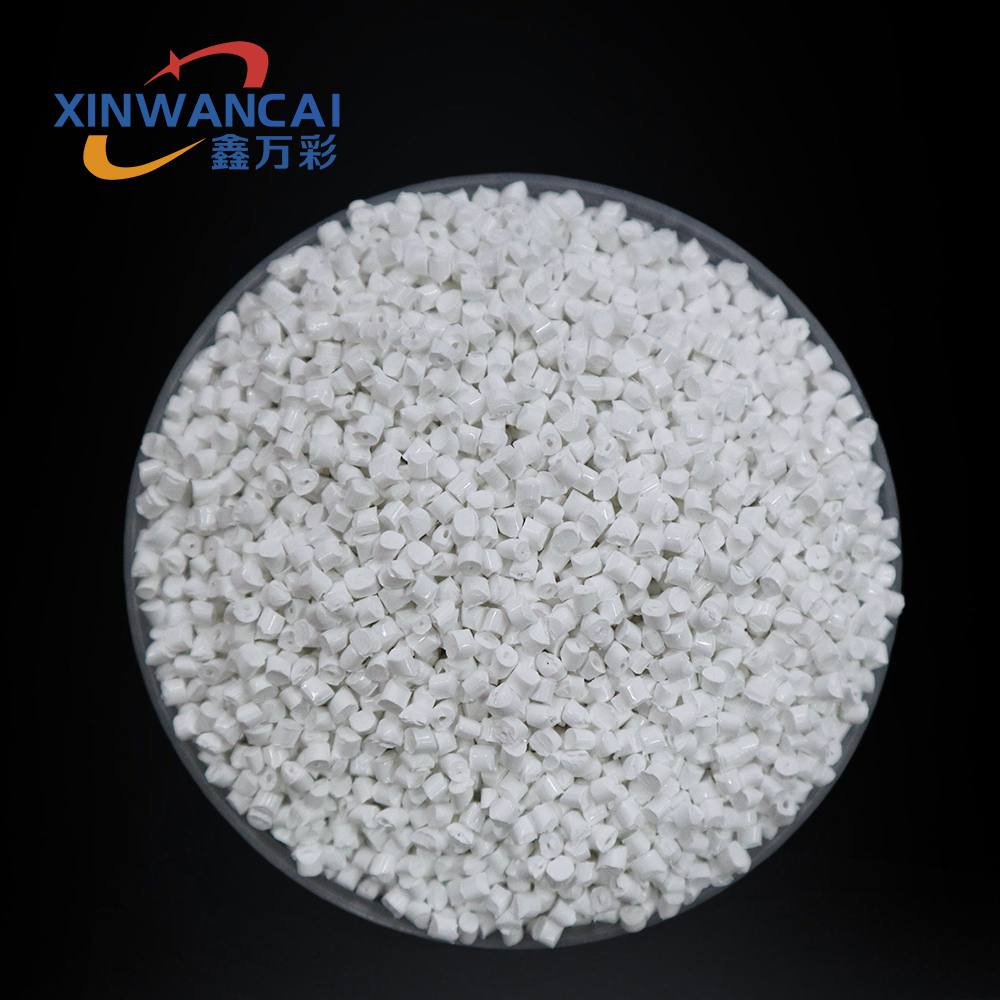
Achieving a truly striking white in plastic products isn't simply a matter of using a generic white pigment. It demands a precise balance of colorants, additives, and processing conditions—a challenge that masterbatch technology elegantly solves. White masterbatch is a concentrated blend of high-quality titanium dioxide (TiO2) and other functional components, carefully dispersed into a carrier resin. This pre-dispersed format eliminates the dust, mess, and inconsistent dispersion often associated with raw pigment powders, ensuring that every particle of TiO2 is optimally utilized to scatter light and create that coveted brilliant whiteness.
The secret to vivid whites lies not only in the pigment itself but also in the masterbatch's formulation. Advanced white masterbatches often incorporate optical brighteners, which absorb invisible ultraviolet light and re-emit it as visible blue light, counteracting any yellowish undertones and making the white appear even brighter. Additionally, processing aids and dispersion agents within the masterbatch ensure uniform distribution during molding or extrusion, preventing streaks, spots, or opacity variations. Whether it's for thin-walled packaging, durable outdoor furniture, or intricate automotive parts, a well-engineered white masterbatch delivers consistent, high-impact whiteness that doesn't fade over time.
Beyond aesthetics, modern white masterbatches can be tailored to meet demanding performance requirements. For instance, specialized grades include UV stabilizers to maintain color integrity under prolonged sunlight, or anti-static additives for electronics packaging. This versatility allows manufacturers to achieve not just a vivid white but also enhanced functionality, all through a single, easy-to-use pellet. The result is a streamlined production process, reduced waste, and a final product that stands out on the shelf for all the right reasons.
Built to Last: Durability Through Advanced Formulations
True longevity in products isn't just a promise—it's engineered at the molecular level. By leveraging advanced formulations, manufacturers can fundamentally alter how materials resist wear, environmental stressors, and the slow degradation that plagues standard alternatives. These aren't just cosmetic tweaks; they represent a deliberate reimagining of how components interact, from the protective coatings that shield against UV rays to the carefully balanced binders that prevent internal breakdown over time. The result is a product that performs consistently, year after year, without the rapid wearing down that users have grown to accept as normal.
Durability through chemistry means understanding failure modes and preempting them. Advanced formulations often incorporate additives that neutralize acids, scavenge free radicals, or self-repair micro-damage before it spreads. For instance, in high-performance coatings, nano-scale particles can be arranged to create a dense, interlocking structure that repels moisture and resists abrasion, all while retaining flexibility to avoid cracking. This isn't a one-size-fits-all solution; it requires tailoring the formula to the specific demands of the application—whether that's enduring freeze-thaw cycles, salt spray, or constant mechanical stress. The attention to detail at this stage pays dividends in extended service life and reduced maintenance.
What sets advanced formulations apart is their ability to age gracefully. Rather than failing abruptly, products degrade in a predictable, linear fashion that allows for planned maintenance and long-term reliability. This predictability comes from rigorous testing and refinement, where each ingredient is scrutinized not just for its individual properties, but for how it interacts within the entire system. By sidestepping cheap fillers and reactive components that trigger cascading deterioration, these formulations create a stable matrix that holds up under real-world conditions. The payoff is clear: fewer replacements, less waste, and a tangible sense of dependability that users can feel.
Application Spotlight: Where White Masterbatch Excels
White masterbatch truly shines across industries where high opacity and consistent color are non-negotiable. In automotive interior trims, it provides the pristine, heat-stable finish needed for dashboards and door panels, resisting yellowing even under prolonged UV exposure. Its high loading capacity means a little goes a long way, ensuring cost-effective production without sacrificing the sleek, premium look consumers expect.
Packaging producers rely on white masterbatch to achieve that flawless, food-safe aesthetic for dairy tubs, cosmetic jars, and pharmaceutical bottles. The superb dispersion properties eliminate streaks and specks, while controlled optical brighteners deliver a clean, hygienic appearance that reinforces brand purity. Thin-wall molding in particular benefits from its ability to maintain opacity at reduced thicknesses, cutting material use without compromising the visual barrier.
In outdoor applications—from garden furniture to playground equipment—the material’s weather-resistant grades provide enduring brightness. By incorporating advanced UV stabilizers and antioxidants directly into the concentrate, processors gain a reliable, all-in-one solution that preserves color and gloss season after season, drastically reducing maintenance and replacement cycles for end-users.
Choosing Wisely: Factors That Make or Break Quality
The first marker of enduring quality often hides in the details that casual observers overlook. It’s not about the initial shine or the price tag, but the quiet consistency that reveals itself over months of use. A seam that holds without puckering, a mechanism that operates with the same smooth resistance on the hundredth cycle as the first—these signals accumulate into a reputation. Genuine quality announces itself through absence: the absence of unexpected wear, of fading, of the need for constant adjustment. When something performs its function without drawing attention to itself, it has already passed the most honest test.
Material choice forms the backbone of this endurance, yet it’s frequently misunderstood. The best producers move beyond spec sheets, selecting substances that age gracefully rather than merely resisting damage. A leather that develops a patina instead of peeling, a metal that weathers to a warm tone rather than corroding—these transformations mark a deliberate philosophy. Equally telling is how companies handle the inevitable point where components meet. True craftsmanship shows in the joints, the transitions, the places where different textures and functions must coexist. The quiet artistry of a perfectly radiused edge or a fastener countersunk just below the surface speaks of priorities beyond cutting costs.
Beyond the physical object, longevity also depends on the ecosystem surrounding it. Products built to be repaired, with accessible internals and standardized parts, telegraph a confidence that disposability cannot counterfeit. A manufacturer that maintains parts inventories years after a model is discontinued, or offers clear guidance for basic maintenance, demonstrates an understanding that quality extends far past the point of sale. In a landscape flooded with planned obsolescence, such approaches create a quiet loyalty—the kind that turns a simple tool into a companion, and a purchase into a relationship.
Enhancing Process Efficiency with the Right White Masterbatch
Selecting an optimal white masterbatch does more than just deliver bright, uniform color; it directly influences how smoothly your manufacturing process runs. The right formulation ensures consistent dispersion of titanium dioxide within the polymer matrix, minimizing the risk of agglomerates that can clog filters, disrupt film gauge, or cause unsightly gels in the final product. When the masterbatch is chemically compatible with your base resin and tailored to your specific processing conditions—such as temperature profile and screw design—it reduces machine downtime by cutting the frequency of screen pack changes and purging cycles. This harmony between material and machinery translates to longer uninterrupted production runs, higher yield, and a noticeable drop in unit manufacturing costs.
Beyond compatibility, the physical form of the masterbatch plays an understated yet critical role in efficiency. Free-flowing, uniformly cut pellets feed more consistently into the extruder throat, preventing starvation or surging that can lead to thickness variations and waste. A masterbatch formulated with a controlled melt flow index also contributes to stable pressure at the die, enabling faster line speeds without sacrificing quality. In practice, operators notice less time spent on recalibrating equipment between batches and a significant reduction in off-spec material that needs to be reground. Such gains are often traced back to a carefully selected carrier system that lubricates the melt and enhances the dispersion of pigments, ultimately making the entire downstream operation more predictable and less labor-intensive.
Finally, the right white masterbatch can elevate efficiency through its impact on energy consumption and overall asset utilization. Concentrates designed to melt and blend at lower temperatures reduce the thermal load on extruders, cutting electricity usage and potentially extending the lifespan of screws and barrels. Moreover, a masterbatch that achieves target opacity at a reduced let-down ratio means less material is consumed per unit of output, streamlining inventory and handling requirements. This lean approach not only lowers the carbon footprint but also frees up resources that can be redirected toward capacity expansion or product innovation. Forward-thinking manufacturers recognize that such incremental improvements compound over time, turning a simple procurement decision into a strategic advantage in a competitive market.
The Green Side of White: Sustainable Masterbatch Solutions
White masterbatch doesn't have to come with an environmental cost. By integrating post-consumer recycled resins and bio-based carriers, manufacturers can cut the carbon footprint of white color concentrates without compromising opacity or dispersion. These sustainable alternatives match the hiding power of virgin-grade products, making them a seamless swap for eco-conscious production lines.
The push for greener white masterbatches goes beyond just the raw materials. Modern production processes now use renewable energy and closed-loop water systems, slashing waste while maintaining batch-to-batch consistency. Additives like mineral-based extenders further reduce the need for titanium dioxide, easing supply chain pressure and lowering overall material intensity.
Brands adopting these solutions aren't just meeting regulatory targets—they're getting ahead of consumer demand for transparent sustainability stories. From packaging films to automotive interiors, the performance stays high while the ecological narrative grows stronger. It's proof that the color white can carry a truly green legacy.
FAQ
White masterbatch is a concentrated mixture of titanium dioxide and other additives encapsulated in a carrier resin. Unlike basic pigments, it's designed for easy dispersion and consistent color in plastic products.
It provides a bright, opaque base that enhances the brightness and intensity of subsequent color layers. Without a good white masterbatch, other colors often appear dull or uneven.
High-grade formulations include UV stabilizers and antioxidants that shield the plastic from sunlight and heat. This prevents yellowing and brittleness, extending the product's lifespan significantly.
Packaging, construction, automotive, and consumer goods industries depend on it. From food containers to pipes and car interiors, it ensures both aesthetic appeal and performance.
Absolutely. Manufacturers can tailor the melt flow index, additive packages, and carrier resin to match processes like injection molding, blow molding, or film extrusion perfectly.
Consistency in quality, titanium dioxide content, dispersion properties, and technical support are vital. A reliable supplier ensures batch-to-batch uniformity and helps optimize production efficiency.
Yes, masterbatches reduce dust and waste during handling, and precise dosing lowers material usage. Some advanced versions also incorporate recycled content or enable easier recycling of the final product.
By enabling lower pigment loading while maintaining opacity, and by minimizing machine downtime due to better dispersion, it cuts material and maintenance costs over time.
Conclusion
Achieving brilliant, lasting whites in plastic products hinges on the strategic use of top-tier white masterbatch. These concentrated pigment and additive blends do more than just deliver opacity; they unlock vivid, consistent coloration by dispersing titanium dioxide or alternative pigments uniformly throughout the polymer matrix. Advanced formulations extend beyond basic whitening, incorporating UV stabilizers, antioxidants, and processing aids that shield the material from degradation. This built-in durability means products resist yellowing, chalking, and loss of mechanical properties even under harsh sunlight or extreme temperatures. Moreover, sustainability has become a core consideration, with leading manufacturers offering masterbatch solutions that utilize recycled carriers, bio-based polymers, or lightweighting capabilities to lower the carbon footprint without sacrificing performance.
White masterbatch excels across diverse applications, from thin-walled packaging and automotive components to medical devices and consumer goods, where flawless aesthetics and regulatory compliance are non-negotiable. Choosing the right masterbatch demands careful evaluation of pigment loading, particle size distribution, and compatibility with the base resin—factors that directly influence color strength, dispersion quality, and final product integrity. Processors also benefit from formulations designed to enhance melt flow, reduce screw slippage, and minimize die buildup, thereby boosting throughput and energy efficiency. By prioritizing these technical aspects and embracing eco-conscious alternatives, manufacturers ensure their white plastics stand out not only for their visual appeal but also for their longevity and environmental responsibility.
Contact Us
Contact Person: JACK
Email: [email protected]
Tel/WhatsApp: 86 18650130917
Website: https://www.xinwancai.com/