

Which China Brown Algae Extract Supplier Is Reliable?
2026-10-19
Sourcing brown algae extract from China shouldn’t feel like a gamble. Yet with dozens of suppliers claiming premium quality, spotting a reliable partner takes more than scanning a spec sheet. Whether you’re formulating cosmetics, nutraceuticals, or functional foods, the wrong choice can disrupt your supply chain and compromise active compound levels. That’s why we’re cutting through the noise—starting with one supplier that consistently stands out: MacroAlga. In this guide, you’ll learn what separates dependable producers from the rest and how to evaluate them before you commit.
Where Does the Algae Come From, and Why Does It Matter?
Algae doesn't need a dramatic introduction from distant oceans or exotic lakes. It grows wherever water, light, and a few nutrients come together—bird baths, irrigation ponds, neglected swimming pools, even the damp edges of a greenhouse bench. That's exactly why it matters when you notice it. The origin is rarely mysterious; it's almost always local. A single cell can ride in on wind, animal fur, or a splash from a nearby puddle. Once it lands in a spot with warm, still water and a bit of phosphorus or nitrogen, it multiplies fast.
The practical significance of algae's source lies in what it reveals about your water system. If you keep treating an algae bloom without finding where seeds keep coming from, you're just playing whack-a-mole. Maybe the source is a clogged filter housing, a decaying leaf pile at the water's edge, or a fish introduced from another tank. Identifying the origin shifts the job from endless chemical cleanup to a targeted fix—rinsing equipment, adjusting flow, or simply removing a decaying mat of organic matter.
There's also an ecological angle. Algae from your local watershed often behaves differently than strains hitchhiking from aquarium plants bought online. Wild types may be adapted to seasonal light shifts, while introduced ones can grow aggressively in warm, nutrient-rich settings without natural predators. Knowing where the algae comes from helps predict how stubborn it will be and which control methods will actually work. In other words, the origin isn't just trivia—it changes the whole management plan.
What Extraction Method Preserves the Compounds You Actually Need?
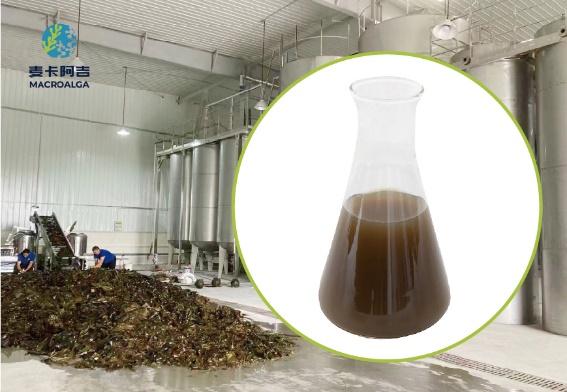
The choice of solvent and temperature can drastically alter which compounds survive the journey from raw plant to final product. Ethanol extraction, for instance, pulls a broad spectrum of polar and non-polar compounds, but high heat during solvent removal often destroys delicate terpenes and flavonoids. Cold ethanol or CO2 extraction keeps temperatures low, preserving volatile aromatics and heat-sensitive phytochemicals that might otherwise evaporate or degrade. If your goal is a full-spectrum profile with intact minor cannabinoids and terpenes, subcritical CO2 often outperforms aggressive solvent methods.
Water-based extraction, such as ice water hash, relies solely on mechanical separation and freezing temperatures, which leaves fragile compounds largely untouched. However, it can under-extract certain lipophilic molecules that need a solvent to loosen them from the plant matrix. On the other hand, butane or propane extraction is excellent for capturing resins but risks leaving residual hydrocarbons unless carefully purged, and even then, some compounds may isomerize under heat. The real question is not which method is “best” but which method aligns with the specific compounds you need for your end use—whether that means preserving enzymes, terpenes, or rare minor alkaloids.
Look beyond the label and ask the manufacturer about their post-extraction handling. Even a gentle extraction can ruin compounds if the crude oil sits in a warm, oxygen-rich environment before final formulation. Vacuum ovens and nitrogen blanketing go a long way toward locking in fragile actives. Ultimately, the method that preserves the compounds you actually need is one that matches the chemistry of those compounds and respects their sensitivity from harvest to final packaging.
Can the Supplier Show You Third-Party Test Results Without Hesitation?
When you ask a supplier for third-party test results, pay less attention to what they say and more to how quickly they produce the actual files. A factory that keeps independent lab reports organized and ready to share treats verification as routine. If they hesitate, flip through folders, or promise to send something later but never do, that delay is often the real answer. You shouldn't have to convince a supplier to show proof that their materials or finished goods meet basic safety and performance standards.
Some suppliers will deflect with phrases like "our own QC already checked everything" or "no other customer has asked for this." Internal checks matter, but they don't replace an outside lab running the same unbiased tests. Ask for the full report, not a summary or a cropped screenshot. Check the date, the product name, and the lab's contact information. Better yet, ask if the lab can verify the report number directly. A supplier who trusts their own product won't treat that request as an insult.
What Do Existing Customers Say About Long-Term Consistency?
Long-term customers rarely talk about a single feature. They talk about how the product still feels like itself after months of use. No surprise redesigns, no sudden shifts in tone, no quiet removal of the tools they rely on. That stability becomes part of their daily rhythm, something they don't consciously notice until they try a competitor and feel the friction of learning everything again.
The words that come up most in their feedback are 'predictable' and 'reliable' — but not in a boring way. They mean the interface behaves the way they expect, the performance doesn't degrade after updates, and the team behind it doesn't chase trends at the expense of core workflows. One customer put it simply: 'I've built three years of muscle memory on this. I don't want to relearn my job every quarter.'
Some of the strongest endorsements aren't praise at all. They're complaints about small things — a button that moved two pixels, a shortcut that changed — because consistency has made those details personal. That kind of attachment only forms when a product respects the user's time and trust over the long haul.
How Flexible Is the Supplier When Your Formulation Needs Change?
Real formulation work rarely follows a straight line. You might swap a preservative, adjust a viscosity modifier, or rebalance a surfactant system mid-project. The real test of a supplier isn't how they handle the initial spec—it's how they react when you call on a Thursday afternoon and say the batch rheology is off. A flexible partner doesn't just nod; they pull up your previous trial data, suggest three alternate grades from inventory, and ask whether you need a sample shipped for tomorrow's bench test.
Look for suppliers who treat change requests as part of the process, not as exceptions. Do they have a dedicated technical contact who knows your formulation history? Can they offer small-batch trial quantities without penalizing you for not hitting drum volumes? The best ones keep a range of functional equivalents on hand—different molecular weights, salt forms, or solvent carriers—so that when your target profile shifts, you're not starting from scratch. That kind of agility comes from experience, not from a generic 'we're happy to help' email.
Ask directly about their change-management workflow. How fast can they turn around a modified sample? Do they batch trial materials on a shared line or a dedicated pilot setup? One practical benchmark: give them a hypothetical reformulation scenario—say, moving from a liquid to a gel format with the same active load—and see if they come back with a concrete list of options, including lead times and cost deltas. If the answer is vague or full of marketing language, you'll know flexibility is just a slide in their deck.
Will the Supply Chain Hold Up During Peak Demand or Seasonal Gaps?
Most logistics teams plan for the obvious spikes—Black Friday, back-to-school, the pre-holiday rush. But the real test often comes from less predictable surges: a sudden cold snap driving heater demand, a viral product taking off overnight, or a supplier's seasonal shutdown that nobody accounted for. Without flexible capacity buffers or real-time visibility into inbound inventory, even a well-oiled supply chain can stall right when customers are most eager to buy.
The gap between forecast and reality tends to widen during shoulder seasons, when demand patterns shift without a clean handoff. Retailers might see steady sales in one region while another faces unexpected returns or cancellations. A chain that relies on fixed lead times and static safety stock will struggle to absorb these swings. The more resilient approach involves dynamic rebalancing—moving inventory between nodes, adjusting reorder points weekly, and keeping a small reserve of high-velocity items that can be deployed where the pressure is greatest.
Seasonal gaps also expose weaknesses in supplier relationships. If every order goes through a single point of contact and that contact is on leave during a festival period, replenishment slows to a crawl. Companies that cross-train their procurement staff, maintain backup vendors for critical SKUs, and stagger purchase orders to avoid everyone hitting the same bottleneck are far less likely to see empty shelves when demand peaks. It's not about predicting every twist—it's about building a supply chain that bends without breaking.
FAQ
Ask for a copy of their production license and a recent audit report. A reliable supplier will usually invite you for a factory tour or a live video walkthrough without hesitation. Check if the address on the license matches the actual blending and drying facility. If they only show offices or warehouses, that's a red flag.
Look for ISO 22000, HACCP, and depending on the target market, organic certifications like EU Organic or USDA NOP. For marine ingredients, MSC or ASC chain-of-custody is a plus. Also confirm their heavy metal and iodine testing aligns with EU Regulation 1881/2006 or USP standards. Don't accept a generic 'GMP certified' claim without seeing the certificate number and issuing body.
Cold-water or enzyme-assisted extraction typically preserves heat-sensitive polysaccharides better than harsh acid or high-temperature alkaline methods. A reliable supplier should disclose the solvent system and drying technique. Ask for a pilot batch with a certificate of analysis showing molecular weight distribution and sulfate content. If they refuse to share extraction parameters, treat that as a lack of technical transparency.
Request a third-party lab test from a name you recognize, like SGS, Eurofins, or Intertek, paid by the supplier but sent directly to you. Check for characteristic markers—fucoidan should show fucose and sulfate esters via HPLC or FTIR. If the quote is 40% below market average and the COA says '100% pure brown algae extract' without specifying species, walk away.
Ask for the exact harvest location and season, plus heavy metal and radiation test results from the last three batches. Reputable suppliers often source from certified farms in Shandong or Fujian with clean water monitoring. If they say 'wild harvested from the open sea' but can't provide GPS coordinates or water quality data, assume they're hiding something.
Yes, free samples under 100 grams are standard. But request the sample be drawn from a recent commercial batch, not a lab-scale special. Test it for solubility, color, odor, and moisture content. A reliable supplier will also send the batch's full COA and MSDS with the sample. If the sample looks perfect but the production quote is much cheaper, ask for a second sample from a different batch.
Insist on 30% deposit and 70% against a copy of shipping documents, never full prepayment. Add a clause stating that if third-party testing fails, the supplier must refund and cover return freight. Include a penalty for late delivery and a requirement for batch retention samples for one year. Avoid suppliers who only accept Western Union or personal PayPal accounts—that's a sign of a trading shell, not a manufacturer.
Conclusion
Finding a reliable brown algae extract supplier in China means looking beyond flashy marketing and digging into where the raw material actually comes from. Coastal regions like Shandong and Fujian are known for cultivating species such as Sargassum and Laminaria, but not all harvest zones are equal. Water quality, seasonal harvesting windows, and traceability back to specific collection sites matter more than a vague "wild-crafted" claim. A supplier who can tell you the exact bay, the harvest month, and the post-harvest handling steps is far more trustworthy than one who simply resells commodity powder. Ask for documentation of heavy metal and iodine levels before the algae even enters extraction, because if the raw biomass is contaminated, no downstream refinement will fix it.
Beyond sourcing, the extraction method and the supplier's willingness to share third-party tests reveal a lot about reliability. Gentle cold-water or enzyme-assisted extraction tends to preserve fucoxanthin, laminarin, and polyphenols far better than harsh solvent boiling, so ask which specific compounds your formulation actually needs and whether the method protects them. A supplier who hesitates to show HPLC or GC-MS reports from independent labs is hiding something, period. Then consider long-term consistency: do existing customers mention batch-to-batch drift in color, viscosity, or active compound percentage? The best suppliers keep detailed production logs and will adjust extraction parameters quickly when your formulation changes, whether that means shifting particle size, standardizing to a different fucoxanthin percentage, or moving from powder to liquid dispersion. Finally, reliability includes supply chain resilience. Ask about their raw material inventory strategy, storage capacity, and backup harvest regions. A supplier who relies on a single narrow seasonal window with no frozen or dried biomass reserve will leave you scrambling during peak demand or an unexpected off-year. The truly reliable partner is the one who admits limitations upfront, shows you their entire chain from tidepool to drum, and treats your formulation changes as a collaboration rather than a hassle.
Contact Us
Contact Person: Kevin ZHANG
Email: [email protected]
Tel/WhatsApp: 8613505438449
Website: https://www.macroalga.com/