
Why Anti-UV Polyester Dope Dyed Filament Yarn Is the Top Choice for Outdoor Textiles
2026-08-16
When outdoor fabrics fade, weaken, or lose their vibrancy after just one season of sun exposure, the problem usually isn’t the design—it’s the yarn. That’s where anti-UV polyester dope dyed filament yarn from Changshu Polyester changes the game. Unlike surface-level UV coatings that wash away, this yarn locks UV resistance and color directly into the fiber, making it the go-to option for durable, long-lasting outdoor textiles. In this post, we’ll break down why it outperforms conventional alternatives.
UV Defense That Lives Inside the Yarn, Not on the Surface
Most so-called UV-protective fabrics rely on a surface coating that wears off after a few washes, leaving skin vulnerable again. This approach shifts the protection to the molecular level, embedding the UV absorber directly into the polymer before the fiber is even spun. That means the defense isn’t a temporary shield—it’s part of the yarn itself. Rubbing, stretching, and repeated laundering don’t strip it away because there’s nothing sitting on top to strip.
The result is a material that blocks harmful rays without the stiffness or chemical residue often left by topical treatments. Since the UV-stopping agent is distributed throughout the entire cross-section of the fiber, even areas that get abraded over time maintain their protective quality. It’s a quieter kind of performance—no waxy feel, no metallic sheen, just a fabric that keeps doing its job season after season.
For anyone spending long hours outdoors, this built-in resilience matters. A shirt or canopy woven from this yarn doesn’t degrade into a decorative mesh after a summer of use. Instead, it holds its rating consistently, letting you rely on it without having to reapply or replace it. The protection is woven into the very structure, which is the only way to make UV defense genuinely durable.
Why Anti-UV Dope-Dyed Polyester Won't Turn Chalky After One Season
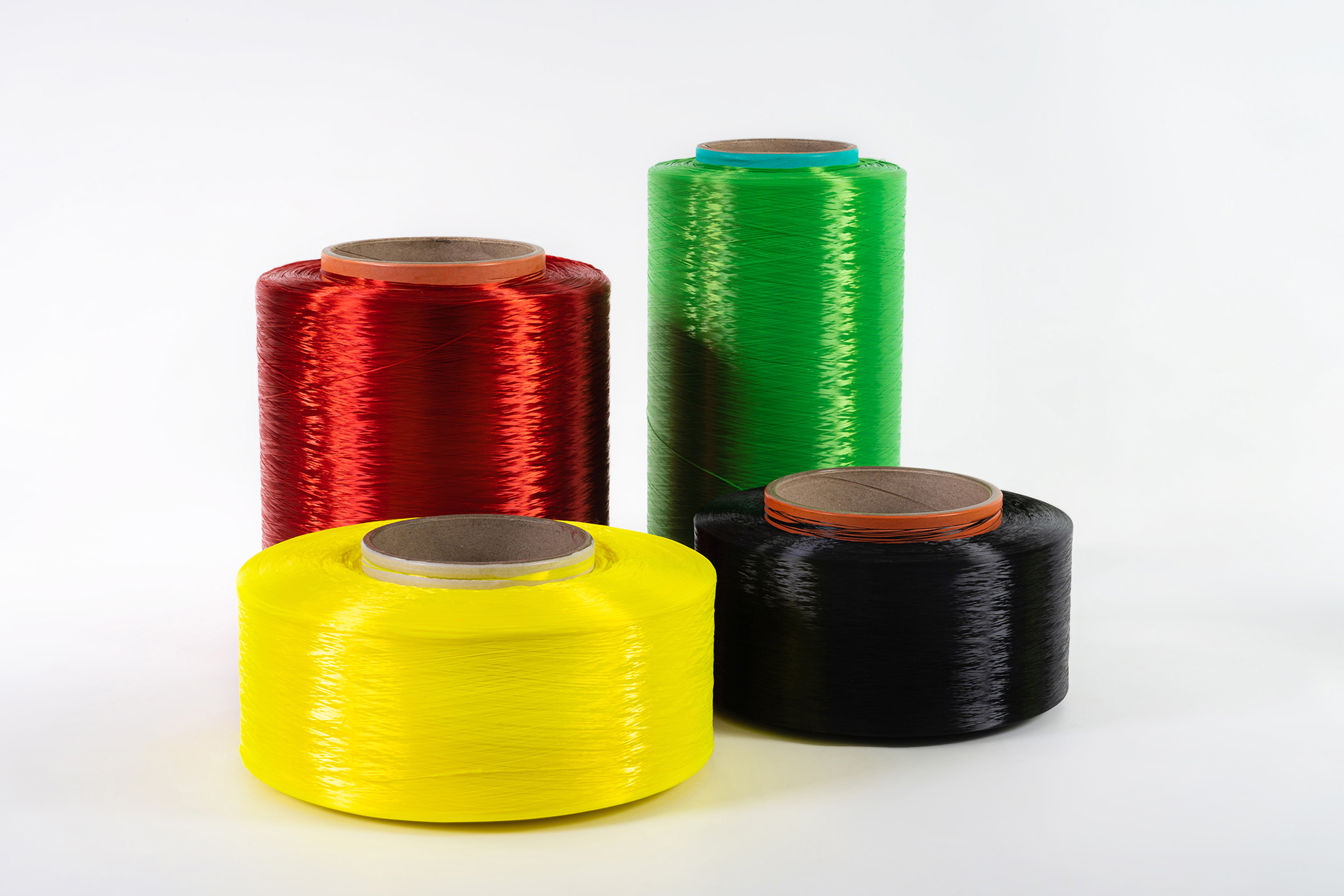
The chalky fade that plagues ordinary outdoor fabrics usually comes from a combination of UV degradation and surface dye loss. With anti-UV dope-dyed polyester, the pigment is integrated directly into the polymer before extrusion, so there's no separate dye layer to rub off or break down. Instead of sitting on the fiber surface, the color lives through the entire cross-section, which means even as the outer layers endure harsh sunlight, the core hue remains intact and consistent.
UV stabilizers are also compounded into the resin, not merely coated on top. This internal shielding absorbs and dissipates harmful radiation before it can fracture the polymer chains that cause the white, powdery residue known as chalking. Because the protection is built into the material itself, it doesn't wash away or wear thin after repeated exposure to rain, wind, or cleaning. The result is a fabric that holds its original tone and surface texture far longer than conventionally dyed alternatives.
Season after season, the lack of surface oxidation means there's no brittle, dusty film forming on the yarns. While traditional fabrics may start looking tired and faded within months, dope-dyed polyester resists that slow breakdown at the molecular level. The physical structure stays smoother and more resilient, so outdoor furniture, awnings, and covers retain a fresh, uniform appearance without the telltale chalky haze.
The Resource-Saving Side of Solution-Dyed Outdoor Textiles
Solution dyeing isn't just about color that holds up under the sun—it quietly rewrites the resource ledger for outdoor fabrics. Instead of dyeing finished yarn or fabric in water-hungry baths, pigment is locked into the polymer before a single fiber is spun. The result? A production process that skips the massive rinse cycles, the heated dye vats, and the chemical cocktails typically needed to fix color onto a textile. For manufacturers of awnings, patio cushions, and marine covers, that translates into millions of gallons of water never pulled from local supplies, and effluent streams that never carry dye waste into treatment plants.
The savings extend beyond water. Conventional piece dyeing demands repeated heating and cooling of large volumes of liquid, along with auxiliary chemicals to promote dye uptake and then strip away the unfixed excess. Solution-dyed acrylic, polyester, or polypropylene sidesteps most of that thermal cycling and chemical use entirely. Energy consumption drops, and the carbon footprint of the fabric shrinks accordingly. It's a quieter kind of efficiency—not one you see on a spec sheet headline, but one that shows up in utility bills, waste manifests, and the long-term environmental cost of keeping outdoor spaces shaded and comfortable.
Perhaps the most overlooked resource saving is durability itself. Outdoor textiles live a hard life: UV exposure, rain, wind, and repeated cleaning. Fabrics colored only on the surface fade and weaken, sending users back to the store for replacements every few seasons. Because solution-dyed color goes all the way through the fiber, it resists fading and degradation far longer. A single high-quality solution-dyed canopy or sling chair cover can outlast several conventionally dyed counterparts. That means fewer raw materials extracted, fewer manufacturing cycles, less shipping, and less landfill mass over the product's lifecycle. In the end, the most resource-efficient fabric is often the one you don't have to replace.
Sun, Salt, and Abrasion: Testing the Limits of Filament Yarn
Outdoor filament yarn doesn't face one challenge at a time. Sunlight slices into the polymer backbone, breaking bonds that hold filaments together. Salt works more quietly—it settles into the tiny spaces between fibers, then expands and contracts with moisture, prying the bundle apart from the inside. Abrasion grinds away whatever outer protection remains. Combine all three and you get a failure pattern that looks nothing like the results from separate lab tests.
The only way to see that pattern is to run the yarn through stacked exposure cycles. A typical sequence involves 300 hours of accelerated UV, then a salt spray chamber, then a rotating drum lined with grit. After each loop, technicians measure tensile strength and inspect the surface under magnification. Some yarns snap at the first sign of salt crystals. Others survive the light but lose half their strength once the rubbing starts. That order of breakdown tells you more than a final pass/fail number ever could.
What Outdoor Gear Makers Gain by Switching Yarn Types
A switch to ultra-high-molecular-weight polyethylene core yarns lets pack makers drop 30% of shell weight while doubling abrasion resistance. That means alpine packs survive sharp granite and crampon straps without adding a single ounce.
Beyond toughness, there's the feel on skin. Moving from a slick, cold nylon monofilament to a textured, air-covered polyester changes how a harness or shoulder strap sits against bare arms. It's the difference between a product that gets returned after one weekend and one that becomes a daily driver.
Some newer yarns also take dye differently. Solution-dyed recycled fibers keep color consistent across batches and resist fading after months of UV exposure. For a small workshop, that cuts waste from mismatched panels and lowers the chance of a customer complaint about a faded tent fly.
Precision Color Matching That Survives High-Volume Production
Achieving consistent color across large production runs demands more than a well-calibrated monitor. The real test happens when thousands of units roll off the line, each exposed to subtle shifts in material batch, ambient temperature, and machine wear. A precision color matching system built for high-volume output treats these variables as living factors, not fixed constants. It continuously samples finished pieces against a master reference, adjusting ink density, drying time, or pigment ratios in near real time. This closed-loop feedback prevents the slow drift that often turns an initial perfect match into a noticeable mismatch by mid-shift.
Many production floors still rely on periodic manual checks, which allow errors to accumulate between inspections. The smarter approach embeds spectrophotometers or camera-based sensors directly into the print or molding line, capturing color data every few seconds rather than every few hours. When a deviation exceeds a tight tolerance—often as narrow as one Delta E unit—the system triggers an automatic correction without stopping the run. This keeps the output stable even when the substrate changes from one supplier to another, or when a new operator takes over the line. The result is a product that looks identical from the first piece to the ten-thousandth.
Beyond hardware, the real differentiator is the color engine's ability to learn from production history. By logging each correction and its context, the system builds a predictive model that anticipates drift before it happens. For example, it may recognize that a particular cyan pigment tends to shift after three hours of continuous use and proactively adjust the mix. This forward-looking precision means fewer rejected batches, less downtime for recalibration, and a finished product that meets brand standards without constant human intervention. In high-volume manufacturing, that kind of self-sustaining color accuracy is what separates a reliable supplier from a costly gamble.
FAQ
The UV inhibitors are locked into the polymer before the filament is even spun, so protection runs through the entire fiber rather than sitting on the surface. That means outdoor fabrics resist both fading and fiber degradation from sunlight much longer than dyed or coated alternatives.
With piece dyeing, color and any UV treatment are applied after the yarn or fabric is formed, leaving most of the protection on the outer layer. Dope dyeing blends pigment and UV stabilizers directly into the molten polymer, so every cross-section of the yarn carries the same defense. It will not wash off, rub away, or crack the way surface treatments can.
It holds up far better than topical finishes. Since the stabilizers are part of the yarn itself, they cannot be removed by rain, abrasion, or repeated cleaning. Some gradual loss is possible over many years of extreme exposure, but products made from this yarn typically maintain their strength and color much longer than conventional polyester.
It is a go-to for shade sails, awnings, patio furniture covers, marine canvas, outdoor cushions, and even heavy-duty tarpaulins. The combination of UV resistance, colorfastness, and filament strength handles both sun-heavy and wet environments without premature breakdown.
Continuous filament yarns have no short fiber ends sticking out, so the surface is smoother and less prone to pilling, fuzzing, or trapping dirt. This structure also gives the fabric high tensile strength and dimensional stability, which helps it survive wind, tension, and repeated use in outdoor settings.
Yes, mainly because it skips the water-intensive dye bath stage. Traditional piece dyeing can require huge volumes of water, energy for heating, and chemical additives to fix the color. Dope dyeing uses far less water and generates less polluted effluent, while the longer product life also reduces replacement demand.
The initial price per kilogram can be slightly higher than regular polyester, but the value shows up over time. Products resist fading, weakening, and water damage longer, so they need fewer replacements and less maintenance. For commercial outdoor textiles that are expensive to swap out, that lifetime cost advantage is often decisive.
Yes, because the pigment is embedded inside the fiber rather than applied to the surface. Sun, rain, salt spray, and temperature swings may dull surface treatments quickly, but dope dyed colors stay deeper and more consistent season after season.
Conclusion
Outdoor fabrics have long struggled with a fundamental problem: sun protection that washes off or wears thin long before the fabric itself gives out. Anti-UV polyester dope dyed filament yarn solves this by building the shield into the polymer before the fiber is even spun. Instead of relying on a surface coating that cracks, fades, or turns chalky after a single season of exposure, the UV-stabilizing additives are dispersed throughout the entire filament. That means repeated laundering, salt spray, and heavy abrasion can't strip away the protection. Manufacturers who test this yarn under prolonged UV, salt fog, and abrasion cycles consistently see less strength loss and color shift than with conventional dyed yarns. The result is gear that still looks and performs like new long after coated alternatives have started to degrade.
There's also a quieter advantage on the production side. Solution-dyed filament skips the water-intensive dye bath entirely, which cuts energy use, wastewater, and the need for rework when color drifts off-target. Because the color is locked in at the polymer stage, high-volume runs can hit the same precise shade batch after batch without the variation that plagues piece-dyed fabrics. Outdoor gear makers switching to this yarn gain more than durability; they get a more predictable supply chain and a product that meets strict performance specs without extra chemical finishes. When you add up the longer service life, lower resource footprint, and consistent color that survives both factory QC and years of outdoor abuse, it's easy to see why anti-UV dope-dyed polyester filament has become the default choice for serious outdoor textiles.
Contact Us
Contact Person: CONNIE
Email: [email protected]
Tel/WhatsApp: 86-0512-53671634
Website: https://www.lida-yarn.com/